
Dust Bowl — 1930s North American drought, wind erosion, and migration
Severe 1930s drought and wind erosion across the North American prairie that devastated agriculture, displaced communities, and reshaped land management and policy.
Overview
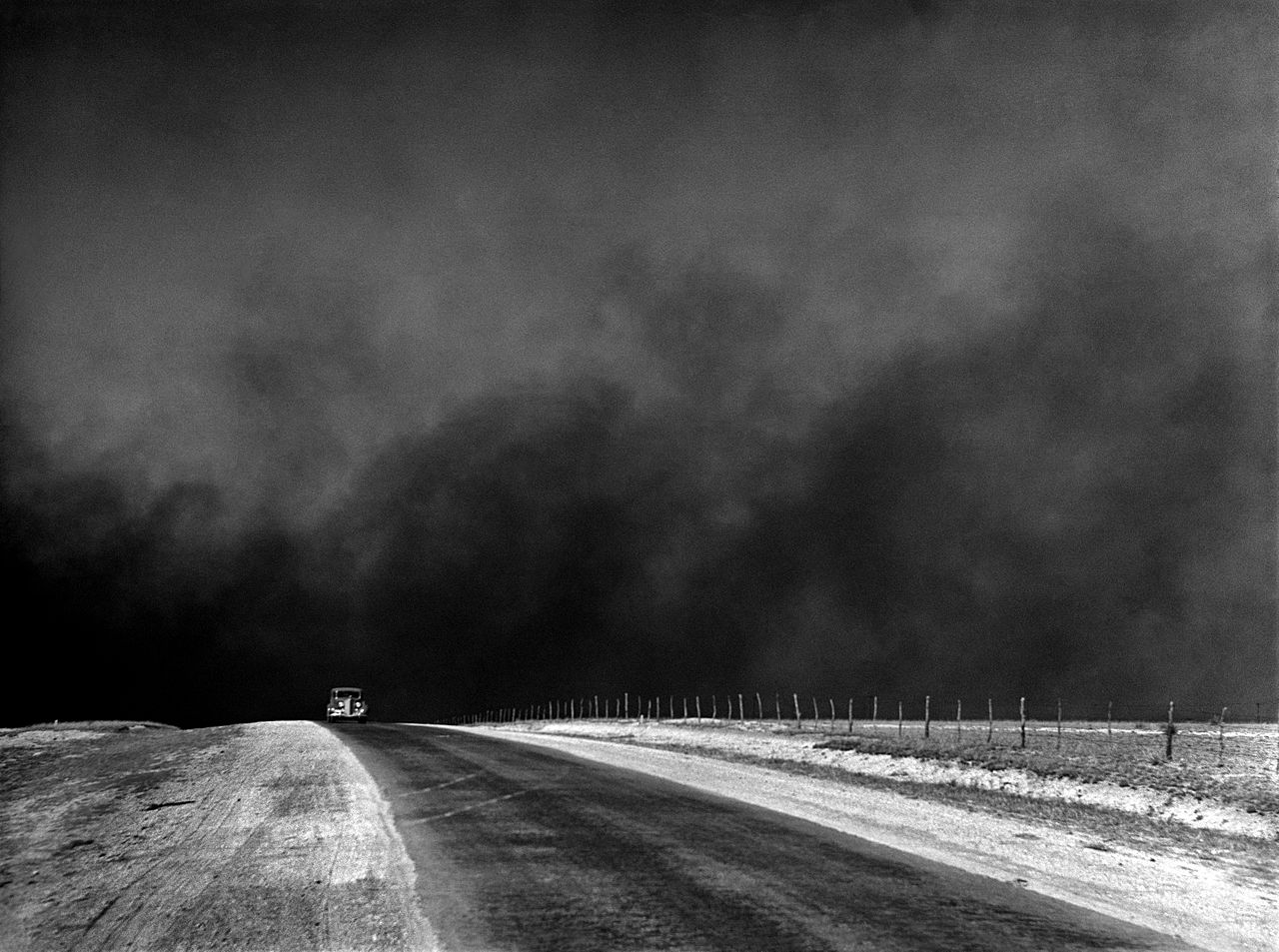
The term Dust Bowl refers to a period in the 1930s when extensive sections of the prairie across the United States and Canada experienced repeated, severe dust storms and crop failures. The affected area extended from the Canadian provinces of Saskatchewan and Manitoba in the north down through the U.S. Plains, including parts of Oklahoma, Texas and New Mexico. These events combined prolonged droughts with wind erosion to produce dramatic dust storms that darkened skies and buried fields and homes.
Image gallery
10 Images




Causes and characteristics
The Dust Bowl arose from a mix of climatic and human factors. Years of below-average rainfall reduced soil moisture and plant cover. At the same time, extensive cultivation and removal of native grasses left topsoil exposed to strong prairie winds. When the drought intensified, loose fine soil was picked up and transported in great clouds, sometimes traveling hundreds of miles. These storms varied in size and duration but often recurred during the 1930s, disrupting visibility, health, and farming operations.
Consequences
Economic and ecological effects were widespread. Crop failures and livestock losses undermined rural livelihoods and local economies. Soil depletion and altered landscapes represented long-term damage to regional ecology. Many families abandoned farms and migrated west or to nearby cities in search of work. The social strain included housing shortages, health problems from dust inhalation, and changes in community structure that lasted beyond the immediate crisis.
Responses and recovery
Relief came through a mix of federal programs, scientific research, and changes in land management. Governments supported emergency aid, agricultural price supports and technical assistance. Conservation measures—such as contour plowing, crop rotation, replanting of native grasses, windbreaks and soil conservation districts—were promoted to reduce erosion risk. Over time, better practices and some wetter seasons reduced the frequency of catastrophic storms.
Legacy and significance
The Dust Bowl helped spur modern soil conservation policy, rural relief programs and research into drought-resistant farming. It also left a deep mark on literature, photography and public memory, shaping how successive generations view the interaction between land use and climate. For further historical and scientific context see resources on the event and its aftermath: overview, regional studies in the Canadian prairies and Southern Plains, environmental analyses of ecological impacts, accounts of the economic consequences, and technical descriptions of dust storm behavior and drought patterns.
- Prairie ecosystems and native vegetation
- Regional histories in Manitoba
- Impacts in Texas and neighboring states
- Local responses in New Mexico
- Comparisons between U.S. and Canadian experiences
These links provide entry points for readers seeking primary documents, scientific analyses and regional narratives that explain how a combination of climate extremes and land-use practices produced one of North America's best-known environmental crises.
Questions and answers
Q: What is the Dust Bowl?
A: The Dust Bowl is a phrase used to describe prairie regions of the United States and Canada in the 1930s.
Q: Where did the Dust Bowl spread to?
A: The Dust Bowl spread from Saskatchewan and Manitoba to the north, all the way to Oklahoma and parts of Texas and New Mexico in the south.
Q: What were the effects of the dust storms and droughts of the 1930s in the Dust Bowl areas?
A: The dust storms and droughts caused major damage to the Dust Bowl areas' economies, ecology, and agriculture.
Q: Was the Dust Bowl a natural disaster?
A: No, the Dust Bowl was the worst man made disaster in U.S history.
Q: How long did the many dust storms happen in the Dust Bowl?
A: The dust storms happened for many years.
Q: What caused the severe conditions of the Dust Bowl?
A: The severe conditions of the Dust Bowl were caused by a combination of poor farming practices, prolonged drought, and economic depression.
Q: Did the Dust Bowl affect only the United States?
A: No, the Dust Bowl also affected parts of Canada.
Related articles
Author
AlegsaOnline.com Dust Bowl — 1930s North American drought, wind erosion, and migration Leandro Alegsa
URL: https://en.alegsaonline.com/art/29338
Sources
- loc.gov : "Great Depression and World War II, 1929-1945: The Dust Bowl"
- cbc.ca : "Canadians Suffer the Dust Bowl"
- english.illinois.edu : "About the Dust Bowl"
- pbs.org : Full transcript available online.