
The Hound of the Baskervilles
A Sherlock Holmes novel by Arthur Conan Doyle that blends Gothic atmosphere with rational detective work; serialized 1901–1902 and published as a novel in 1902, set on the bleak Devonshire moor.
Overview
The Hound of the Baskervilles is one of four full-length novels featuring Sherlock Holmes, written by Arthur Conan Doyle. It combines elements of Gothic horror with the conventions of the detective story, centring on a legendary, apparently supernatural hound that haunts the Baskerville family. Much of the action takes place on the fog-bound moors of Devon, an atmospheric landscape that contributes to the book's enduring popularity.
Image gallery
8 Images


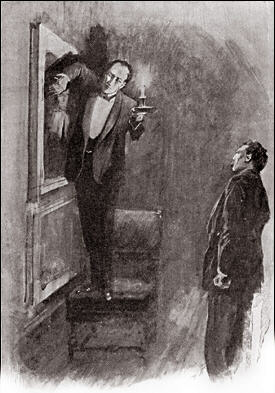
Plot and principal characters
The basic premise concerns the mysterious death of Sir Charles Baskerville and the inheritance of his estate by the young Sir Henry Baskerville. Dr. Mortimer brings the matter to Holmes and Dr. Watson, who investigate a local legend about a diabolical hound said to curse the family. Holmes remains largely in London while Watson is sent to the moor to observe events and report back. The investigation uncovers deception, a criminal plot to secure the Baskerville fortune, and the reality behind the terrifying canine.
- Sherlock Holmes – the consulting detective, analytical and skeptical.
- Dr. John H. Watson – Holmes's friend and the primary reporter of events on the moor.
- Sir Henry Baskerville – heir to the Baskerville estate and target of the plot.
- Dr. Mortimer – country doctor who seeks Holmes's help.
- Jack Stapleton – a naturalist whose motives and identity are central to the mystery.
Themes and structure
The novel juxtaposes scientific reasoning with superstition, repeatedly testing Holmesian deduction against local folklore. Structurally it is notable for its heavy use of Watson as narrator during the investigation, with Holmes absent for much of the action; this builds suspense and showcases Watson's observational role. The landscape—the Grimpen Mire and the moor—is treated almost as a character, shaping mood and events.
Publication history and context
The story was first published in serialized form in 1901–1902 and released in book form soon afterward. Conan Doyle wrote it after the public reaction to earlier Holmes stories and after having previously killed off the detective in 1893; the Hound is often seen as part of Holmes's revival. The novel helped cement Holmes's popularity and brought wider attention to the conventions of detective fiction blended with Gothic elements.
Adaptations and legacy
The Hound has been adapted repeatedly for stage, radio, film and television around the world. Its memorable settings and the striking premise of a supposedly supernatural hound have made it one of the most recognizable Holmes narratives. Critics and readers praise its tense atmosphere, clear plotting, and the effective contrast between rational investigation and eerie superstition.
Notable facts
- It is one of four novels about Holmes; the others include A Study in Scarlet and The Valley of Fear.
- The story makes distinctive use of the moor and the Grimpen Mire as dramatic devices.
- Although it relies on the legend of a spectral hound, the resolution restores a natural explanation, typical of Conan Doyle's detective fiction.
Related articles
Author
AlegsaOnline.com The Hound of the Baskervilles Leandro Alegsa
URL: https://en.alegsaonline.com/art/98168