
John Steinbeck: American novelist, social chronicler, and Nobel laureate
John Steinbeck (1902–1968) was an American novelist known for social-realist works such as Of Mice and Men and The Grapes of Wrath. He won the 1962 Nobel Prize and influenced literature and film.
John Ernst Steinbeck Jr. (February 27, 1902 – December 20, 1968) was an American writer whose fiction and non‑fiction captured social change in the United States during the twentieth century. He became widely known for novels that combine vivid regional detail, economical prose and a concern for ordinary people confronting economic and moral struggles. For background on his life and reception see biographical sources and general surveys of American letters at literary overviews.
Image gallery
10 Images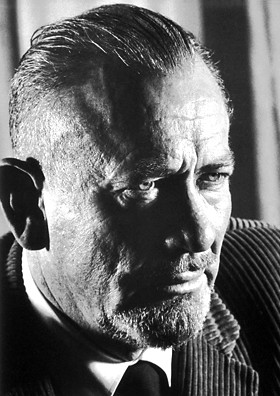


Themes and style
Steinbeck's work is frequently associated with naturalism and social realism: he drew characters from rural California and the migrant laboring communities of the Dust Bowl era, then placed them in stories that probe economic hardship, dignity and human solidarity. His writing blends reportage-like observation with mythic and philosophical reflection. For discussions of his methods and influences consult resources on naturalism, philosophy and mythological elements in twentieth-century fiction.
Major works
Among Steinbeck's best-known books are Of Mice and Men and The Grapes of Wrath. The latter received the Pulitzer Prize in 1940 and became a defining literary account of migrant workers during the Great Depression. Other important titles include Cannery Row, East of Eden and several collections of journalism and travel writing that show his interest in historical context and social policy. A concise list of select books follows:
- Of Mice and Men (1937) — novella about friendship and displacement
- The Grapes of Wrath (1940) — epic novel of the Joad family and migrant labor
- Cannery Row — character-driven portrait of a Monterey neighborhood
- East of Eden — multi-generational novel on moral choices and legacy
Film, screenwriting and adaptations
Steinbeck's narratives have attracted filmmakers: roughly seventeen of his works were adapted for the screen. He also spent time writing for Hollywood and received recognition for his film work, including an Academy Award nomination in the mid-1940s for his role in scripting Alfred Hitchcock's lifeboat drama; see material on film adaptations, Steinbeck's Academy Award history and commentary on Hitchcock at Hitchcock studies. Information on the broader relationship between literature and cinema is available at awards and adaptations.
Reception and legacy
In 1962 Steinbeck was awarded the Nobel Prize in Literature; the committee cited his realistic and imaginative writings that combine sympathetic humor and keen social perception. His books have remained in curricula, anthologies and public discussion because they offer accessible narratives about social justice, community and human resilience. Scholarly and public resources explore his political engagement and critical reception; see entries on politics, history and major works for deeper analysis.
Further study
Readers who want to investigate Steinbeck's life, critical debates and archival materials can consult libraries and reputable online archives. For a starting point, explore general biographies and critical essays via historical databases, annotated editions at literary collections, university special collections at academic repositories, and curated filmographies at cinematic archives. Additional curated guides and teaching resources appear at philosophy and literature portals and publisher sites at naturalism studies.
Questions and answers
Q: Who was John Ernst Steinbeck Jr.?
A: John Ernst Steinbeck Jr. was an American writer who won the Nobel Prize in Literature in 1962.
Q: What are some of his most famous works?
A: Some of his most famous works are Of Mice and Men (1937) and The Grapes of Wrath (1940), which won a Pulitzer Prize.
Q: What type of writing did he use in his books?
A: Steinbeck used naturalism in his books.
Q: Where did he get ideas for his characters and stories?
A: He got ideas for his characters and stories from real events from the early 20th century.
Q: What other topics were explored in Steinbeck's work?
A: His work shows a wide range of interests, such as politics, history, philosophy and mythology.
Q: How many movies were made based on Steinbeck's works?
A: Seventeen of his works were made into Hollywood movies.
Q: Did Steinbeck ever try screen writing? A: Yes, he tried screen writing, which is writing for movies. He received an Academy Award nomination for Best Writing in Alfred Hitchcock's 1945 movie, Lifeboat.
Related articles
Author
AlegsaOnline.com John Steinbeck: American novelist, social chronicler, and Nobel laureate Leandro Alegsa
URL: https://en.alegsaonline.com/art/50816