
Thalassodromeus — large crested pterosaur from Brazil
Thalassodromeus is an Early Cretaceous pterosaur from northeastern Brazil, notable for its enormous cranial crest, toothless beak and debated feeding ecology. It illustrates pterosaur diversity and biomechanical questions.
Overview
Thalassodromeus is a genus of pterosaur known from Early Cretaceous deposits in northeastern Brazil. It is most famous for an enormous, blade-like crest extending from the skull and for a large, toothless beak. Fossils come from concretions in the Santana Formation and have helped show how diverse flying reptiles were in the Cretaceous world. For general background on its group see pterosaur references.
Image gallery
10 Images




Key characteristics
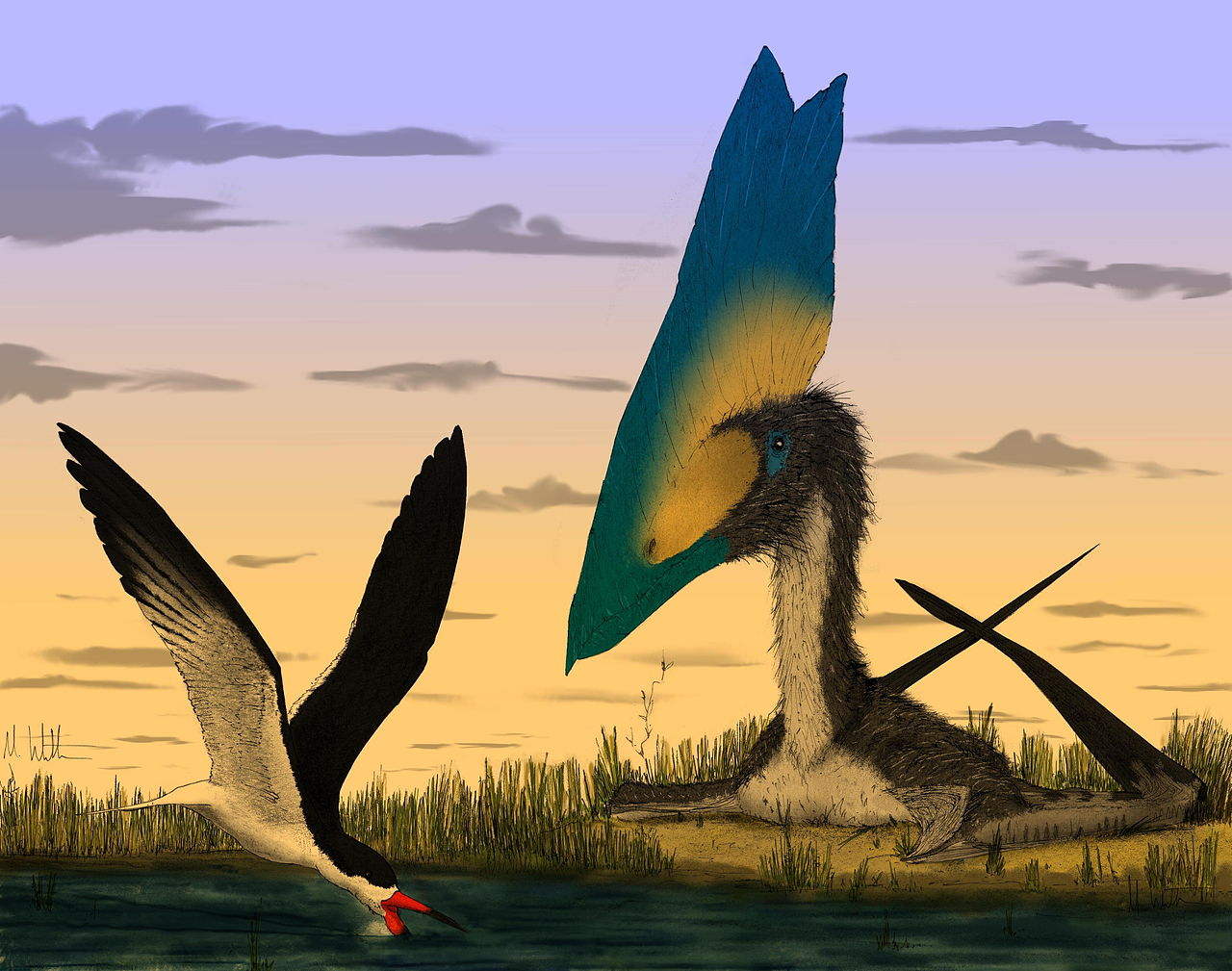
This animal combined a relatively long head with a pronounced cranial crest and a light, hollow skeleton adapted for flight. The beak lacks teeth and appears robust, suggesting a bite or grasping function rather than grinding. Many reconstructions estimate a wingspan of several metres (commonly cited around 4–5 m), making it a large but not the largest pterosaur known. Its crest is proportionally one of the most extreme among known species and likely influenced aerodynamics and display.
Discovery and name
Specimens of Thalassodromeus were recovered from limestone concretions in northern Brazil and described from these Santana Formation fossils in the early 21st century. The genus name means roughly "sea runner," reflecting early ideas about its ecology. Specimens and their preparation histories are often discussed in overviews of South American fossil sites; see material from the region via Brazilian fossil collections.
Classification and scientific debate
Thalassodromeus has been placed near tapejarid and thalassodromid pterosaurs; its exact relationships have been debated as researchers revise pterosaur family trees. Some workers assign it to a distinct family (Thalassodromidae) while others link it more closely with tapejarids. For discussions of phylogenetic placement consult relevant comparative studies and reviews on classification.
Paleoecology and behavior
Early interpretations proposed a piscivorous lifestyle, in part because of the Santana Formation's marine-influenced deposits and the genus name. Later biomechanical work has questioned specialized skim-feeding for Thalassodromeus; current hypotheses include a generalist predator or scavenger that captured prey on land or from the water surface. The crest is widely thought to have served in visual display, species recognition or sexual selection, and may have had secondary aerodynamic or thermoregulatory effects. For broader ecological context see resources on pterosaur feeding strategies here.
Importance and notable facts
- Thalassodromeus highlights extreme crest development among pterosaurs and raises questions about the role of ornamentation in flighted animals.
- Its well-preserved fossils contribute to knowledge of Cretaceous ecosystems in South America and to debates about pterosaur feeding mechanics.
- Specimens and casts are exhibited in museums and form part of educational displays about Mesozoic life; see institutional holdings via museum resources.
Because many aspects of Thalassodromeus biology remain topics of active research, descriptions emphasize plausible interpretations and note where evidence is limited or contested.
Related articles
Author
AlegsaOnline.com Thalassodromeus — large crested pterosaur from Brazil Leandro Alegsa
URL: https://en.alegsaonline.com/art/97357