
Thelyphonida (whip scorpions or vinegaroons): biology, behavior, and facts
Thelyphonida, also called whip scorpions or vinegaroons, are an order of nonvenomous arachnids known for their whip-like tail and defensive acetic acid spray. Overview, anatomy, behavior, and significance.
Overview
Thelyphonida is an order of arachnids often referred to as whip scorpions or vinegaroons. Members of this group are terrestrial predators with a flattened body and prominent pedipalps that resemble pincers. Although their appearance recalls true scorpions, they lack a venomous sting and belong to the wider class Arachnida. The group is sometimes treated under the name Uropygi in older classifications and contains several genera distributed mainly in tropical and subtropical regions.
Image gallery
3 Images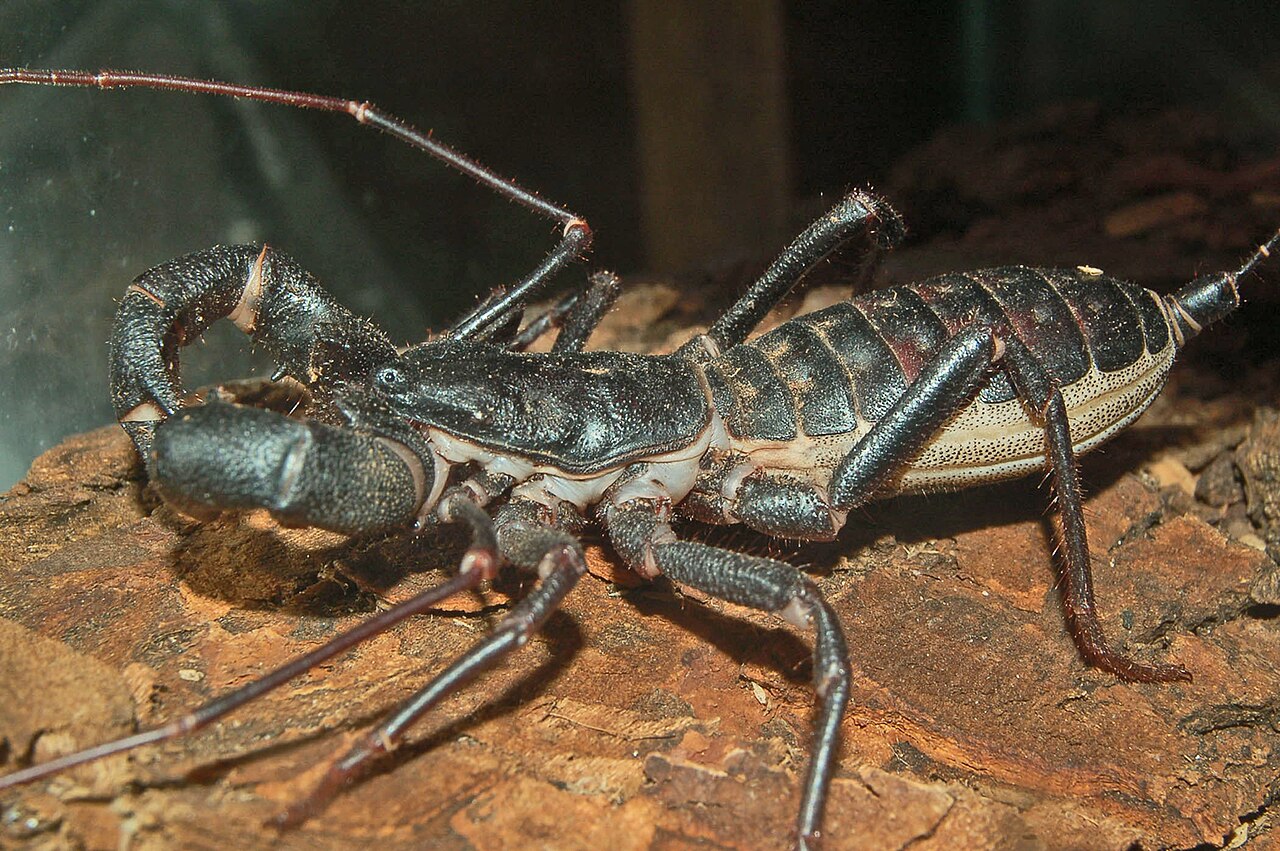


Distinctive features
Thelyphonids are characterized by a long, flexible, whip-like tail and the ability to produce a pungent defensive spray. Their front legs are often modified for sensing the environment, acting like antennae while the remaining legs are used for locomotion. The large, spiny pedipalps are used to seize prey. Unlike true scorpions, they do not possess a venomous telson; instead, many species can eject a mist with a vinegar-like odor that contains dilute acetic acid, giving rise to the common name.
Defense, diet, and behavior
When threatened, a vinegaroon may raise its abdomen and aim its tail to spray the defensive secretion, which deters predators primarily by smell and irritation rather than toxicity. These arachnids are primarily nocturnal hunters that feed on insects, spiders and other small invertebrates, using their pedipalps to capture and crush prey. They are generally solitary and hide under logs, stones or inside leaf litter during the day.
Relationships and common names
- Taxonomy: often called the order Thelyphonida or Uropygi in older sources.
- Common names: vinegaroons for their acetic odor and whip scorpions for the tail resemblance.
- Related groups: they are allied with other arachnids such as spiders, true scorpions and ticks within Arachnida.
Not venomous: a key distinction is that vinegaroons lack venom; their defense relies on mechanical strength and chemical sprays rather than injection. In ecosystems they serve as beneficial predators that help control insect populations. They are occasionally kept by hobbyists but require specific humidity and shelter to thrive in captivity.
Because of their unusual appearance and dramatic defensive behavior, Thelyphonida attract interest from naturalists and educators. Their combination of morphological traits — sensory anterior legs, robust pedipalps, segmented abdomen and the distinctive tail — make them a recognizable and instructive example of arachnid diversity.
Related articles
Author
AlegsaOnline.com Thelyphonida (whip scorpions or vinegaroons): biology, behavior, and facts Leandro Alegsa
URL: https://en.alegsaonline.com/art/99202