
Pterosaurs: Mesozoic flying reptiles
Pterosaurs were the Mesozoic era’s flying reptiles and the first vertebrates to achieve powered flight. This article explains their anatomy, diversity, fossil history, ecology and how they differ from birds and bats.
Pterosaurs were a diverse group of flying reptiles that lived throughout the Mesozoic Mesozoic era, alongside the dinosaurs dinosaurs. They first appear in Upper Triassic Triassic deposits and persisted until the mass extinction at the close of the Cretaceous. Pterosaurs are notable as the earliest vertebrates vertebrates known to have developed true powered flight powered flight, and they occupied many ecological niches from small insectivores to gigantic coastal soarers such as Quetzalcoatlus. Fossil finds and historical research have shaped our view of pterosaurs since the late 18th and early 19th centuries.
Image gallery
10 Images


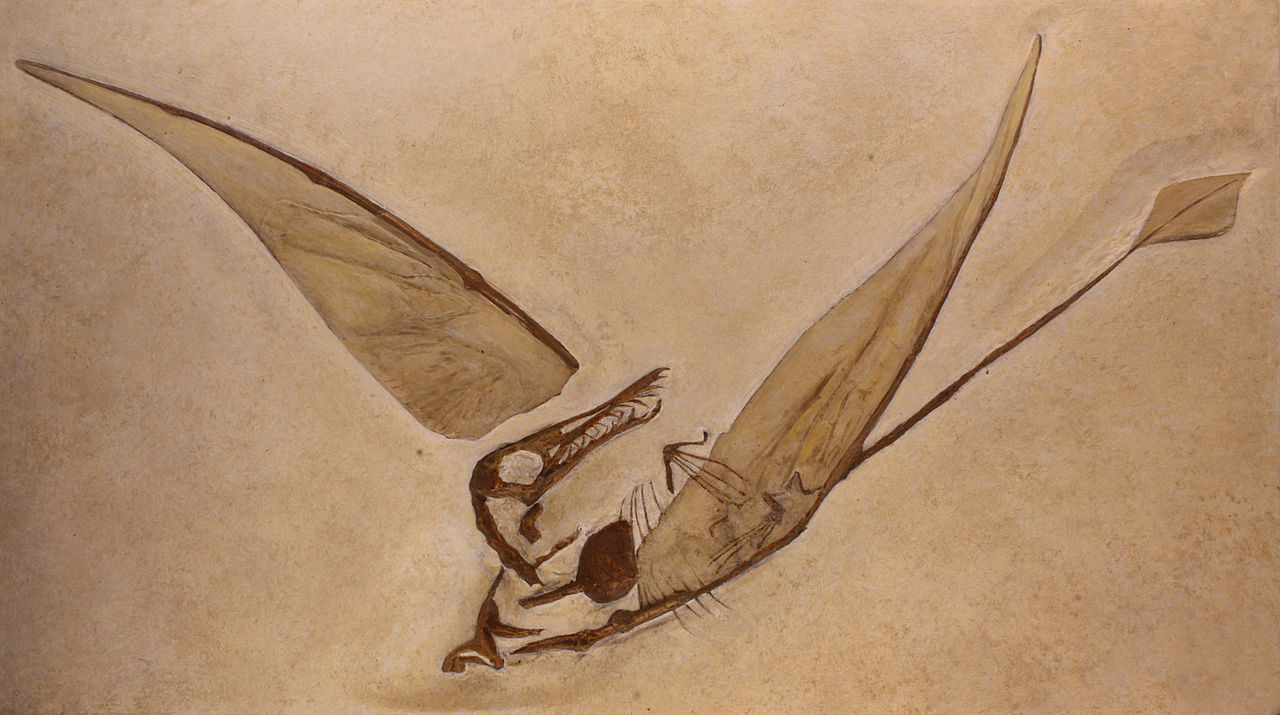


Anatomy and adaptations for flight
Pterosaur wings were formed primarily from a skin-and-fiber membrane that stretched from the body to an enormously elongated fourth finger. This unique wing architecture differs from the feathered wings of birds and the membranous wings of bats. Many pterosaurs had lightweight, air-filled (pneumatic) bones and an enlarged breastbone to anchor flight muscles. Soft-tissue impressions show the body was often covered with filamentous hairs (pycnofibers), suggesting some capacity for thermoregulation and possibly warm-blooded physiology.
- Wing structure: skin membrane supported largely by the fourth digit.
- Skeleton: hollow bones, keeled sternum in many species, and specialized joints for flight.
- Covering: filament-like pycnofibers rather than feathers on most forms.
Classification, diversity and life habits
Pterosaurs are commonly divided in broad terms into earlier, long-tailed forms and later short-tailed forms. Classical names used to distinguish these groups include the long-tailed rhamphorhynchoids (for example Rhamphorhynchus) and the more derived pterodactyloids (for example Pterodactylus) that had shorter tails and, in many cases, toothless beaks. Within those categories, species ranged from small, agile fliers to giants with wingspans rivaling small aircraft. Their diets varied widely—some were fish-eaters that skimmed or dived, others hunted insects or small vertebrates, and some likely fed opportunistically on carrion.
Fossil record and history of discovery
Pterosaur fossils first captured scientific attention from deposits such as the Late Jurassic Late Jurassic Solnhofen limestone in what is now Germany, the same famous quarry that produced Archaeopteryx. The earliest recognitions of pterosaurs as flying animals date to the work of naturalists like Georges Cuvier. Notable finds include specimens described from the Solnhofen strata and the early 19th-century British discoveries such as Dimorphodon, collected by Mary Anning at Lyme Regis. Together these and many other sites worldwide provide a long and detailed record of pterosaur evolution and variety.
Notable genera and extremes
- Dimorphodon — an early Jurassic form with a robust skull and varied dentition.
- Rhamphorhynchus — a long-tailed, fish-eating genus from Solnhofen deposits.
- Pterodactylus — a representative of the short-tailed pterodactyloids.
- Quetzalcoatlus — one of the largest known, with wings estimated up to several meters to more than ten meters across in some reconstructions.
These and other genera illustrate the breadth of form and function among pterosaurs. They were not dinosaurs in the strict sense, but belong to Archosauria and are closely related to the lineage that produced dinosaurs. Their extinction at the end of the Cretaceous removed the last major clade of flying reptiles, after which birds and bats occupy the aerial niches pterosaurs once filled. Research continues to refine details about their flight style, growth, ecology and relationships within the tree of reptiles, making pterosaurs a dynamic subject of paleontological study.
For more on pterosaur anatomy, fossil sites, and current debates about their behavior and physiology, see specialist summaries and museum resources: flying reptiles overview, studies of evolution and functional vertebrate morphology, and accessible accounts of life in the Mesozoic Upper Cretaceous seas and coasts.
Questions and answers
Q: What era did pterosaurs live in?
A: Pterosaurs lived in the Mesozoic era at the same time as the dinosaurs.
Q: How large were some of the largest pterosaurs?
A: The largest pterosaurs had a wing-span of up to 12 metres (~40 feet).
Q: When did the first pterosaur fossils occur?
A: The first pterosaur fossils occur in the Upper Triassic.
Q: How did they fly?
A: Pterosaurs were able to flap or soar, and their wings were made from a flap of skin between their bodies and a big fourth finger (sometimes called the "wing finger").
Q: Who discovered the first pterosaur fossil?
A: The first pterosaur fossil was discovered by Georges Cuvier in 1784 in Germany.
Q: What is another famous UK find?
A: Another famous UK find was an example of Dimorphodon by Mary Anning, which she found in 1828 at Lyme Regis, Dorset, England.
Q: What group are pterosaurs closely related to?
A: Pterosaurs are a close sister-group to the dinosaurs, part of the Archosauria.
Related articles
Author
AlegsaOnline.com Pterosaurs: Mesozoic flying reptiles Leandro Alegsa
URL: https://en.alegsaonline.com/art/79883