
Thalassomedon — a long‑necked plesiosaur of the Cretaceous seas
Thalassomedon was an elasmosaurid plesiosaur from the Late Cretaceous Western Interior Seaway, known from fossils found in Kansas and described by Samuel Welles in 1943.
Thalassomedon (name meaning "lord of the seas") is an extinct marine reptile traditionally placed among the elasmosaurid plesiosaurs. It lived during the Late Cretaceous in the shallow, warm waters of the Western Interior Seaway and is best known from fossil material recovered in what is now Kansas. Although commonly associated with dinosaurs in popular accounts, Thalassomedon was a separate kind of secondarily marine reptile that breathed air and returned to the surface periodically; it belongs to the broader group of plesiosaurs rather than to true dinosaurs. For broader context on the time span in which it lived, see the Mesozoic Era, and for its place among marine reptiles consult a general overview at marine reptile resources.
Image gallery
10 Images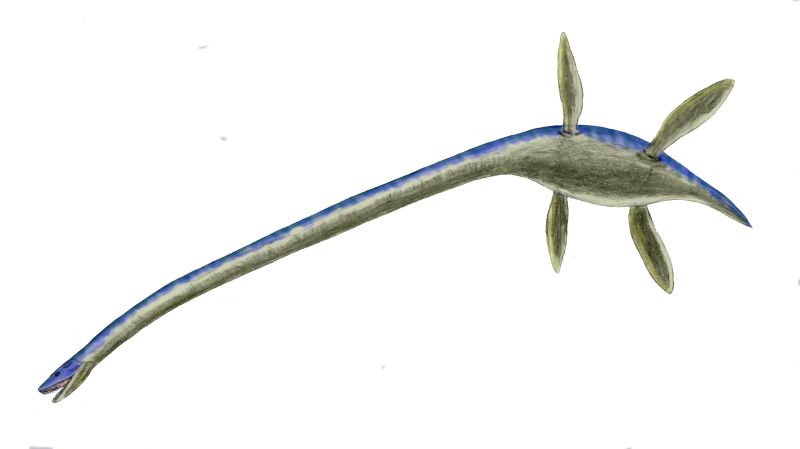


Physical characteristics
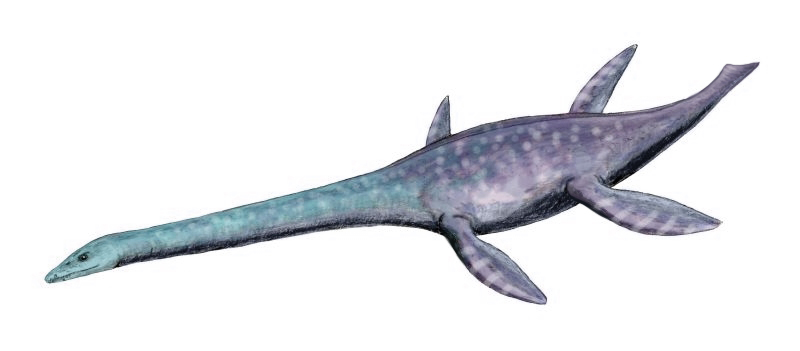
Thalassomedon possessed the characteristic elasmosaurid body plan: a relatively small skull set on a very long neck, a broad, barrel‑shaped torso, and four large, paddle‑like limbs. The jaws carried numerous slender, conical teeth suited to grasping fish and soft-bodied prey. Its long neck was formed from many cervical vertebrae, producing a distinctive silhouette among marine reptiles. The flippers were adapted for steady, powerful swimming and maneuvering rather than high‑speed bursts.
Size and proportions
Exact measurements vary by specimen, but Thalassomedon is generally described as a large elasmosaurid. Paleontologists infer that its proportions—especially the extreme neck length relative to head size—reflect a specialized mode of feeding and locomotion. Debates continue about how much lateral and vertical flexibility the neck allowed and how the animal balanced maneuverability with hydrodynamic efficiency.
Discovery and specimens
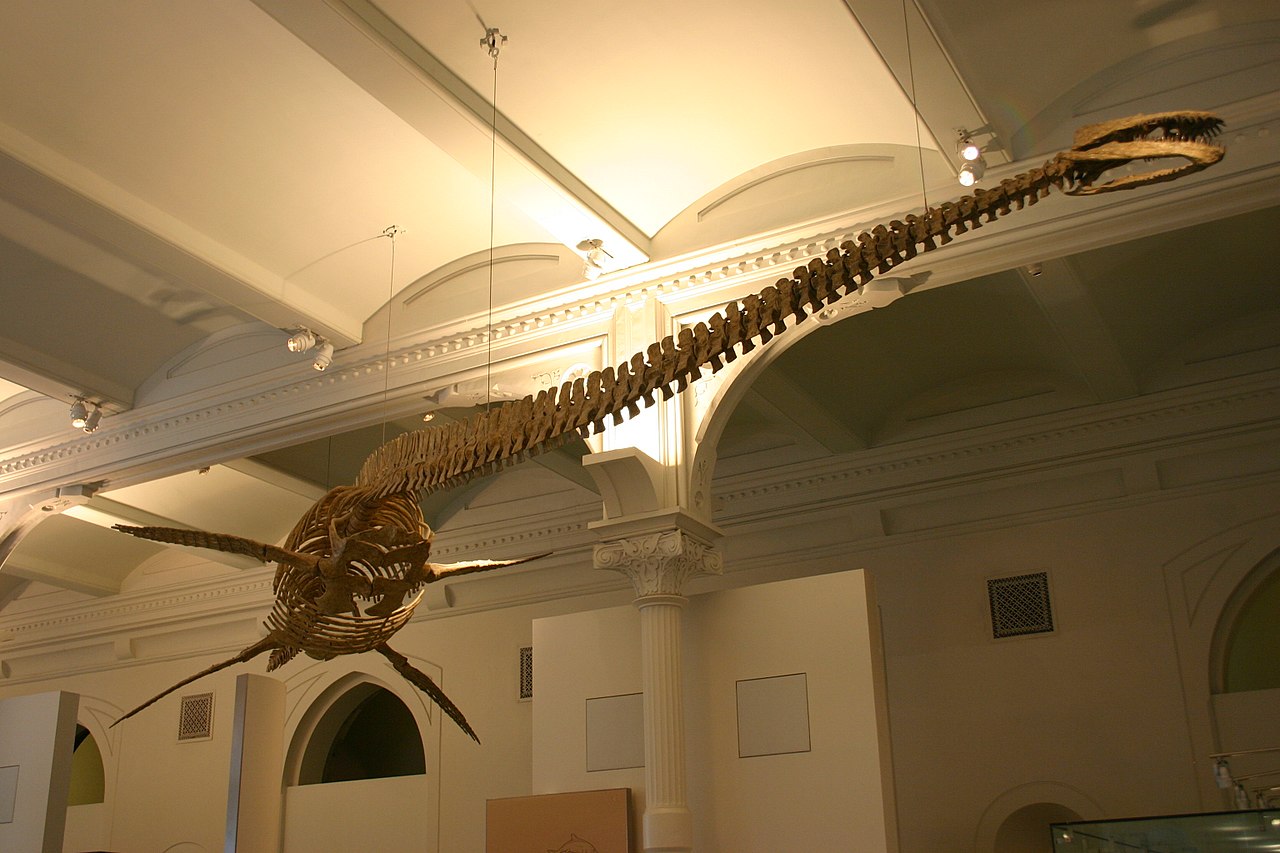
The type species, Thalassomedon haningtoni, was named by Samuel Welles in 1943 following discoveries in Late Cretaceous marine deposits of the central United States. Most specimens come from chalk and shale beds deposited in the Western Interior Seaway, which preserved a diverse assemblage of marine life. Partial skeletons and mounted reconstructions in museums have provided the basis for anatomical description and comparisons with related elasmosaurids.
Ecology and behavior
Thalassomedon is interpreted as a marine predator that fed on fish, cephalopods and other animals it could catch with its toothy jaws. Its long neck may have been used to stealthily approach prey or to strike into schools of fish with minimal movement of the body. Like other plesiosaurs, it must have periodically surfaced to breathe, and its life history and reproductive mode remain subjects of study; related plesiosaurs provide evidence that some marine reptiles gave live birth, but direct evidence for Thalassomedon is lacking.
Scientific importance
As an exemplar of elasmosaurid morphology, Thalassomedon helps paleontologists study the evolution of extreme neck elongation, locomotor adaptations in fully marine reptiles, and the structure of Cretaceous marine ecosystems. Continued discoveries and careful comparisons with other plesiosaurs refine understanding of its biology and phylogenetic relationships. Specimens and reconstructions on display in natural history collections also serve an educational role, illustrating the diversity of life in the ancient seas of North America.
Related articles
Author
AlegsaOnline.com Thalassomedon — a long‑necked plesiosaur of the Cretaceous seas Leandro Alegsa
URL: https://en.alegsaonline.com/art/97358