
Thaliacea (pelagic tunicates)
Thaliacea are free‑living, often transparent tunicates — including salps, doliolids and pyrosomes — that filter plankton, alternate sexual and asexual generations, and play a large role in oceanic food webs and carbon cycling.
Overview
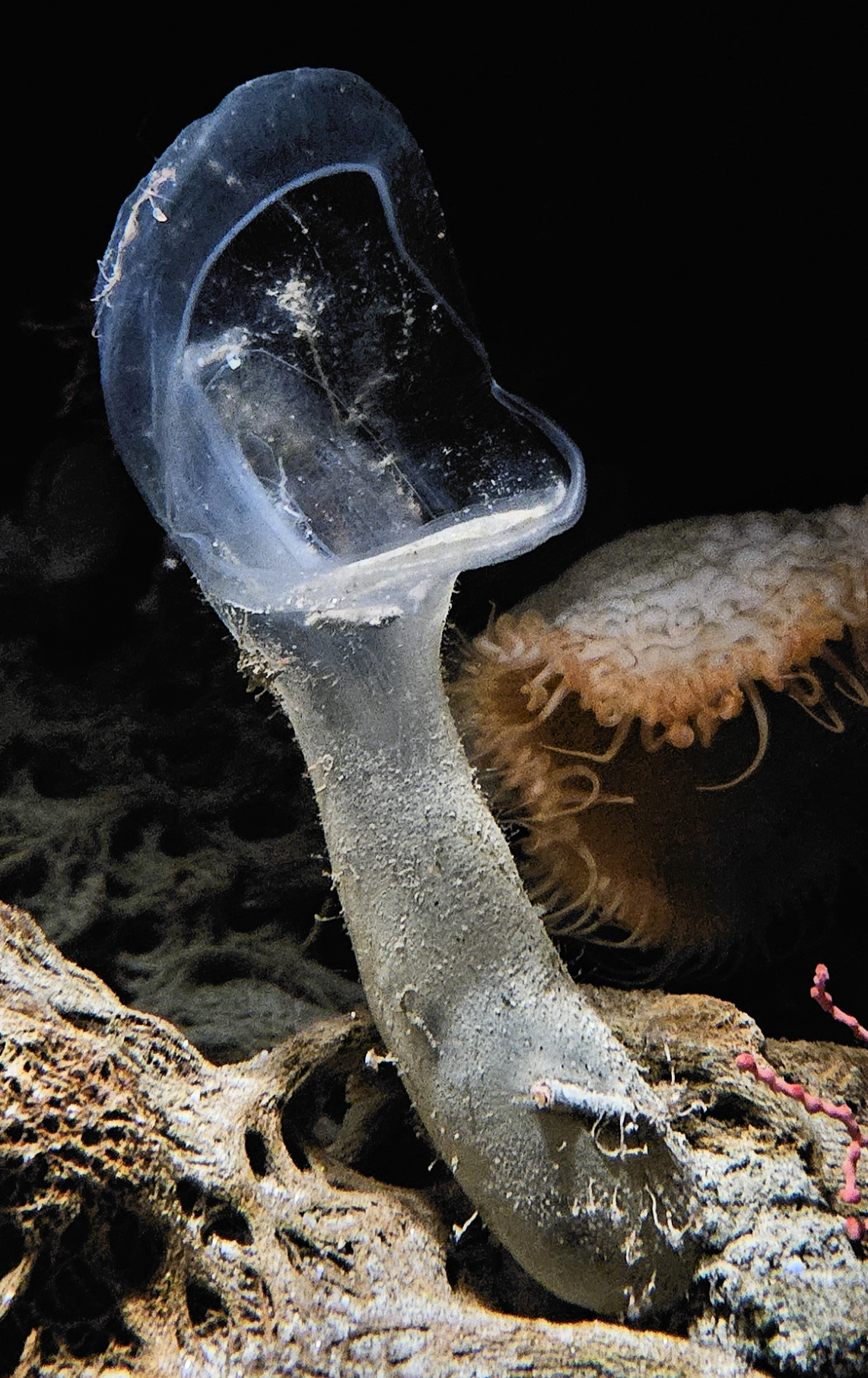
Thaliacea are a group of pelagic marine animals within the tunicates, distinguished by a gelatinous, often barrel‑shaped body and a life spent drifting or swimming in the open ocean. Familiar members include salps, doliolids and pyrosomes. As tunicates, they share the basic chordate features at some life stages and are important components of planktonic ecosystems.
Image gallery
9 Images


Form and feeding
Thaliaceans have a tunic — a thin, flexible outer covering — and an internal pharyngeal basket that acts as a filtration apparatus. Water is pumped through the body by muscular contractions and cilia, and particles are trapped on a mucous net or within the pharynx. They are efficient filter feeders, consuming microscopic phytoplankton and small zooplankton suspended in the water column (plankton).
Life cycle and reproduction
Many thaliaceans exhibit a complex life history with alternating phases. Their reproduction often involves an alternation of generations: asexual budding produces chains or colonies, followed by sexual reproduction in another phase. This alternation of generations means that one generation multiplies by budding while the next produces gametes; some individuals or stages reproduce sexually, others do so asexually.
Major groups
- Salps — solitary and colonial forms; solitary individuals (oozoids) can bud to form long chains (blastozooids).
- Doliolids — typically small, fast‑reproducing, with complex alternating stages and rapid population growth.
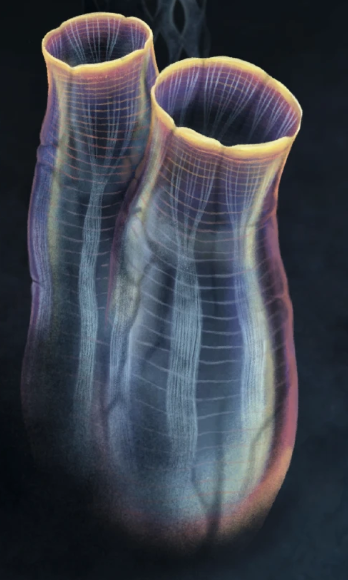
- Pyrosomes — true colonies of many zooids embedded in a common gelatinous tunic; some species are bioluminescent.
Ecological role and importance
Thaliaceans can form dense blooms that quickly consume phytoplankton, affecting local food webs and nutrient cycles. Their discarded mucous nets, fecal pellets and dead bodies sink rapidly, transporting organic carbon from surface waters to the deep sea and contributing to the biological carbon pump. They are also prey for fish, turtles and some larger predators, and can influence fisheries by altering plankton availability.
Distribution, taxonomy and notable facts
Found throughout the world’s oceans from surface waters to considerable depths, thaliaceans are strictly marine. They are classified within the Tunicata and have been studied since early marine biology; their fragile bodies leave a limited fossil record, so molecular studies are important for understanding their evolution. Some species form conspicuous floating colonies or blooms that are visible at the sea surface; others undertake diel vertical migrations. Certain colonial species and life stages are especially notable for rapid asexual reproduction and synchronized life cycles (colonial forms).
For further general information, introductory references and species lists see sources and summaries linked here: tunicates overview, filter feeding, plankton basics, reproductive modes, alternation of generations, sexual reproduction, colonial tunicates.
Related articles
Author
AlegsaOnline.com Thaliacea (pelagic tunicates) Leandro Alegsa
URL: https://en.alegsaonline.com/art/97363