
Terraforming: altering planets and moons to support Earth life
Terraforming is the theoretical engineering of a planet or moon to make it habitable for terrestrial organisms, via changes to atmosphere, temperature, water and ecosystems.
Overview
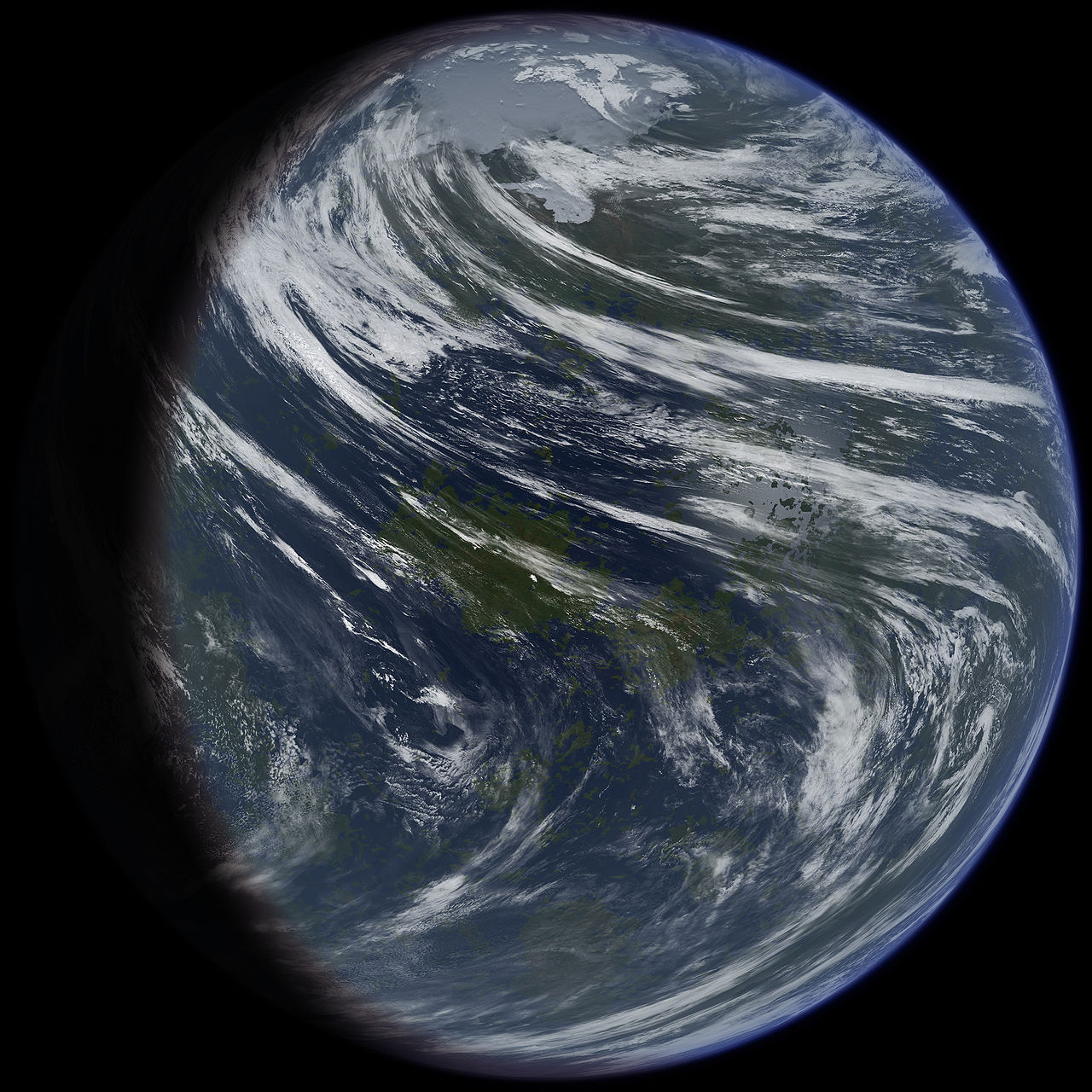
Terraforming is the deliberate modification of a world that is currently uninhabitable for humans into one where terrestrial life could survive without full suits or constant artificial life support. In general usage the term applies to a planet or a large natural satellite, but it also covers partial approaches that alter local environments. The core idea is to produce an atmosphere, temperature range, liquid water availability and surface conditions suitable for organisms derived from Earth.
Image gallery
7 Images



Essential components and processes
Successful terraforming would involve changes to several interconnected systems: atmospheric composition and pressure, thermal balance and incoming/outgoing radiation, surface and subsurface water in liquid form, and ecological succession to create self-sustaining biomes. Practical methods discussed in literature include releasing greenhouse gases or aerosols to warm a body, importing volatiles such as water and nitrogen, creating magnetic shielding or artificial fields to reduce particle radiation, and seeding the surface with hardy microbes to begin building soils.
Targets and candidate bodies
Different worlds present distinct challenges and opportunities. Some commonly proposed targets for large-scale modification are Mercury, Venus, Mars, the dwarf planet Ceres, distant objects such as Pluto, our own Moon, and icy moons like Titan or Jovian satellites such as Callisto. Each candidate is evaluated for raw resources (volatiles, sunlight), gravity, native temperature, and hazards like radiation and extreme atmospheres.
Variants: paraterraforming and worldhousing
Because full planetary engineering may be slow, risky or prohibitively costly, alternative strategies are often proposed. Paraterraforming or "worldhousing" means creating sealed or semi-sealed habitats that cover parts of a world, rather than rewriting the entire planet. This can take the form of large-scale greenhouse-style enclosures or networks of geodesic domes that maintain Earthlike conditions inside while the outside remains unchanged. Such approaches reduce the scope of planetary-scale interventions while enabling human presence and agricultural production.
Historical context and human analogues
The idea of altering other worlds appears in speculative fiction and early scientific proposals; more recently it has been the subject of theoretical studies and laboratory experiments. On a smaller scale, humanity has already reshaped environments on Earth to make inhospitable regions livable: irrigation, urban heating, and infrastructure allow settlements in deserts and polar areas. Observers sometimes use Earth itself as evidence that environmental engineering can transform a landscape, and point to technologies that let people live in extreme zones such as the Arctic.
Challenges, ethics and current research
Major technical obstacles include the enormous energy and material requirements, long timescales measured in centuries to millennia, uncertain ecological consequences, and planetary protection concerns: introducing Earth life to another world could irreversibly damage potential indigenous ecosystems or scientific value. Ethical debates weigh the rights of future generations, the preservation of pristine extraterrestrial environments, and the governance of actions that affect entire worlds. Present research concentrates on remote sensing, simulation modeling, small-scale habitat technology and astrobiological safeguards rather than immediate large-scale geoengineering.
Importance and outlook
Terraforming remains largely theoretical but serves as a useful framework for thinking about planetary habitability, resource utilization, and long-term human expansion into space. It connects disciplines from planetary science and climatology to ecology, engineering and ethics. Whether pursued as a centuries-long project or replaced by localized habitat strategies, the concept highlights both human ingenuity and the responsibility that comes with altering environments beyond Earth.
Further reading and resources: planetary engineering overview, satellite habitability, Mercury studies, Venus atmosphere research, Mars exploration, Ceres missions, lunar bases, Titan research, Earth systems engineering, Arctic habitation, greenhouse technologies, geodesic dome designs.
Related articles
Author
AlegsaOnline.com Terraforming: altering planets and moons to support Earth life Leandro Alegsa
URL: https://en.alegsaonline.com/art/97111