
Thalassa — inner moon of Neptune
Thalassa (Neptune IV) is a small, irregular inner satellite of Neptune discovered in Voyager 2 images in 1989. It is named for a Greek sea figure and remains little studied beyond flyby data.
Overview
Thalassa, also designated Neptune IV, is one of the inner moons of Neptune and lies very close to the planet compared with the larger outer satellites. Its name comes from Greek mythology — a daughter of Aether and Hemera — and from the ancient Greek word for the sea, as noted in sources on Greek mythology and the language itself (Greek). The moon has little atmosphere, is much smaller than Neptune's major satellites, and was unknown before the era of spacecraft exploration.
Image gallery
9 Images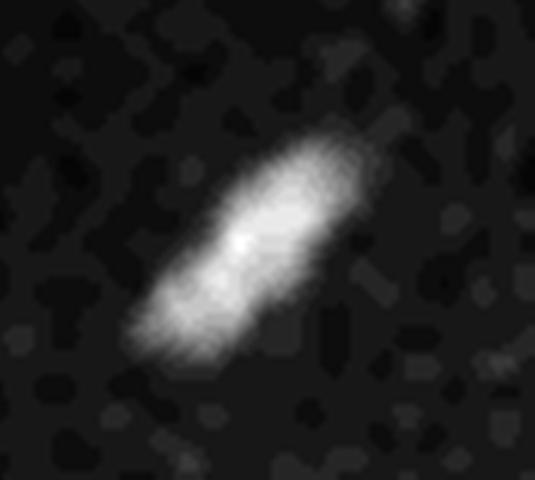




Discovery and naming
Thalassa was discovered in images returned by the Voyager 2 probe during its 1989 flyby of the Neptune system. Photographic frames taken over several days revealed several previously unseen inner moons; Thalassa received the provisional designation S/1989 N 5 and was later given the name Thalassa in 1991. Before the flyby, the faint, tightly bound inner satellites could not be resolved from Earth-based telescopes.
Physical characteristics
Observations indicate that Thalassa is a small, irregularly shaped body rather than a spherical satellite, consistent with insufficient self-gravity to relax into a round shape (non-spherical). Voyager 2's images provided limited resolution: details such as craters, ridges, or layering are not well resolved, and there is no clear evidence of recent geological activity. Its surface appears dark and relatively featureless at the available imaging scale, suggesting an old, heavily processed regolith.
Orbit and dynamical role
Thalassa orbits close to Neptune, inside the region occupied by some faint rings and among several other inner satellites. Its proximity to the planet means it is subject to strong tidal forces and likely rotates synchronously, keeping the same face towards Neptune as many small satellites do. As part of Neptune's inner satellite system, Thalassa contributes to the complex gravitational interactions that can affect ring material and the orbital evolution of neighboring moons, though detailed modeling is limited by the sparse data.
Scientific importance and limitations
Because Voyager 2 was the only spacecraft to make close observations of Neptune's inner moons, Thalassa remains poorly characterized compared with satellites of other planets. Even so, studying such small moons is important for understanding collisional histories, tidal evolution, ring–moon interactions, and the processes that shape irregular bodies in the outer Solar System. Future missions or more advanced telescopes could clarify its shape, composition, and relationship to Neptune's rings.
Notable facts
- Designation at discovery: S/1989 N 5, announced from Voyager 2 imagery.
- Name drawn from Greek myth and language: see mythology and the Greek word for sea.
- Observed as non-spherical (non-spherical) and lacking clear signs of recent geology in flyby images.
- Discovered during the Voyager 2 probe encounter, which transformed knowledge of Neptune's system.
Much about Thalassa remains an open question: its precise shape, internal structure, composition, and any role in shaping nearby ring material await better observations. For now, it stands as a small but intriguing member of Neptune's inner satellite family, linking planetary dynamics, ring science, and classical myth in a compact world only briefly glimpsed by human instruments.
Related articles
Author
AlegsaOnline.com Thalassa — inner moon of Neptune Leandro Alegsa
URL: https://en.alegsaonline.com/art/97355