
Natural satellite
A natural satellite is a body held by gravity in orbit around a larger object. Commonly called moons, they range from tiny captured rocks to large planetary companions like Earth's Moon.
Overview
A natural satellite is a celestial object that is gravitationally bound to and revolves around a larger body. In astronomy this general term covers bodies that orbit planets, dwarf planets, or even large stars and galaxies. The motion of a natural satellite along a path around its primary is commonly described as an orbit, and that motion is maintained by mutual gravitational attraction.
Image gallery
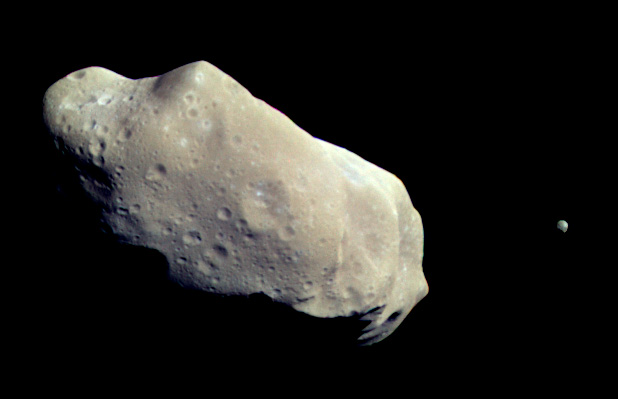
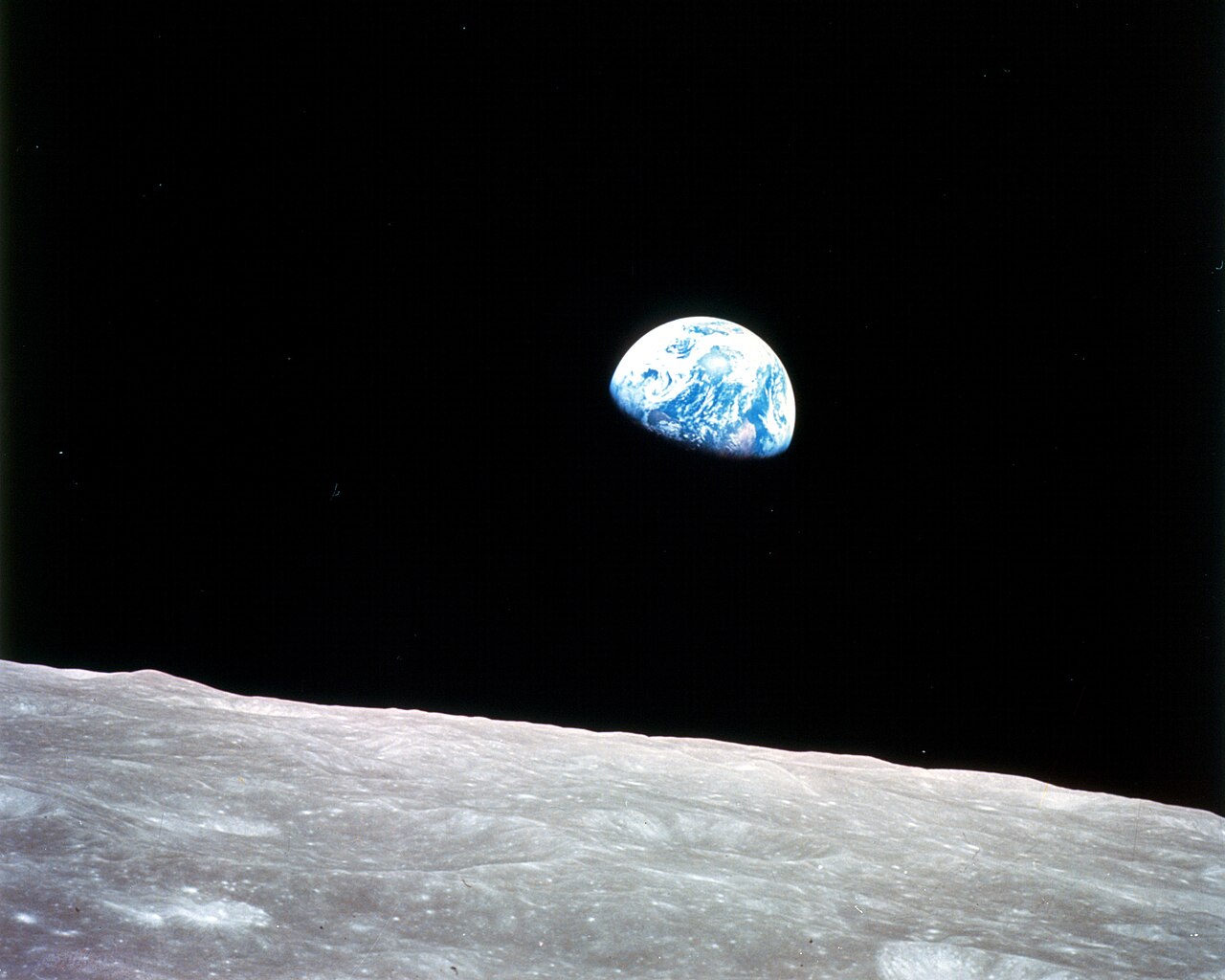
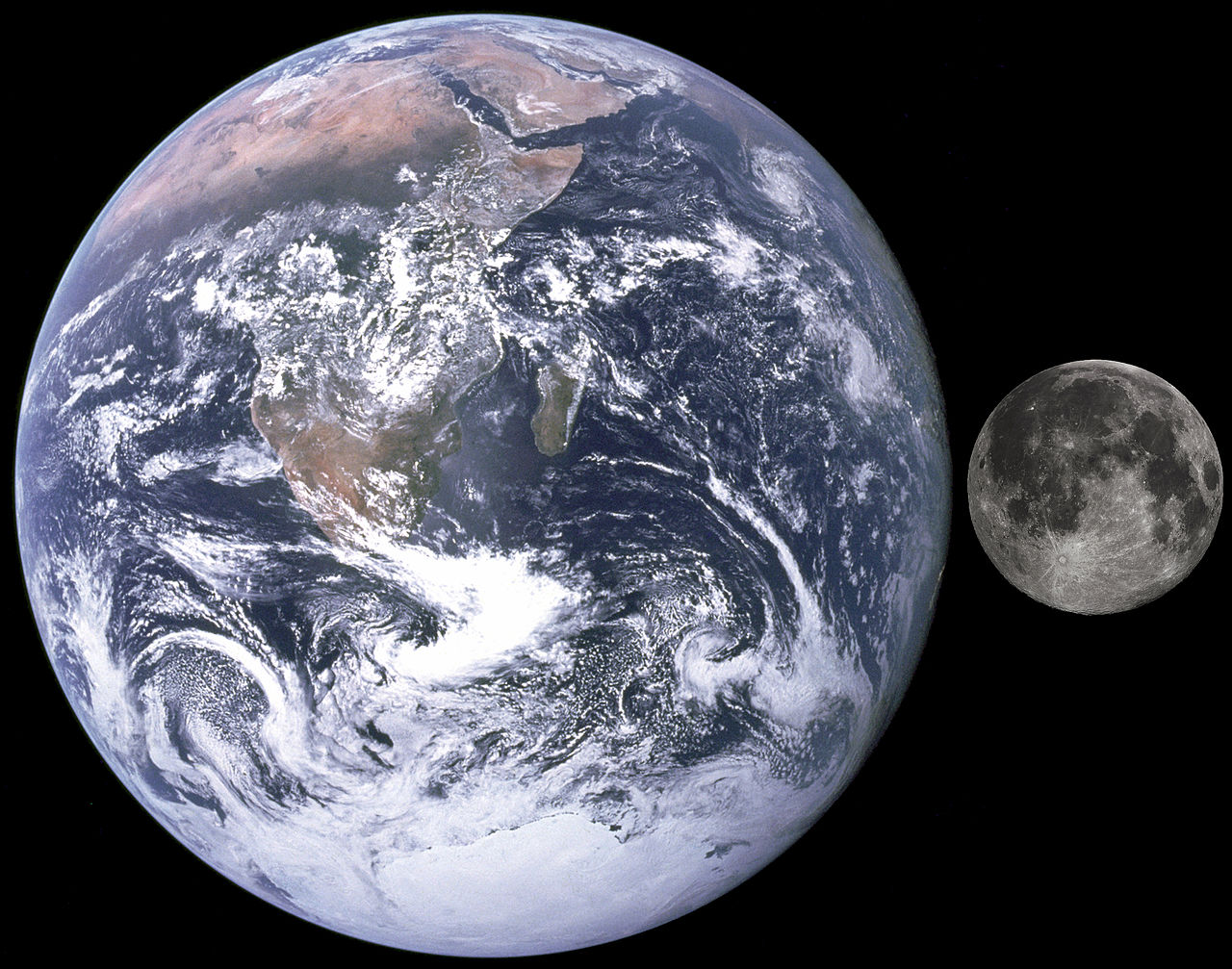
10 Images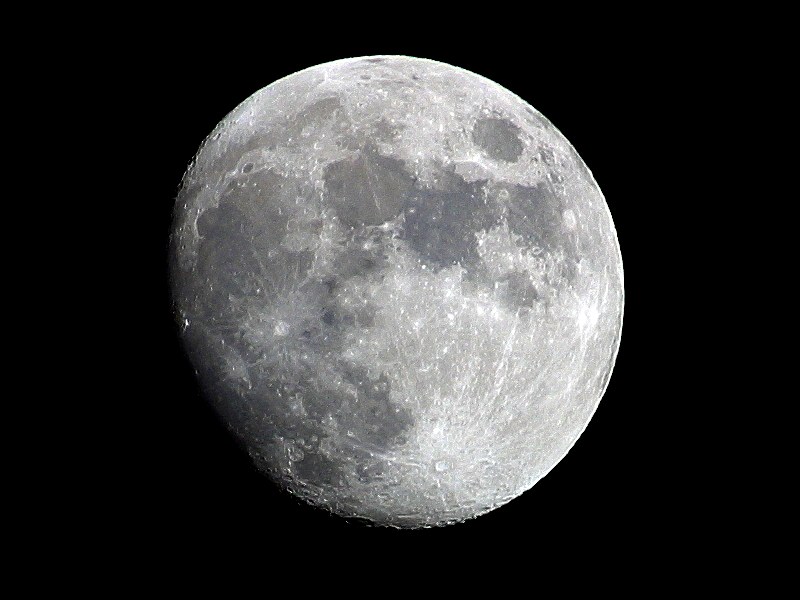






Characteristics and orbital behavior
Natural satellites vary enormously in size, composition and shape. Some are nearly spherical and geologically complex; others are small, irregularly shaped fragments. Their orbits are described by parameters such as semi-major axis, eccentricity and inclination. Many large moons are tidally locked so one face always points toward their primary, while others rotate independently. Interactions with tides, resonances and the primary's gravity can sculpt orbits over time and influence internal heating and geological activity.
How moons form
Scientists recognize several broad formation pathways for natural satellites. Common models include:
- Co-formation: a moon forms in a circumplanetary disk around a young planet during the same epoch as the planet itself.
- Giant impact: a collision between a planet and a large body ejects material that later accretes into a moon, a widely accepted explanation for Earth's Moon.
- Capture: a passing object is slowed and captured into orbit, often producing small, irregular moons.
- Fission or rotational shedding: historically proposed in older ideas, where a fast-spinning body ejects material that becomes a satellite.
Each scenario leaves different fingerprints in orbital properties, composition and relative age; in many systems multiple processes may have played a role.
Types, examples and notable systems
Moons are often classified broadly as regular (prograde, near-equatorial orbits, likely formed in place) or irregular (highly inclined or eccentric orbits, often captured). The Earth has one large natural satellite, the Moon, which dominates tides and has influenced Earth's climate and life. Some planets, such as Mercury and Venus, have no known moons. Mars has two small irregular satellites, while the giant planets host dozens of moons, including large worlds like Titan with a dense atmosphere and volcanic or cryovolcanic moons elsewhere.
Human interaction and distinction from artificial satellites
The word "satellite" can refer to either natural or human-made objects. Natural moons should be distinguished from spacecraft: people use rockets to place machines into orbit around a planet; these man-made devices are called artificial satellites. Natural satellites are not engineered and arise through astrophysical processes, while artificial satellites serve communications, navigation, observation and scientific research.
Importance, names and cultural notes
Natural satellites influence planetary environments through tides, by stabilizing axial tilt in some cases, and by acting as a record of early conditions in a planetary system. When people speak of "the Moon" without qualification they usually mean Earth's satellite; that name is often capitalized as "Moon". The Latin root lunar is commonly used in scientific and cultural contexts (for example, a lunar eclipse). The term "moon" itself is a convenient shorthand for any natural satellite, and the adjective natural highlights the contrast with human-made objects.
Questions and answers
Q: What is a natural satellite in astronomy?
A: A natural satellite in astronomy is a smaller body that moves around a larger body due to its gravitational force.
Q: What bodies are called moons?
A: Bodies which orbit planets are called moons.
Q: How many moons does the Earth have?
A: The Earth has only one moon.
Q: What is the term used for moons which go around planets?
A: The term used for moons which go around planets is natural satellite.
Q: What is the Latin word for the moon?
A: The Latin word for the moon is luna.
Q: What is the meaning of the adjective "lunar"?
A: The adjective "lunar" is used to talk about the moon, which means anything related to the moon.
Q: What are artificial satellites?
A: Machines that are sent into orbit around the earth using rockets are called artificial satellites.
Related articles
Author
AlegsaOnline.com Natural satellite Leandro Alegsa
URL: https://en.alegsaonline.com/art/68779
Sources
- sciencemag.org : "The Dust Halo of Saturn's Largest Icy Moon, Rhea -- Jones et al. 319 (5868): 1380 -- Science"
- newscientist.com : "Saturn satellite reveals first moon rings - 06 March 2008 - New Scientist"
- home.dtm.ciw.edu : "The Jupiter Satellite and Moon Page"