
Sweet roll
A small, individually sized, yeast-leavened bun made with enriched dough and sweet fillings or toppings, eaten at breakfast, as a snack, or a dessert across many cultures.
Overview
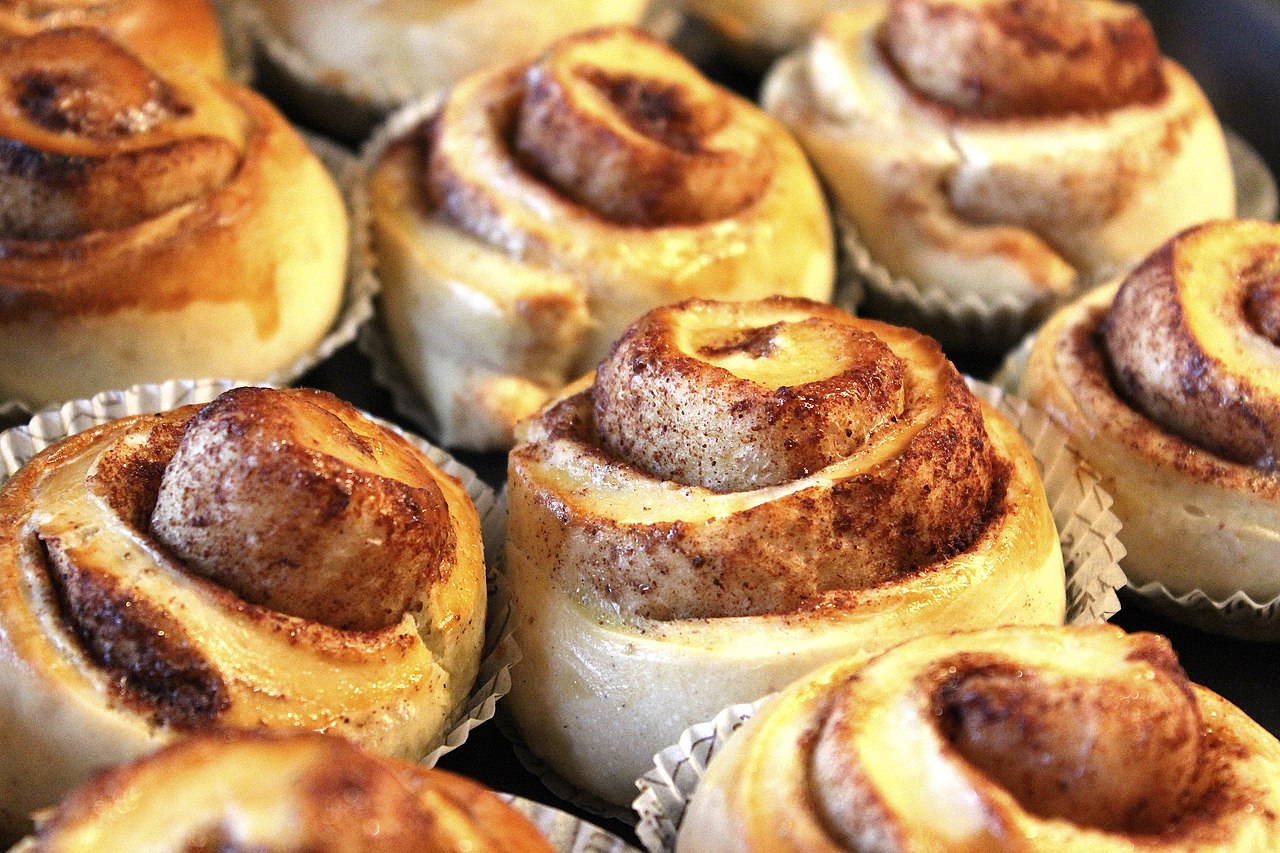
A sweet roll (also called a sweet bun) is a single-serving bread product made to be sweet. Typically produced from an enriched, yeast-leavened dough, sweet rolls are often round or spiral-shaped and designed to be eaten by one person. They are commonly served at breakfast, with coffee or tea, as a snack, or as a dessert. The category includes plain sweet buns as well as richly filled and iced varieties.
Image gallery
5 Images



Ingredients and preparation
Sweet roll dough differs from lean bread dough by containing higher proportions of sugar, fat (such as butter), and often eggs. These ingredients enrich flavor, tenderness and crust color. Yeast is usually used as the leavening agent, and the dough may be allowed an extended fermentation for flavor development. Typical inclusions are ground or whole spices like cinnamon or cardamom, nuts, dried or fresh fruit, sweet pastes, jams, or custard-style fillings; many rolls are finished with a sugar glaze, cream cheese icing, or a simple sugar syrup.
Varieties and regional forms
Many cultures have characteristic sweet rolls. Examples in English-speaking and European contexts include cinnamon rolls, sticky buns, Chelsea buns and fruit-filled spirals. Scandinavian countries have cardamom- or saffron-scented buns; other regions produce enriched buns with local ingredients and shapes. Home bakers and commercial bakeries adapt fillings, dough enrichment and finishing to local taste, resulting in a wide family of related products.
History and culinary context
Enriched, sweetened breads emerged as bakers adapted basic bread recipes to include more sugar, fat and eggs, and to use preserved fruits and spices acquired through trade. The rise of coffeehouse culture and mass baking technologies increased the availability and variety of sweet rolls in shops and supermarkets. While similar to some pastries, sweet rolls are distinguished by their yeast-leavened, bread-like dough rather than laminated pastry dough or cake batters.
Consumption, storage and commercial production
Sweet rolls may be eaten fresh from the oven or at room temperature. They are sold in bakeries, cafes and grocery stores, and are also produced commercially in frozen or ready-to-bake forms. Storage recommendations depend on fillings: plain enriched rolls keep a day or two at room temperature in airtight containers, while those with cream fillings require refrigeration.
Distinctions and related topics
Sweet rolls differ from pastries, which typically use laminated or high-fat paste doughs, and from cakes, which are often not yeast-leavened. They are distinct from doughnuts, which are normally deep-fried rather than baked. Many items overlap at culinary borders, so classification sometimes depends on local naming conventions and preparation methods.
Related links
Related articles
Author
AlegsaOnline.com Sweet roll Leandro Alegsa
URL: https://en.alegsaonline.com/art/95497
Sources
- dictionary.reference.com : "Sweet roll"
- scholar.google.com : Bakery Processes, Yeast-Raised Products
- dx.doi.org : dx.doi.org/10.1002/0471238961.2505011916151420.a01.pub2
- oald8.oxfordlearnersdictionaries.com : "bun"
- dictionary.cambridge.org : "roll noun (BREAD)"
- reference.com : "Pastry"
- merriam-webster.com : "Cake"
- dictionary.reference.com : "Doughnut"