
SWAT team: roles, equipment, history, and tactical operations
Overview of SWAT teams: specialized police units trained for high-risk operations, their equipment, missions, organization, history, and public-policy considerations.
A SWAT team is a specially organized and trained unit within a law enforcement agency that responds to incidents beyond the scope of regular patrol officers. The term SWAT stands for Special Weapons And Tactics, and teams are typically composed of police officers who receive additional training in high‑risk entry, marksmanship, negotiation, and tactical medicine. These officers are not ordinary police officers; they operate with specialized skills, equipment, and procedures intended to resolve volatile situations while minimizing harm to civilians and responders.
Image gallery
10 Images
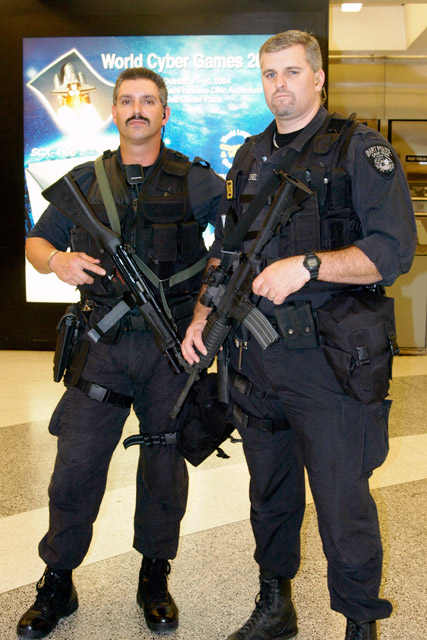


Characteristics and common equipment
SWAT units are distinguished by their use of enhanced protective gear, communication systems, and weapons suited for specific tactical roles. Typical items include long guns such as designated marksman rifles or sniper rifles, close‑quarters weapons like shotguns, and automatic or semi‑automatic platforms sometimes referred to generally as machine guns for certain support roles. Armored vehicles, ballistic helmets, plate carriers, and tactical shields provide protection during entries, while non‑lethal tools (tasers, beanbag rounds, and chemical agents) are employed when appropriate.
Beyond weaponry, SWAT teams make regular use of specialized mission support equipment: night‑vision and thermal optics for low‑light operations, rope systems and rappelling gear for vertical entry, small inspection cameras and robotic devices to investigate confined spaces, and distraction devices such as flashbang and smoke grenades. Tactical shields like the ballistic shield are frequently part of breaching and protection protocols. Teams also integrate negotiators and medics to provide on‑scene crisis communication and immediate casualty care.
Roles, responsibilities and typical missions
SWAT units are mobilized when incidents pose significant risk to public safety or when conventional policing tactics are unlikely to succeed. Common missions include:
- Resolving hostage and barricade situations and conducting precision rescues (hostage operations)
- Arresting armed or barricaded suspects and serving high‑risk warrants
- Responding to violent felony incidents such as bank robberies or armed standoffs (robbery contexts)
- Counterterrorism and active shooter intervention
- Protection of visiting dignitaries and critical infrastructure
- High‑risk search and seizure operations, including drug interdiction raids (illegal drug enforcement)
Within a team, members often specialize: tactical operators execute entries, designated marksmen cover approaches, negotiators attempt peaceful resolution, medics treat casualties, and support personnel handle communications and vehicle operations. Coordination with patrol, detectives, and command staff is essential to maintain legal oversight and scene safety.
Origins and development
SWAT-style tactical units emerged in the mid‑20th century in response to a rise in incidents that exceeded traditional policing methods—examples include heavily armed fugitives, complex hostage crises, and politically motivated violence. One of the earliest formalized units was created by a large municipal police department in the United States, after which many agencies adapted the concept to local needs. Over time, doctrine evolved to emphasize planning, intelligence gathering, medical support, negotiation, and the graduated use of force.
Training, organization, and legal context
Members undergo rigorous and ongoing training in marksmanship, close quarters battle (CQB), breaching techniques, tactical movement, crisis negotiation, and casualty care. Training standards and deployment protocols vary by jurisdiction and are governed by law, departmental policy, and oversight mechanisms intended to ensure use of force is lawful and proportionate. Smaller departments may have regional teams or access mutual aid, while larger agencies maintain full‑time tactical squads.
Controversies, oversight, and public policy
SWAT operations can generate public debate over militarization of police, proportionality of force, and civil liberties. Critics point to incidents in which dynamic entries led to unintended harm, while supporters argue that properly trained tactical teams reduce casualties and improve outcomes in the most dangerous scenarios. Many agencies have responded with clearer deployment criteria, transparency measures, body camera use, and community engagement to balance tactical capability with accountability.
Notable distinctions and international variants
Although the SWAT model originated in the United States, many countries have similar specialized police units adapted to local legal regimes and threats. Some units focus primarily on counterterrorism, others on riot control or rural tracking. Terminology and organizational placement differ—some are part of national police forces, others are regional or municipal. Regardless of name or structure, these units share the objective of managing situations that exceed normal policing resources while aiming to preserve life and uphold the rule of law.
For further reading on tactical doctrine, equipment standards, and case studies, consult official agency publications, academic analyses, and reviews by independent oversight bodies. Example resources include departmental manuals and subject matter reviews available through public safety channels and legal commentaries (law enforcement overviews and training repositories).
Related articles
Author
AlegsaOnline.com SWAT team: roles, equipment, history, and tactical operations Leandro Alegsa
URL: https://en.alegsaonline.com/art/95440