
Tea Act of 1773
An 18th-century British law that altered tea trade rules to aid the East India Company; it reduced costs of company tea, provoked colonial protests and helped trigger the American Revolution.
The Tea Act of 1773 was legislation passed by the British Parliament intended to assist the financially troubled British East India Company by changing the commercial rules for tea exported from Britain to its North American colonies. Although the Act lowered the price of legally imported East India Company tea by removing certain costs and allowing direct shipment to the colonies, it preserved the existing duty imposed under earlier measures. The measure therefore combined commercial relief for a major corporation with a political assertion of Parliament's right to levy taxes on the colonies.
Image gallery
3 Images

Key provisions and effects
Rather than creating a new tax, the Act adjusted trade arrangements so that tea held by the company in Britain could be exported duty-free and shipped directly to colonial ports. It reduced the layers of middlemen and aimed to make company tea cheaper than smuggled tea. The legislation gave the company privileges that bypassed traditional merchants and allowed consignees in America to sell at auction. Supporters argued it would lower retail prices and preserve employment tied to tea trade; critics viewed it as a de facto monopoly and a tool to force acceptance of parliamentary taxation.
Background and legislative context
The measure came against a backdrop of chronic smuggling of cheaper foreign teas into the colonies and growing colonial resistance to British fiscal policy after the Stamp Act and the Townshend duties. The Act is often framed alongside the earlier Townshend Acts; it left the small Townshend duty on tea in place to demonstrate that Parliament still claimed revenue authority. It was enacted by the Parliament of Great Britain and intended to rescue the East India Company from a large surplus of tea stored in London.
Colonial reaction and consequences
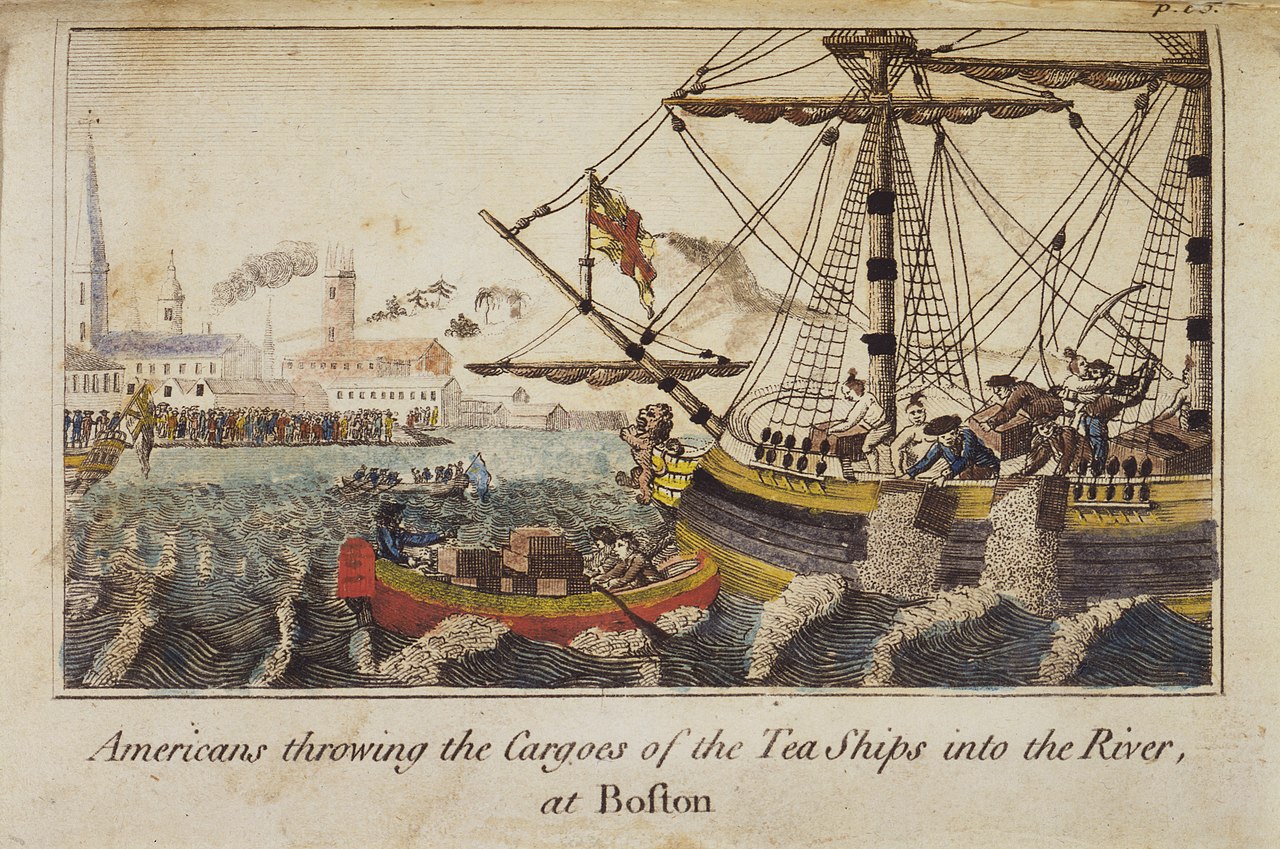
Colonial merchants, non-importation associations, and many consumers resisted the policy on political and economic grounds. In several ports consignments were refused or sent back; in Boston, direct action escalated to the infamous Boston Tea Party on December 16, 1773, when protesters destroyed a shipment of company tea rather than allow it to be landed. The measure therefore intensified disputes over "taxation without representation" and led to punitive responses from Britain, which further radicalized colonial opinion.
Significance and distinctions
The Tea Act is significant less as a fiscal change than as a catalyst in the relationship between Britain and its American colonies. It illustrates how commercial policy and constitutional questions about parliamentary authority and colonial rights became entangled. While it lowered legal tea prices, the Act is remembered mainly for provoking resistance to perceived imperial overreach and helping set the stage for the wider conflict that became the American Revolution. For more detailed legislative text and analyses, see sources discussing the Townshend duties and parliamentary debates of the period, including commentary on the Townshend duties.
- Legislation date: received royal assent May 10, 1773.
- Immediate outcome: colonial boycotts and the Boston Tea Party.
- Long-term impact: part of the chain of events leading to open rebellion.
Scholars continue to examine the Tea Act as a crossroads of economics, law and political symbolism: a commercial remedy that had unintended constitutional consequences.
Related articles
Author
AlegsaOnline.com Tea Act of 1773 Leandro Alegsa
URL: https://en.alegsaonline.com/art/96626