
Taxing and Spending Clause (Article I, Section 8, Clause 1)
Overview of the Taxing and Spending Clause of the U.S. Constitution: text, components, historical debates, judicial development, limits, and examples of its modern application.
Overview
The Taxing and Spending Clause appears in Article I, Section 8, Clause 1 of the U.S. Constitution and gives Congress the authority to "lay and collect Taxes, Duties, Imposts and Excises" in order to pay the debts of the nation and to provide for the common defense and general welfare. This clause is the constitutional source of the federal government’s power to raise revenue and to use federal funds for programs and policies administered at the national level. It is often discussed together with the related power of taxation and the requirement of geographic uniformity in taxation.
Image gallery
1 Image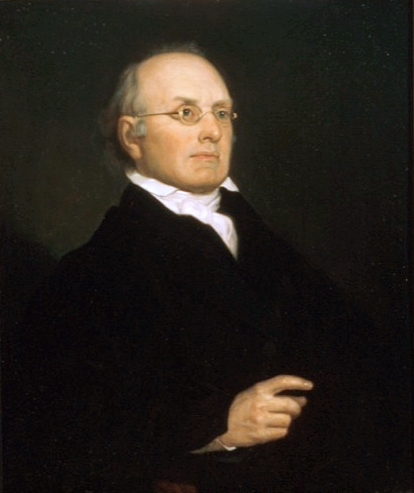
Structure and principal elements
The phrase contains two closely linked ideas: the authority to impose taxes and the authority to spend collected funds. Commentators and courts describe two embedded concepts by name: the General Welfare Clause, which frames spending for national objectives, and the Uniformity Clause, which requires that taxes be uniform across the several states. How broad each element is has been an enduring question.
Historical debates and judicial development
Early political figures debated whether the General Welfare language gave Congress a freestanding power to pursue any public purpose or whether it merely qualified the taxing power. Alexander Hamilton tended to favor a broad reading, while James Madison urged restraint. The Supreme Court has since weighed in through major decisions. For example, McCulloch v. Maryland (1819) affirmed broad federal authority in connection with national functions, and later cases such as United States v. Butler and decisions addressing conditional grants refined limits on how spending may be used.
Key features and limits
- Purpose: Taxes must be raised to pay debts and promote common defense and general welfare, but Congress’ practical spending choices are expansive.
- Uniformity: Federal indirect taxes must be uniform across states, a geographic—not a proportional—requirement.
- Conditional spending: Congress may attach conditions to federal funds given to states, but conditions cannot be unconstitutionally coercive.
Modern examples and significance
In practice, the clause underpins federal income and excise taxes, federal grant programs, and many regulatory programs that rely on funding. The Court’s modern rulings distinguish permissible inducements to state action (upholding certain federal grant conditions) from impermissible coercion (striking down conditioning that effectively commandeers state governments). These decisions shape federalism, budget policy, and the scope of national programs.
Notable cases and further reading
- Foundational interpretations—cases that established the principle of national fiscal authority.
- Limits and coercion—cases that test how far Congress may condition funds.
- Uniformity issues—analysis of geographic uniformity requirements for taxation.
The Taxing and Spending Clause remains central to constitutional law because it allocates essential tools—money and policy—between the national government and the states. Its interpretation evolves as courts, Congress, and political actors negotiate the boundaries between federal capacity to act and protections for state sovereignty.
Questions and answers
Q: What is the Taxing and Spending Clause and where is it located in the US Constitution?
A: The Taxing and Spending Clause grants the federal government of the United States its power of taxation and is located in Article I, Section 8, Clause 1 of the US Constitution.
Q: For what purposes can Congress levy taxes according to the Taxing and Spending Clause?
A: Congress can levy taxes to pay the debts of the United States and to provide for the common defense and general welfare of the United States.
Q: Are there any additional clauses contained in the Taxing and Spending Clause?
A: Yes, there are two additional clauses contained in the Taxing and Spending Clause: the General Welfare Clause and the Uniformity Clause.
Q: What does the General Welfare Clause refer to?
A: The General Welfare Clause is one of the additional clauses contained in the Taxing and Spending Clause and authorizes Congress to provide for the general welfare of the United States.
Q: What does the Uniformity Clause refer to?
A: The Uniformity Clause is another additional clause contained in the Taxing and Spending Clause and requires that all taxes imposed by Congress are done so in a uniform manner across all states.
Q: How does the Taxing and Spending Clause grant power to the federal government of the United States?
A: The Taxing and Spending Clause grants power to the federal government of the United States by authorizing Congress to levy taxes for the purposes of paying the debts of the United States and providing for the common defense and general welfare of the United States.
Q: Can Congress levy taxes for any other purposes besides paying debts and providing for the general welfare of the United States?
A: No, according to the Taxing and Spending Clause, Congress can only levy taxes for the purposes of paying the debts of the United States and providing for the common defense and general welfare of the United States.
Related articles
Author
AlegsaOnline.com Taxing and Spending Clause (Article I, Section 8, Clause 1) Leandro Alegsa
URL: https://en.alegsaonline.com/art/96584
Sources
- constitution.laws.com : "Understanding Tax and Spend Law"
- grammarphobia.com : "Was the Founders' English less than perfect?"
- senate.gov : "Constitution of the United States"
- digitalhistory.uh.edu : "Articles of Confederation"
- law.cornell.edu : "Power to Tax and Spend"
- law.utexas.edu : "Apportionment of Direct Taxes: The Foul-Up in the Core of The Constitution"
- law.cornell.edu : "Spending for the General Welfare"
- oll.libertyfund.org : "Jefferson on Taxes and the General Welfare (1791)"
- heritage.org : "Uniformity Clause"