
Machine gun: overview, types, history and uses
A machine gun is an automatic firearm capable of sustained fire. This article explains how they work, main components, classifications, historical development, military and civilian roles, and notable distinctions.
Overview
A machine gun is an automatic firearm designed to fire multiple rounds in rapid succession as long as the trigger is depressed and ammunition is available. It is one class of automatic weapon, distinguished by its ability to deliver sustained, controlled bursts or continuous fire. Machine guns are used to provide suppressive fire, defend fixed positions, or increase firepower on vehicles and aircraft.
Image gallery
10 Images






Design and main components
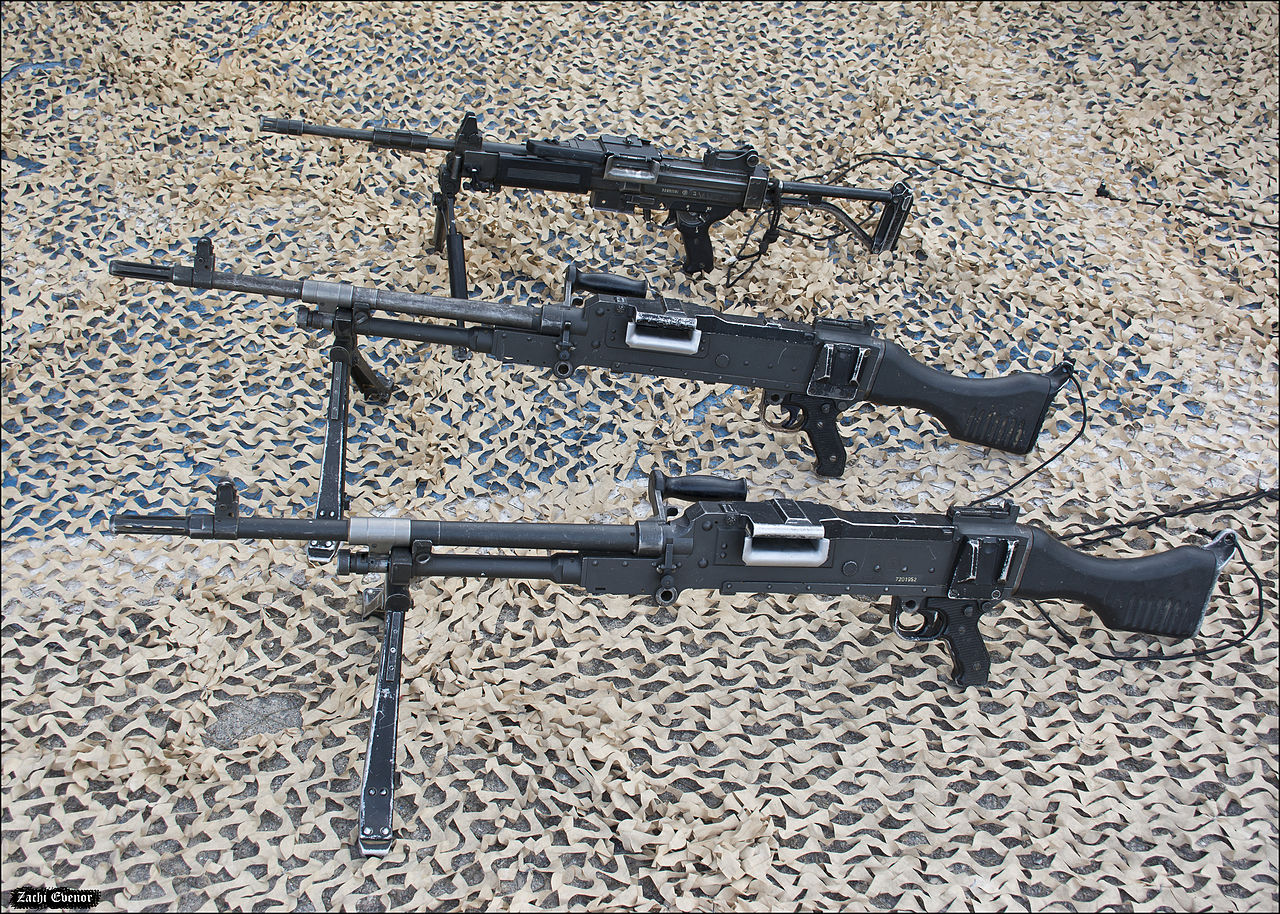
Most machine guns share several core features: a receiver and barrel assembly, a mechanism that extracts and ejects spent cartridges, and a feeding system that supplies live rounds. Ammunition may be supplied by flexible belts of cartridges or by detachable magazines. Cooling systems vary: some weapons rely on air-cooled barrels and quick-change barrel designs, while earlier models used water jackets. Mounting hardware such as bipods, tripods, vehicle pintles, or turrets allows heavier designs to be stabilized for accurate sustained fire.
Classification and common types
Military doctrine separates automatic weapons into several practical categories based on role, weight and ammunition type. Light machine guns (LMGs) are intended to be operated by a single soldier and often feature bipods and relatively lighter barrels. Heavy machine guns (HMGs) are larger, fire heavier cartridges and are typically crew-served or vehicle-mounted. Submachine guns (SMGs) fire pistol-caliber cartridges, are compact and suited for close quarters, while general-purpose machine guns (GPMGs) can serve in both light and sustained roles depending on mounting. Assault rifles have selective automatic fire but are usually classified separately because they fire intermediate cartridges and are intended as individual service rifles rather than sustained-fire support weapons.
Historical development
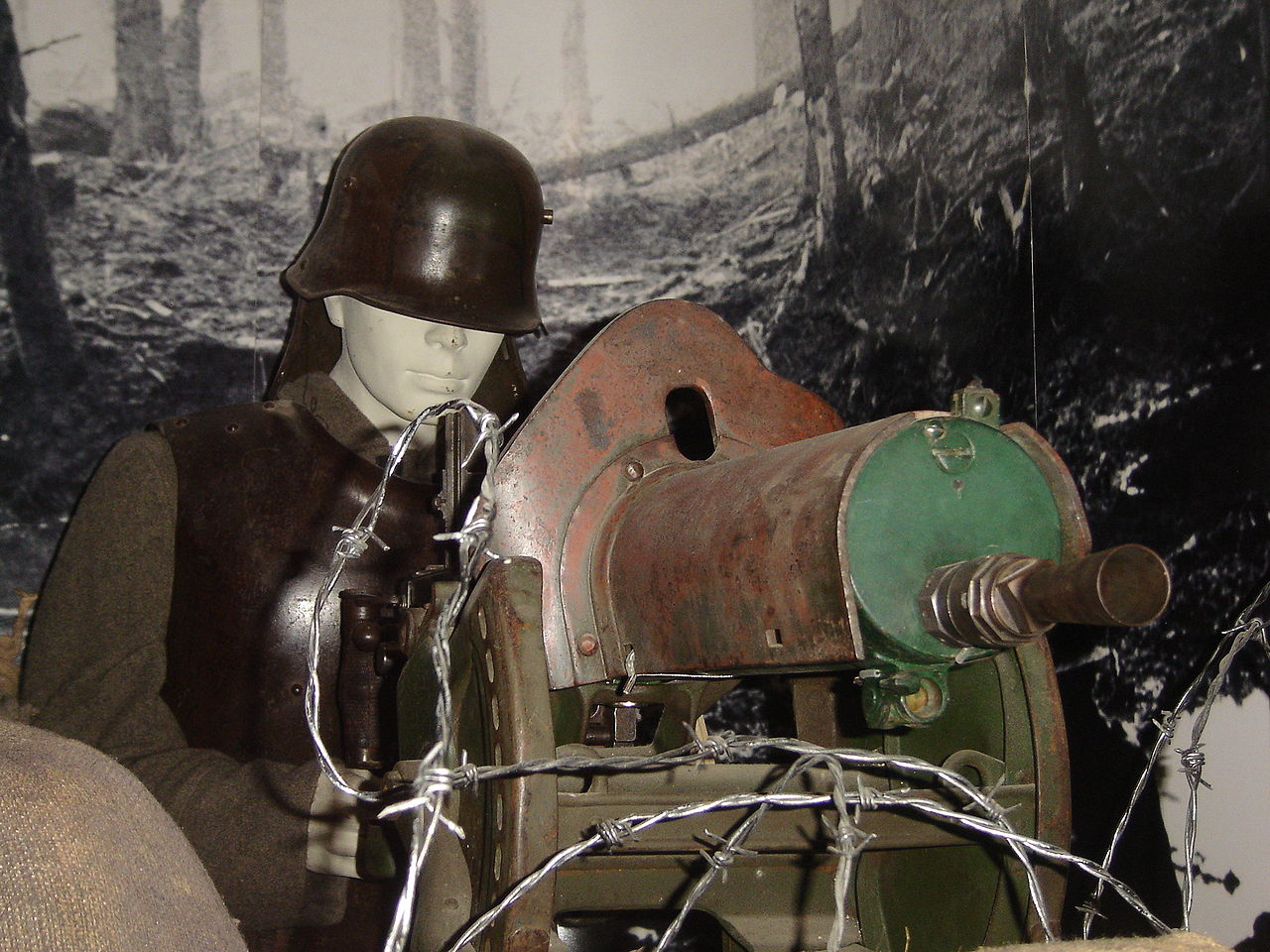
The machine gun emerged in the late 19th century with designs that automated loading and extraction, dramatically increasing rates of fire compared with single-shot rifles. Early successful designs led to profound changes in tactics, doctrine and the scale of defensive firepower during conflicts in the early 20th century. Through two world wars and numerous later conflicts, machine gun technology advanced in materials, feeding systems and mounting options. Iconic designs from different eras—crew-served heavy guns, belt-fed general-purpose types, and compact submachine guns—illustrate how engineers adapted automatic firepower to different battlefield needs.
Uses, importance and limitations
Machine guns serve multiple roles: providing sustained suppressive fire to shape enemy movement, defending key positions, arming vehicles, and supporting infantry maneuvers. Mounted on vehicles and aircraft they extend reach and lethality. Limitations include weight, ammunition consumption, barrel heating, and the need for crew or mounts in heavier types. Rules of engagement, civilian firearm laws and safety considerations also shape how these weapons are deployed in law enforcement and military contexts.
Notable distinctions and facts
Not all automatic weapons are labeled as machine guns in doctrine or law; the term commonly refers to weapons optimized for sustained automatic fire. Caliber ranges vary from pistol-sized rounds in submachine guns to large, heavy rounds in vehicle-mounted heavy machine guns. Many historical examples remain well known for their influence on tactics and design evolution. Training, logistics and doctrine are as important as the weapon itself for effective use.
References and further reading
- Source 1
- Source 2
- Source 3
- Source 4
- Source 5
- Source 6
- Source 7
- Source 8
- Source 9
- Source 10
- Source 11
- Source 12
- Source 13
- Source 14
- Source 15
- Source 16
- Source 17
- Source 18
- Source 19
- Source 20
- Source 21
- Source 22
- Source 23
- Source 24
- Source 25
- Source 26
- Source 27
- Source 28
- Source 29
- Source 30
- Source 31
- Source 32
Questions and answers
Q: What is a machine gun?
A: A machine gun is a type of weapon that can fire one bullet after another as long as the trigger is pulled and there are bullets ready to fire. This is called automatic fire, and it is also known as an automatic weapon.
Q: How do machine guns deliver bullets?
A: Machine guns typically deliver bullets from a long chain of cartridges called an ammunition ('ammo') belt, or from spring-loaded boxes called magazines.
Q: What are the different types of machine guns?
A: The three main types of machine guns are heavy-duty machine guns (HMG), light machine guns (LMG), and sub-machine guns (SMG).
Q: How are heavy-duty machine guns used?
A: Heavy-duty machine guns are usually placed on the ground, supported on a tripod, or mounted on a vehicle with a support for the gun with a rotating base or turret. They often require two people to operate them - one to assist with loading ammunition and one to aim and fire. It always takes two or more people to carry one.
Q: How are light machine guns used?
A: Light machine guns can usually be carried and fired by one person, but they must often be rested on a bipod or tripod while firing since they're too heavy to hold up while standing without assistance.
Q: How do submachine guns differ from other types of machine gun?
A: Submachine Guns (SMGs) generally use less powerful bullets than other types of machines such as HMGs and LMGs, making them easier to conceal and carry around. They also have handles (stocks) which makes them easy for individual soldiers or police officers to carry around.
Q: What is the difference between an assault rifle and a machine gun?
A: Assault rifles have automatic capabilities but they aren't considered true "machine"guns because they mainly use semi-automatic fire rather than fully automatic fire like most traditional "machine"guns do, plus they typically use lighter bullets than what you'd find in most "machine"guns such as HMGs and LMGs.
Related articles
Author
AlegsaOnline.com Machine gun: overview, types, history and uses Leandro Alegsa
URL: https://en.alegsaonline.com/art/60339