
Illegal drugs: definition, categories, history, and impacts
A concise encyclopedia entry on illegal drugs covering definitions, common categories, legal history, health and social effects, distinctions from legal medicines, and approaches to harm reduction.
Illegal drugs are substances whose possession, manufacture, distribution, or sale is prohibited or tightly restricted by a government or international agreements. Whether a particular substance is illegal depends on laws in a specific country or region; the same substance can be legal, controlled, or forbidden in different jurisdictions. In broad terms, a drug is any substance that, when introduced into the body, alters physiological or psychological functions. Many drugs are also chemical compounds that interact with cells and neurotransmitter systems.
Image gallery
10 Images




Characteristics and common categories
Illicit drugs vary in origin, effect, and risk. They are often grouped by how they affect the nervous system:
- Stimulants — increase alertness and energy.
- Depressants — slow brain activity and can produce relaxation or drowsiness.
- Opioids — relieve pain but carry high risk of dependence.
- Hallucinogens — alter perception, mood, and thought.
- Synthetic and designer compounds — chemically manufactured to mimic or modify effects.
Examples commonly discussed in public health and legal contexts include substances that are often controlled or prohibited, though legal status varies: certain forms of cannabis, cocaine, heroin, methamphetamine, and various synthetic drugs. Risks include dependence, overdose, infectious disease when injecting, and acute or chronic mental and physical health harms.
History and regulation
Laws restricting particular substances have existed in many societies for centuries, and modern drug control has been shaped by national legislation and international agreements. Over time, regulation has included scheduling systems that classify drugs by perceived medical value and potential for harm. Policy approaches range from strict prohibition and criminal enforcement to decriminalization, regulated markets, and public-health–oriented strategies.
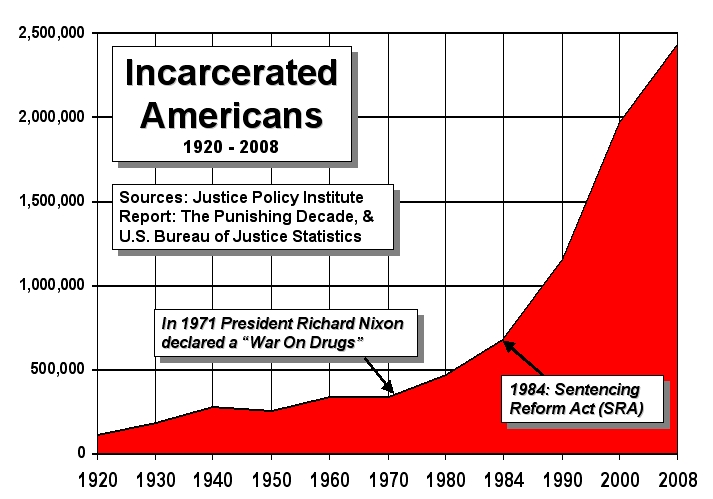
Debate continues about the effects of criminalization, with concerns about incarceration, organized crime, and unequal enforcement. Public-health responses emphasize prevention, evidence-based treatment for dependence, access to medical care, and harm reduction measures such as needle exchange and overdose reversal medications.
Distinctions and notable points
Important distinctions include the difference between illicit drugs and legally regulated substances (such as alcohol, tobacco, and prescription medicines), and between possession for personal use versus trafficking or distribution. Understanding illegal drugs involves law, medicine, sociology, and ethics; responses combine legal regulation, healthcare services, and social policy to reduce harm and support affected individuals and communities.
Questions and answers
Q: What are illegal drugs?
A: Illegal drugs are drugs which a person is not allowed to own or use.
Q: How do illegal drugs affect the human body and mind?
A: Illegal drugs can affect the human body and mind when taken in any way.
Q: What is a drug?
A: A drug is any chemical that affects the human body or mind when taken in any way.
Q: Are all chemicals considered drugs?
A: No, not all chemicals are considered drugs. Only those that affect the human body or mind when taken in any way are considered to be drugs.
Q: Is it legal to own and use illegal drugs?
A: No, it is not legal to own or use illegal drugs.
Q: Are there consequences for using illegal drugs?
A: Yes, there can be serious consequences for using illegal drugs, including fines, jail time, and other penalties depending on the severity of the offense.
Q: Can prescription medications also be classified as illegal drugs?
A: Yes, certain prescription medications can also be classified as illegal Drugs if they are used without a valid prescription from a doctor or if they are used for non-medical purposes.
Related articles
Author
AlegsaOnline.com Illegal drugs: definition, categories, history, and impacts Leandro Alegsa
URL: https://en.alegsaonline.com/art/46716