
Smoke grenade
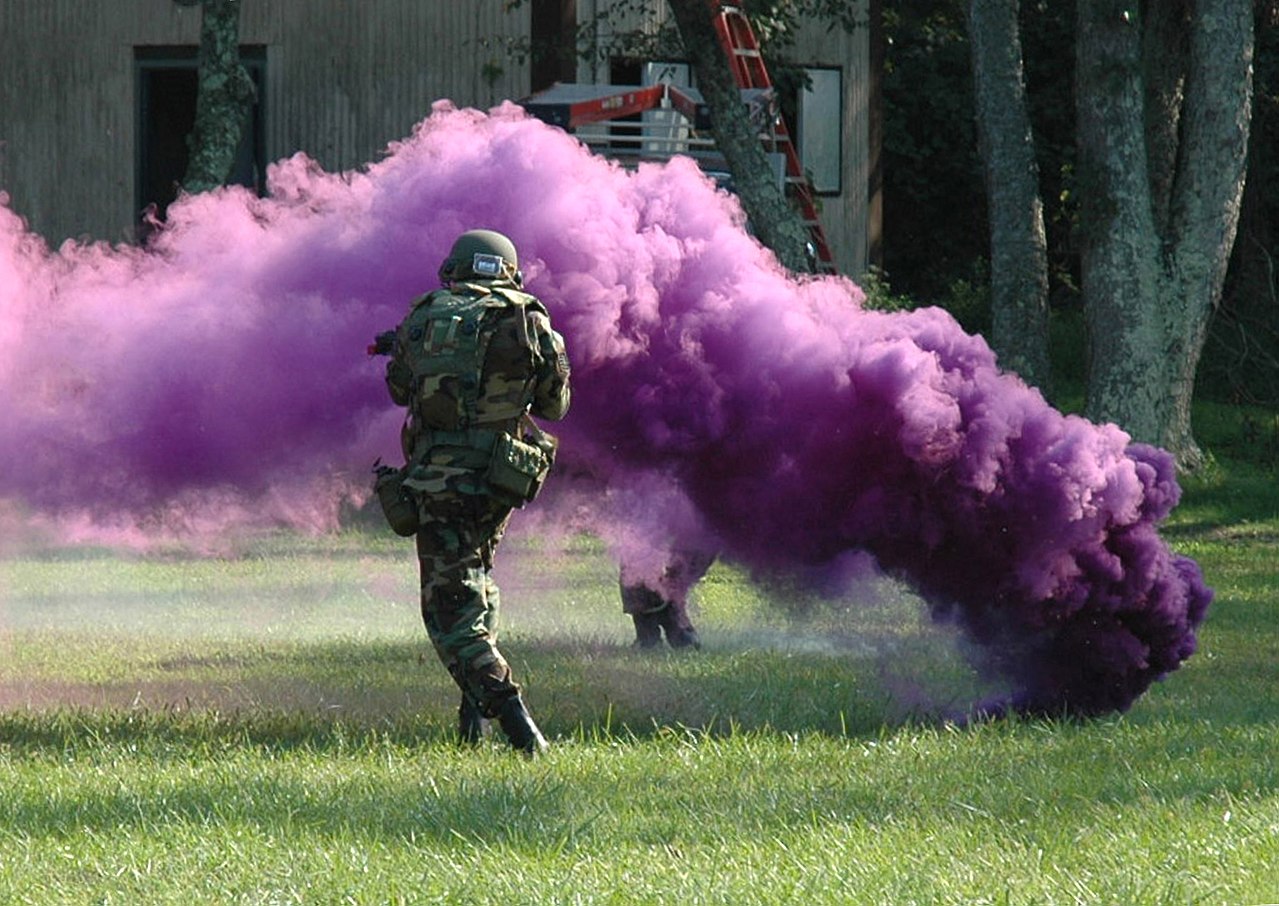
A smoke grenade is a pyrotechnic device that emits dense smoke for concealment, signaling, training, or entertainment. It is used by militaries, emergency services, and civilians under regulation and safety limits.
Overview
A smoke grenade (often called a smoke bomb) is a handheld pyrotechnic device designed to generate a large, relatively dense cloud of smoke for a short period. Unlike explosive ordnance, its primary effect is visual—obscuring, signaling, or marking—rather than causing fragmentation or blast damage. Modern smoke grenades come in several types, including white or colored smoke and long-duration screening rounds used by armed forces.
Image gallery
5 Images


Design and components
Typical components of a factory-made smoke grenade include a rigid outer body or canister, an internal combustible or pyrotechnic filler that produces smoke when burned, and an ignition or fuse assembly to start the reaction. The casing contains and directs the smoke plume while providing a degree of safety and handling convenience. Manufacturers vary the formulation to change color, persistence, and density; some designs emphasize low toxicity for training and public events.
History and development
Smoke as a tactical tool predates modern grenades; armies and mariners have used smoke and embers for concealment and signaling for centuries. The systematic military use of smoke devices expanded in the 19th and 20th centuries with the development of chemical and pyrotechnic technology. In major 20th-century conflicts, smoke screens and grenades became standard for obscuring movements, concealing retreats, and marking landing zones. Since then, civilian and commercial variants have been developed for photography, film, and recreational signaling.
Primary uses and examples
Smoke grenades serve several roles across military, emergency, and civilian contexts:
- Concealment: creating temporary visual cover for troops, vehicles, or equipment during maneuvers. Armies commonly integrate smoke into tactical planning and training (military tactics).
- Signaling and marking: colored smoke is used to indicate landing zones, extraction points, or ground references; teams often deploy smoke to guide aircraft or rescuers (helicopter landing).
- Training and simulation: non-toxic smoke produces realistic conditions for firefighting, emergency response, and military exercises.
- Public events and media: colored smoke is popular in photography, film production, sporting celebrations, and demonstrations of visual effects.
- Law enforcement and crowd management: authorities may use smoke devices to obscure vision or mark areas, though devices intended to deliver irritant agents are distinct from plain-smoke grenades and are regulated differently (soldier and responder safety).
Safety, legal and environmental considerations
Smoke grenades produce fine particulates and combustion products that can irritate the eyes and respiratory system; some formulations emit chemicals considered hazardous in confined spaces. They can also present fire risks if used near flammable material. Many jurisdictions restrict sale, possession, and use of pyrotechnic smoke devices or require permits for public displays. Users should follow manufacturer guidance, local laws, and accepted safety practices to limit harm to people, property, and the environment.
Distinctions and notable facts
Smoke grenades differ from tear gas or incendiary devices in purpose and composition: pure smoke devices aim to obscure or signal without an irritant agent, whereas crowd-control grenades often combine smoke with chemical irritants. Duration, color, and smoke density vary widely between products: quick-burn units offer an intense burst of smoke for a short interval, while screening rounds may produce sustained output for longer tactical use. For non-professional applications, commercially available colored smoke grenades are popular for controlled outdoor photography shoots and celebrations but still require caution.
Related articles
Author
AlegsaOnline.com Smoke grenade Leandro Alegsa
URL: https://en.alegsaonline.com/art/91253