
Battle of Hampton Roads (March 8–9, 1862)
A decisive naval encounter of the American Civil War, fought at Hampton Roads, Virginia, notable as the first meeting of ironclad warships and for its lasting impact on naval design.
Overview
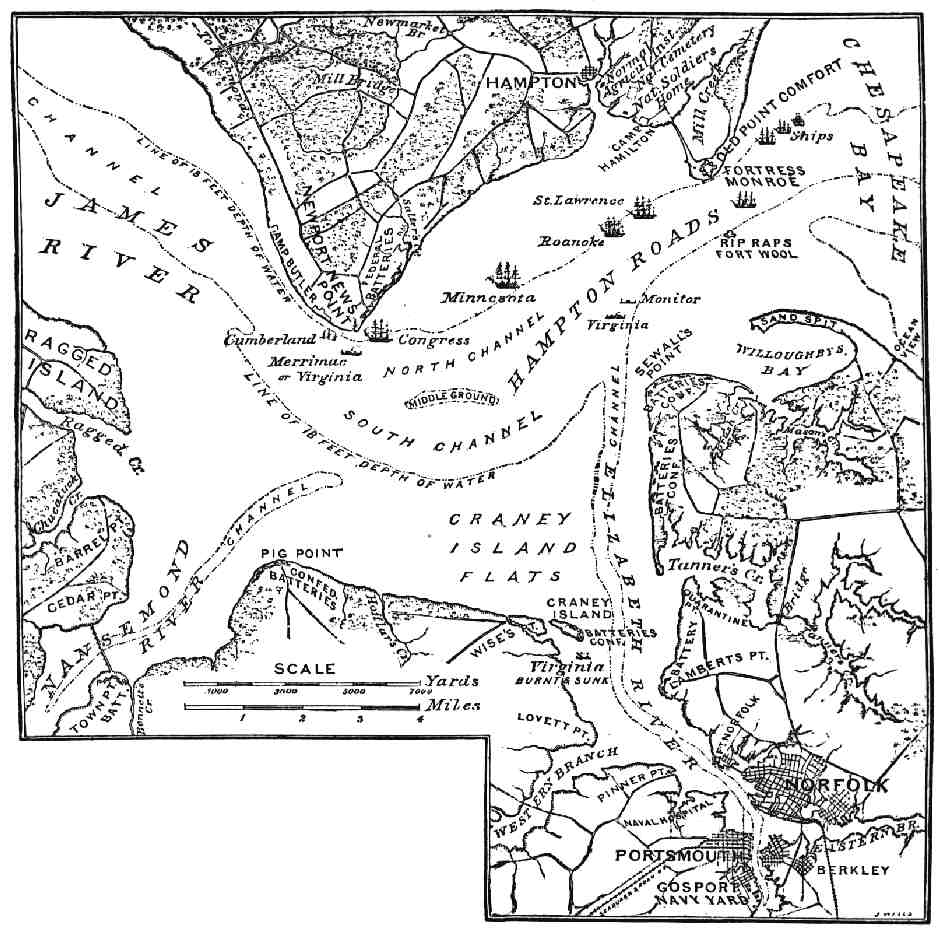
The Battle of Hampton Roads was a two-day naval engagement during the American Civil War fought on March 8–9, 1862, in the tidal waterways known as Hampton Roads near Virginia. It is most famous for staging the first sustained clash between purpose-built iron-armored warships—an encounter that demonstrated the obsolescence of wooden ships in modern naval warfare and signaled a rapid worldwide shift toward armored fleets.
Image gallery
10 Images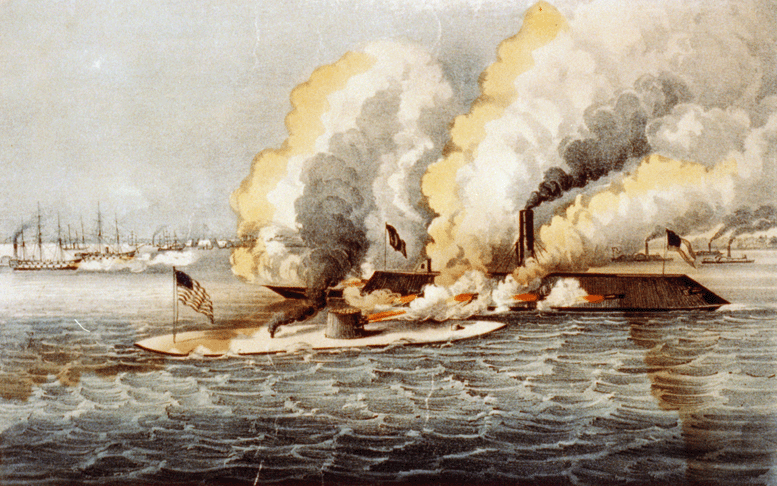




Ships and technology
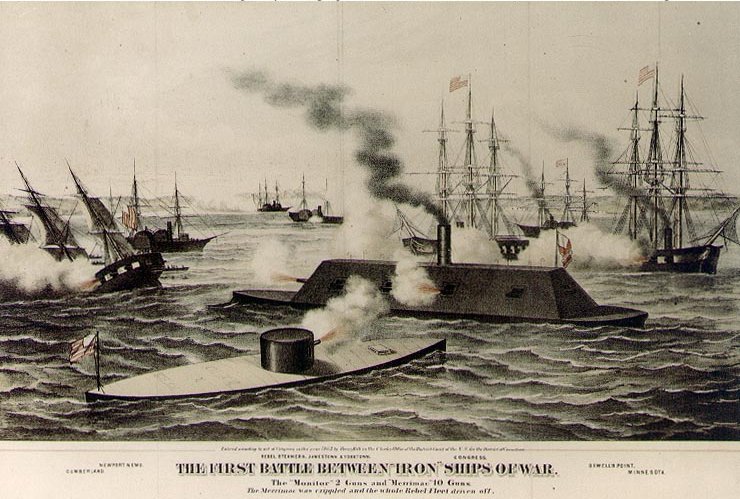
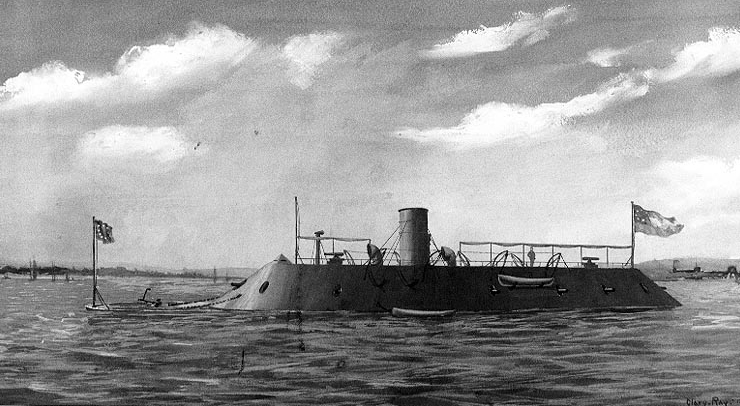
The two principal combatants were the Confederate ironclad CSS Virginia and the Union ironclad USS Monitor. The Virginia was converted from the burned hulk of the steam frigate Merrimack and equipped with sloped iron casemates and heavy guns. The Monitor was a purpose-built Union ironclad featuring a low freeboard and a revolving gun turret, an innovative layout that influenced future warship design. Both vessels employed iron armor and steam propulsion, traits that distinguished them from the wooden sailing and steam-frigate vessels that had dominated navies until that time.
The engagement, March 8–9
On March 8, 1862, the Confederate ironclad and accompanying vessels attacked Union wooden warships blockading the harbor. The Virginia sank and disabled several Union vessels, demonstrating its superiority over wooden hulls. Overnight, the Union rushed the Monitor to the scene. On March 9 the two ironclads fought for several hours at close range. Their armored hulls absorbed many hits, and although each ship inflicted some damage on the other, neither could force a decisive destruction. By sundown both sides claimed success, but the Confederate force failed to lift the Union naval blockade.
Aftermath and significance
Strategically, the battle did not alter the broader course of the war: the Union blockade remained in place and the Confederacy lost access to the Norfolk Navy Yard soon afterward, prompting the Confederates to destroy the Virginia to avoid capture. The Union's Monitor later sank in heavy weather off Cape Hatteras. The Monitor's remains and artifacts from the fight were recovered or located in the 1970s, and the wreck has since been the subject of maritime archaeology and preservation efforts; historical summaries often refer to the site as a protected relic and to recovered artifacts as items of national interest.
Why the battle matters
The encounter demonstrated in practical terms that ironclad construction and steam propulsion changed naval combat: iron armor could resist solid shot that would devastate wooden hulls, and turreted guns could bring heavier ordnance to bear with greater flexibility. In consequence, navies around the world accelerated construction of armored warships and rethought ship design, armament placement, and tactics. The clash at Hampton Roads is therefore less significant for its immediate strategic outcome than for its technological and doctrinal consequences.
Key points and notable facts
- The clash occurred in the context of the Confederate effort to break the Union blockade that curtailed commerce to important ports.
- The Virginia sought to restore Confederate access to Norfolk and Richmond supply lines but ultimately could not defeat the blockade permanently.
- On the first day the Virginia sank and disabled multiple wooden battleships, proving armored ships' superiority over traditional wooden warships.
- The opposing sides were commonly described as Confederate and Union navy forces, reflecting the war's divided national loyalties.
- The battle has been widely analyzed in naval histories and appears in many reference works and museum exhibits; further reading and resources are available through historical collections and dedicated research sites (combat accounts, technical studies on ironclad warships, and archival records).
- For archaeological and wreck information, see material on the Monitor's wreck and post-battle recoveries.
Overall, Hampton Roads stands as a landmark event in naval history: a brief fight with outsized influence on the design and doctrine of warships for the remainder of the 19th century. Researchers and visitors continue to study its ships, artifacts, and contemporary accounts to better understand the transition from wooden fleets to armored navies.
Questions and answers
Q: What was the Battle of Hampton Roads?
A: The Battle of Hampton Roads was a naval battle of the American Civil War fought on March 8 and 9, 1862 near Hampton Roads, Virginia.
Q: What made this battle important?
A: This battle was important because it was the first combat between ironclad warships.
Q: What did the Confederate ironclad CSS Virginia try to do during the battle?
A: The Confederate ironclad CSS Virginia tried to break the Union navy blockade of Hampton Roads which prevented all commerce with Norfolk and Richmond, Virginia.
Q: When did the Union ironclad USS Monitor arrive at the scene?
A: The Union ironclad USS Monitor arrived on March 8 and fought against the CSS Virginia.
Q: How long did this battle last?
A: This battle lasted for several hours but neither ship could defeat each other so both ships left thinking they had won.
Q: How did this battle affect warship building in future years?
A: After this battle, people stopped building wooden ships and started building iron warships instead as they were much stronger than wooden ships.
Q: What happened to both ships after their fight at Hampton Roads? A: Both ships were lost soon after their fight; The CSS Virginia was destroyed by its crew when Norfolk fell in May 1862 and The USS Monitor sunk in a storm near Cape Hatteras on December 31, 1862.
Related articles
Author
AlegsaOnline.com Battle of Hampton Roads (March 8–9, 1862) Leandro Alegsa
URL: https://en.alegsaonline.com/art/9484
Sources
- americancivilwar.com : "Union Navy Ship USS Monitor"
- learning.blogs.nytimes.com : "The Monitor and the Merrimac Face Off in Battle of Hampton Roads"
- eyewitnesstohistory.com : "The Battle of the Ironclads, 1862"