
Norfolk, Virginia
Norfolk is an independent port city in southeastern Virginia, home to a major naval base, cultural institutions, and a diverse urban population with long maritime and military ties.
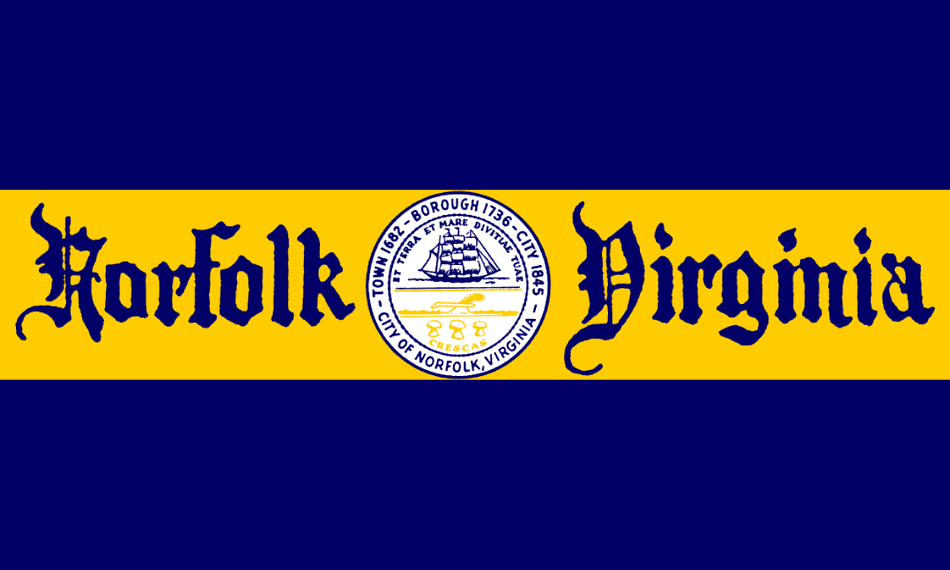
Overview
Norfolk is an independent city located in the Hampton Roads region of Virginia, in the United States. It is one of the larger urban centers in the state and has been listed as the 78th largest city in the country by some counts. Norfolk combines a long maritime history with major military, shipping, cultural and educational institutions and serves as a regional economic and transportation hub.
Image gallery
10 Images


Geography and climate
Norfolk sits on the Elizabeth River at the mouth of the Chesapeake Bay. Much of the city is low-lying and interlaced with waterways, which has shaped its development as a port and naval center. The climate is humid subtropical, with hot, humid summers and generally mild winters. Proximity to the bay and Atlantic Ocean moderates seasonal extremes but also increases exposure to coastal storms and flooding.
History and development
Norfolk originated as a colonial port and grew over centuries into a commercial and naval center. Its location made it important for coastal trade, shipbuilding and later for military logistics. The 20th century saw substantial expansion of naval facilities and shipyard activity, which continue to influence the city’s economy and identity. Urban renewal, waterfront redevelopments and cultural investments in recent decades have reoriented parts of the downtown toward tourism and the arts.
Economy, transportation and military presence
A defining feature of Norfolk is the presence of Naval Station Norfolk, one of the largest naval bases in the world and a major employer in the region. The Port of Virginia and related logistics businesses support container, bulk and vehicle shipping. Transportation infrastructure includes Norfolk International Airport, regional highways, ferry links across the harbor, and a light rail system serving downtown and nearby communities.
Culture, landmarks and recreation
Norfolk hosts a variety of cultural institutions, parks and attractions. Notable sites include museums, galleries and performance venues, public waterfront spaces, botanical gardens and a zoo. The city’s waterfront districts offer dining, festivals and promenades that draw residents and visitors. Sports have also played a role in local life; the city has been home to professional hockey teams such as the Norfolk Admirals and supports collegiate and recreational athletics.
Demographics and government
As an independent city, Norfolk is administratively separate from surrounding counties. According to the 2000 U.S. census, the city had 234,403 people, 86,210 households, and 51,898 families. The recorded population density was 1,684.4/km² (4,362.8/mi²), with 94,416 housing units at an average density of 678.5/km² (1,757.3/mi²). The racial makeup at that time was approximately 48.36% White, 44.11% African American, 2.81% Asian, 0.46% Native American, 0.11% Pacific Islander, 1.67% from other races, and 2.48% from two or more races; Hispanic or Latino of any race comprised about 3.80% of the population. More recent estimates show demographic shifts typical of many coastal urban areas, but the 2000 census provides a snapshot of Norfolk at the start of the 21st century.

- Major institutions: Naval Station Norfolk, Port of Virginia, regional universities and cultural centers.
- Transportation: Airport, light rail, ferries, and extensive port facilities.
- Distinctive traits: maritime heritage, military presence, waterfront revitalization.
For visitors and residents alike, Norfolk combines waterfront access, military history, and urban amenities, making it a focal point of southeastern Virginia’s economy and culture.
Questions and answers
Q: Where is Norfolk located?
A: Norfolk is located in Virginia, United States.
Q: What is the population of Norfolk?
A: According to the census of 2000, the population of Norfolk is 234,403 people.
Q: How does the population density of Norfolk compare to the national average?
A: The population density of Norfolk is higher than the national average, at 1,684.4/km² (4,362.8/mi²).
Q: What is the racial makeup of Norfolk?
A: The racial makeup of Norfolk is diverse. As of the census of 2000, 48.36% of the population was White, 44.11% was African American, 0.46% was Native American, 2.81% was Asian, 0.11% were Pacific Islander, 1.67% were from other races, and 2.48% were from two or more races.
Q: What sports team is located in Norfolk?
A: The Norfolk Admirals of the AHL is located in Norfolk.
Q: What is the average housing density in Norfolk?
A: The average housing density in Norfolk is 678.5/km² (1,757.3/mi²).
Q: What percentage of the population in Norfolk is Hispanic or Latino?
A: According to the census of 2000, 3.80% of the population in Norfolk is Hispanic or Latino.
Related articles
Author
AlegsaOnline.com Norfolk, Virginia Leandro Alegsa
URL: https://en.alegsaonline.com/art/70703