
Ironclad warship
Armored naval vessels protected by iron or steel plates, first recorded in East Asia and later widely adopted by Western navies in the 19th century, transforming naval combat and ship construction.
An ironclad is a naval warship whose hull or superstructure is protected by plates of iron or steel. These vessels replaced or augmented traditional wooden construction with metal armor to resist explosive and incendiary ordnance, changing the balance of offense and defense at sea. The innovation affected ship design, armament layout, propulsion systems and naval tactics.
Image gallery
10 Images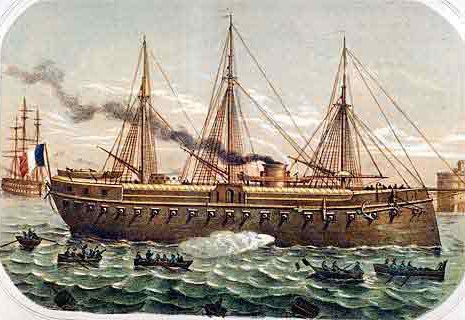


Design and principal features
Ironclads combined several elements that distinguished them from earlier sailing ships: steam propulsion for independent maneuvering, heavy gun batteries mounted behind armored casemates or turrets, and metal plating to protect vital areas. Common design elements included:
- Armored belt and casemate protecting machinery, magazines and gun positions.
- Steam engines and screw propellers replacing or supplementing sails.
- Rams or reinforced bows—some commanders used ramming as a tactic in close combat.
- Gun arrangements ranging from broadside batteries to rotating turrets.
Historical origins and development
There are early records of armored craft in East Asia: the first known use of protected ships occurred during the Japanese invasion of Korea, where locally adapted vessels showed resistance to small arms and incendiaries. In the West, serious development of ironclads accelerated in the mid-19th century as naval architects reacted to the greater destructive power of explosive shells. By the 1850s–1860s, navies in Europe and North America had begun building purpose-designed armored warships; these designs evolved rapidly as metallurgy, engineering and gunnery advanced.
Role, examples and impact
The arrival of ironclads altered naval warfare. Classical wooden fleets became vulnerable, and blockades, coastal bombardment and fleet engagements required new tactics and equipment. Famous early examples include opposing armored vessels that demonstrated the concept in combat and prompted navies to modernize. The Western naval arms race that followed led to larger armored cruisers and, later, battleships—steps on the path to the dreadnought era.
Beyond warfare, ironclads influenced shipbuilding techniques and industrial capacity, stimulating advances in shipyard tooling, riveting and plate rolling. Their legacy is visible in modern warship design: the principle of protecting vital systems with hard structures continues in various forms, even as materials and methods have changed.
Questions and answers
Q: What is an ironclad warship?
A: An ironclad is a type of warship that is protected by iron or steel armor plates.
Q: When was the first recorded use of an ironclad?
A: The first recorded use of an ironclad was during the Japanese invasion of Korea.
Q: Why did Western powers start using ironclads?
A: Western powers started using ironclads because prior to that, wooden warships were easily damaged by explosive or incendiary shells.
Q: When did Western powers begin developing ironclads?
A: Western powers began developing ironclads in the second half of the 19th century.
Q: What is the purpose of the iron or steel armor plates on an ironclad?
A: The purpose of the iron or steel armor plates on an ironclad is to protect the ship from damage.
Q: What problem did the ironclad solve for naval warfare?
A: The ironclad solved the problem of wooden warships being easily damaged by explosive or incendiary shells.
Q: Were ironclads exclusively used by Western powers?
A: No, ironclads were also used by Japan during the invasion of Korea.
Related articles
Author
AlegsaOnline.com Ironclad warship Leandro Alegsa
URL: https://en.alegsaonline.com/art/48231
Sources
- commons.wikimedia.org : Ironclads