
Battleship: armored capital warship — history, design, and legacy
A comprehensive overview of the battleship: definition, design features, development from ironclads to dreadnoughts, wartime roles, decline after World War II, and surviving museum ships.
A battleship is a large, heavily armed and armored warship that for many decades acted as a nation’s principal capital ship. Traditionally distinguished by thick steel protection and a main battery of large-caliber guns, a battleship combined heavy offensive firepower with survivable construction so it could fight other major surface combatants and survive near-shore operations. Early definitions and contemporary summaries describe a battleship as an armored vessel with heavy caliber main guns and substantial displacement, larger and more resilient than cruisers, destroyers or frigates; an early concise description appears in period sources as an "armored warship" (armored warship) with integrated protection systems (armour) and gun batteries (heavy guns). Battleships were most prominent from the late nineteenth century into the mid-twentieth century, although the last operational uses in combat occurred as late as the 1991 Gulf War (Gulf War, 1991), and a number are preserved today as museum ships (museum vessels).
Image gallery
10 Images


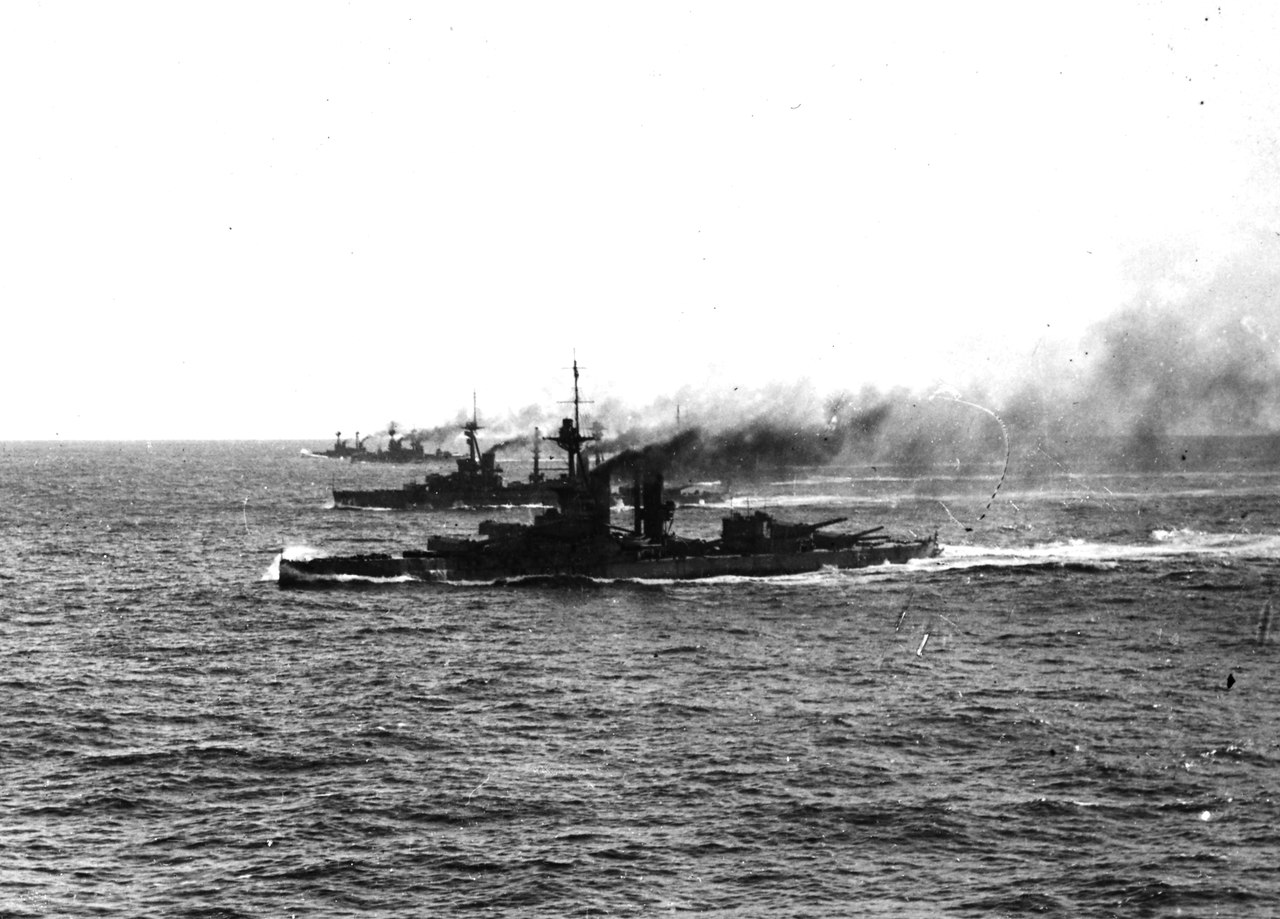


Key characteristics and major components
Several features set battleships apart from other warship types. These can be grouped under protection, armament, propulsion and supporting systems. The classic battleship balanced these elements to meet strategic needs of sea control, fleet action and shore bombardment.
- Protection: Thick armor belts, armored decks and protected citadels were designed to stop or limit damage from shellfire and torpedoes; the earliest steps toward such protection came with iron and steel plating on mid-nineteenth-century designs (armour evolution).
- Main armament: Large, turreted guns of the heaviest calibers available were the primary offensive weapons, mounted in armored turrets or barbettes to engage enemy capital ships (main battery concept).
- Secondary armament and defenses: Medium and smaller guns provided defense against torpedo boats and later aircraft; anti-aircraft guns and later missile suites were added to prolong operational relevance.
- Propulsion: Battleships used a succession of propulsion systems—sail and steam hybrids to steam engines, then steam turbines—to achieve required speeds and endurance during long deployments (steam propulsion).
- Fire control and sensors: Rangefinders, directors and centralized fire-control systems increased the accuracy of long-range gunnery as engagement distances grew, a development critical to the dreadnought era.
- Role flexibility: In addition to fleet engagements, battleships were used for flag projection, convoy protection, commerce protection/blockade enforcement (fleet hierarchy), and naval gunfire support during amphibious landings.
Many of these systems evolved rapidly around the turn of the twentieth century as metallurgy, gunnery and engineering advanced. The transition from iron to steel hulls and improved rifling for shells increased both protection and range (steel construction, rifled guns), while improved boilers and turbines increased sustained speed and maneuverability.
Origins and development
The battleship emerged from nineteenth-century experiments in armored warship design. The French ship Gloire (1859) is often cited as an early example of a sea-going ship armored against explosive shells; it combined sail and steam propulsion and introduced an iron-armored hull concept that superseded traditional wooden ships (early ironclads). Ironclads proved their value in the American Civil War and prompted a global effort to build larger and better-protected warships (American Civil War ironclads, ironclad development).
By the 1890s, the term "battleship" came into common use for the most powerful armored warships. Rival navies sought incremental improvements—larger guns, thicker armor, and more reliable engines—leading to an arms race in many regions (naval budget debates). The name and concept of the modern battleship were redefined in 1906 with the commissioning of HMS Dreadnought, which combined steam turbine propulsion with an "all-big-gun" armament layout; this design set a new standard for battleship construction and precipitated a worldwide shift to dreadnought-type ships (steam turbine, HMS Dreadnought).
Naval strategy and politics also influenced construction rates. The expense of maintaining fleets led to diplomatic efforts to limit capital ship building, such as the Washington Naval Treaty of 1922, which sought to prevent a renewed battleship arms race by placing limits on new construction and tonnage (Washington Naval Treaty). Such treaties, combined with economic pressures, constrained battleship programs between the world wars.
Combat history and changing relevance
Battleships figured prominently in early twentieth-century naval warfare. During World War I, surface engagements such as the Battle of Jutland demonstrated the strength and limits of battleship formations: powerful but cautious, and costly if mishandled (Battle of Jutland). Submarines and mines also proved decisive in interdiction and commerce warfare, changing strategic calculus (submarine warfare).
World War II marked a turning point. The rise of naval aviation allowed aircraft to strike from beyond the gun range of battleships, as shown in attacks like the Japanese raid on Pearl Harbor and the British carrier strike at Taranto, where aircraft inflicted damage on capital ships that surface guns could not prevent (World War II, aircraft carriers vs battleships). While some battleship actions and shore-bombardment missions occurred, the carrier became the principal capital ship because of its ability to project air power over great distances.
Postwar era, adaptations, and legacy
After 1945 the strategic logic for battleships diminished further. The advent of jet aircraft, anti-ship missiles, nuclear weapons, and the increasing capability of aircraft carriers reduced the operational space in which a heavily armored gunship was decisive. Nonetheless, some navies retained and modernized battleships during the Cold War, particularly for naval gunfire support and presence missions. The United States Navy refitted several ships with modern electronics and missile systems, keeping them in service because only a superpower could absorb the high cost of operation (United States Navy, Cold War context).
In their final combat appearances, battleships provided shore bombardment and fire support during operations such as the Gulf War, when older battleships delivered naval gunfire in support of land forces (Gulf War fire support). But the last ships of the class were decommissioned or converted into museums by the early twenty-first century. Their heavy guns nevertheless retained a niche utility for close shore bombardment and psychological presence during amphibious operations (naval gunfire support), while the broader strategic role of the battleship faded as missile and air power dominated the seas.
Today battleships survive mainly as museum exhibits and historical artifacts that embody a century of naval engineering and strategic thought. They provide material culture for scholars and the public to study shipbuilding technology, naval tactics and the political debates that once centered on capital ships. For readers who wish to explore specific ships, preserved examples, or technical discussions, consult specialized naval histories and museum collections via bibliographies and online archives (public funding debates, blockade and sea control, gunnery developments).
Questions and answers
Q: What is a battleship?
A: A battleship is a type of large warship with metal armor and heavy caliber guns. It was the most powerful and expensive kind of warship from around 1880 to the 1940s.
Q: What were some of the inventions used to make battleships more powerful?
A: Different countries used new inventions like steel armor, rifled guns, and better kinds of steam engine to make their ships more powerful.
Q: Who built many battleships in the 19th century?
A: Britain and France were two countries that tried to build bigger and better warships in the 19th century, while other countries like Germany, Russia, Japan, Italy and the United States also built many battleships.
Q: What was HMS Dreadnought?
A: HMS Dreadnought was a new kind of battleship made by Britain in 1906 which had steam turbine engines which made it faster than earlier ships. All its guns were also very large so it could damage other ships from further away.
Q: How did submarines affect World War I?
A: Submarines made a bigger difference to World War I than people expected even though battleships were still important at this time. Submarines could sink enemy vessels without being seen or detected easily making them an effective weapon against naval forces during this war.
Q: How did aircraft carriers become more important than battleships during World War II?
A: Aircraft carriers became more important than battleships during World War II because they had dozens of airplanes which could drop bombs or torpedos from further away than a battleship's guns could shoot. Also hits from bombs or torpedos would still sink a heavily armored battle ship despite its thick armor making aircraft carriers much more effective weapons against naval forces during this war.
Q: When did American Battleships become museums?
A: American Battleships became museums in 2004 when the last ones were decommissioned by the United States Navy after having been kept for use since Cold War times due to their big guns being useful for shooting at shore targets if there was an invasion from sea as well as being given new weapons like guided missiles for potential use against Russia if there was ever another war between them two countries
Related articles
Author
AlegsaOnline.com Battleship: armored capital warship — history, design, and legacy Leandro Alegsa
URL: https://en.alegsaonline.com/art/9610
Sources
- encyclopedia.com : "Battleship Facts, information, pictures"