
Steam: properties, types, history, uses and safety
Steam is gaseous water formed by boiling or evaporation. This article explains its physical properties, varieties (saturated, superheated), historical role, common uses and safety considerations.
Overview: Steam is the name given to water in its gas phase. When water is heated to its boiling point under a given pressure, liquid turns into steam. The familiar white cloud often called steam is usually not the gas itself but tiny liquid droplets produced when hot steam cools and condenses into an aerosol of water vapor suspended in air; by contrast, very hot steam in free form is largely invisible.
Image gallery
5 Images
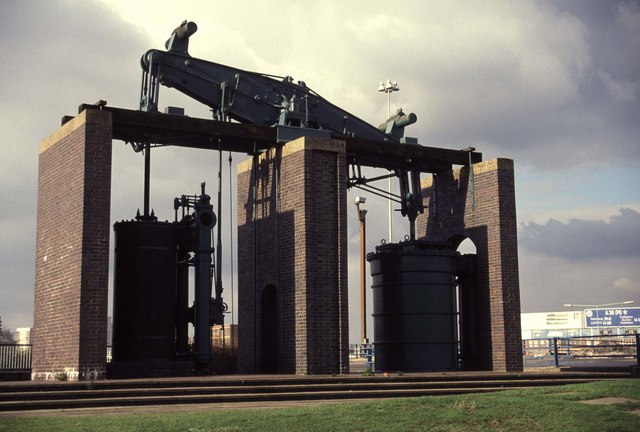


Physical properties and basic thermodynamics
At a typical sea-level atmosphere of about 1013 mbar (sea level pressure), pure water boils and becomes steam at 100 °C (which equals 212 °F and 373.15 K). That temperature is the familiar boiling point under those conditions. Boiling occurs in devices such as a boiler where heat provides the energy required for the phase change. The transition absorbs a large amount of energy with little change in temperature; this latent heat makes steam an efficient medium for transporting thermal energy.
Types of steam and important distinctions
Steam used in engineering and industry is classified by its condition. Saturated steam exists at the boiling temperature for a given pressure and may contain small suspended water droplets. Superheated steam has been heated above the saturation temperature at that pressure and behaves more like an ideal gas. Condensate (the liquid that forms when steam cools) must be managed in systems because it can reduce efficiency and cause damage. The term boil is used for the phase change itself, while routine generation of steaming water in a vessel is performed in a boiler or similar heat exchanger.
History and development
Harnessing steam as a motive force transformed technology and society. Early experiments created simple steam devices, but practical steam engines that performed significant mechanical work appeared and matured during the 18th and 19th centuries, powering factories, ships and locomotives and driving the Industrial Revolution. Modern steam turbines, which convert the energy of high-pressure steam into rotary motion, are the central workhorse of many power plants and operate on thermodynamic principles refined from the original steam engine concepts.
Common uses and examples
- Electricity generation: steam turbines in thermal, nuclear and some solar power stations.
- Industrial heating and processing: heat transfer, drying, and chemical processes that require controlled temperatures.
- Sterilization: autoclaves use pressurized steam to sterilize medical instruments and laboratory equipment.
- Transportation history: steam locomotives and steamships were early prime movers before widespread internal-combustion engines.
- Domestic uses: cooking (e.g., steaming food), humidification and heating systems.
In all these roles, steam’s capacity to carry large amounts of energy per unit mass and to release it upon condensation is exploited for efficient heat transfer and mechanical work.
Safety, efficiency and practical considerations
Steam systems require careful control of pressure and temperature. Because hot steam can be invisible and carries concentrated thermal energy, it poses a severe scalding hazard: contact with steam or sudden condensation on skin or surfaces can cause burns. Mechanical risks include overpressure and water hammer from trapped condensate. Engineers manage these risks with pressure-relief devices, condensate drains, insulation, and routine maintenance. Efficiency depends on minimizing heat losses, recovering condensate and optimizing the steam conditions (pressure and temperature) to suit the application, often described and analyzed using thermodynamic cycles such as the Rankine cycle.
Notable facts: the visible white 'steam' clouds you see from a kettle or power station stacks are mostly condensed droplets; true gaseous steam is largely transparent. Boiling temperature changes with pressure, so steam generation and behavior vary with altitude and containment. For further technical detail and practical guidance consult specialized sources and standards (temperature, Fahrenheit, Kelvin, and operational manuals) or introductory references on thermodynamics and heat transfer (water, gas, condensation, vapor, pressure, 1013 mbar, sea level, boiling, 100°C, boiling point, boiler, temperature, 212°F, 373.15 K, steam engines).
Related articles
Author
AlegsaOnline.com Steam: properties, types, history, uses and safety Leandro Alegsa
URL: https://en.alegsaonline.com/art/93615