
Gas: properties, types, behavior, and human uses
A gas is a state of matter whose particles move freely; this article explains properties, composition, examples, history, and practical uses of gases.
Overview
A gas is one of the principal states of matter characterized by particles that move largely independently and occupy the entire volume available. Unlike a liquid or a solid, a gas lacks a fixed shape or single, fixed volume. The constituent molecules or atoms in a gas collide frequently but are not bonded into rigid structures, which gives gases distinctive behaviors such as high compressibility and easy diffusion.
Image gallery
9 Images




Fundamental characteristics
Gases are defined by several measurable properties. Pressure arises from particles striking container walls; temperature corresponds to average kinetic energy of particles; and volume is not fixed but depends on the container and conditions (see variable volume). The modern kinetic theory describes macroscopic gas laws (Boyle's, Charles's, Avogadro's) in terms of microscopic motion. Gases are highly compressible, expand to fill containers, and mix readily with one another by diffusion and convection.
Composition and common types
A gas may be single atoms, molecules of one element, or combinations of elements. A monoatomic gas consists of individual atoms (an example is neon), while an elemental molecular gas can be two or more atoms of the same element (hydrogen as H2). Gases that contain different kinds of atoms joined in molecules are compounds, for example carbon dioxide. Mixtures of gases combine these forms without chemical bonding between constituents; such a gas mixture is the atmosphere we call air, which is chiefly nitrogen, oxygen, about 1% argon, and trace carbon dioxide and other gases.
History and notable facts
Understanding gases has been crucial for science and technology. Studies of gas behavior in the 17th–19th centuries led to the development of thermodynamics and physical chemistry. Gases have also played darker roles: certain poison gases were used as chemical weapons during World War I and their use has been restricted by later international treaties. Meanwhile, naturally occurring fuels such as natural gas (primarily methane) have powered industries and homes for more than a century.
Common uses and applications
- Energy: combustion of gaseous fuels for heating, electricity generation, and vehicle fuel (natural gas, hydrogen).
- Industrial processes: reactors, synthesis gases, carrier gases in manufacturing and semiconductor production.
- Medical and life support: oxygen for respiration, nitrous oxide as an anaesthetic component, and medical gas blends.
- Refrigeration and cryogenics: gases used as refrigerants or liquefied for low-temperature applications.
- Everyday applications: air for breathing and ventilation, carbon dioxide in beverages, and inert gases for welding and preservation.
Distinctions and practical considerations
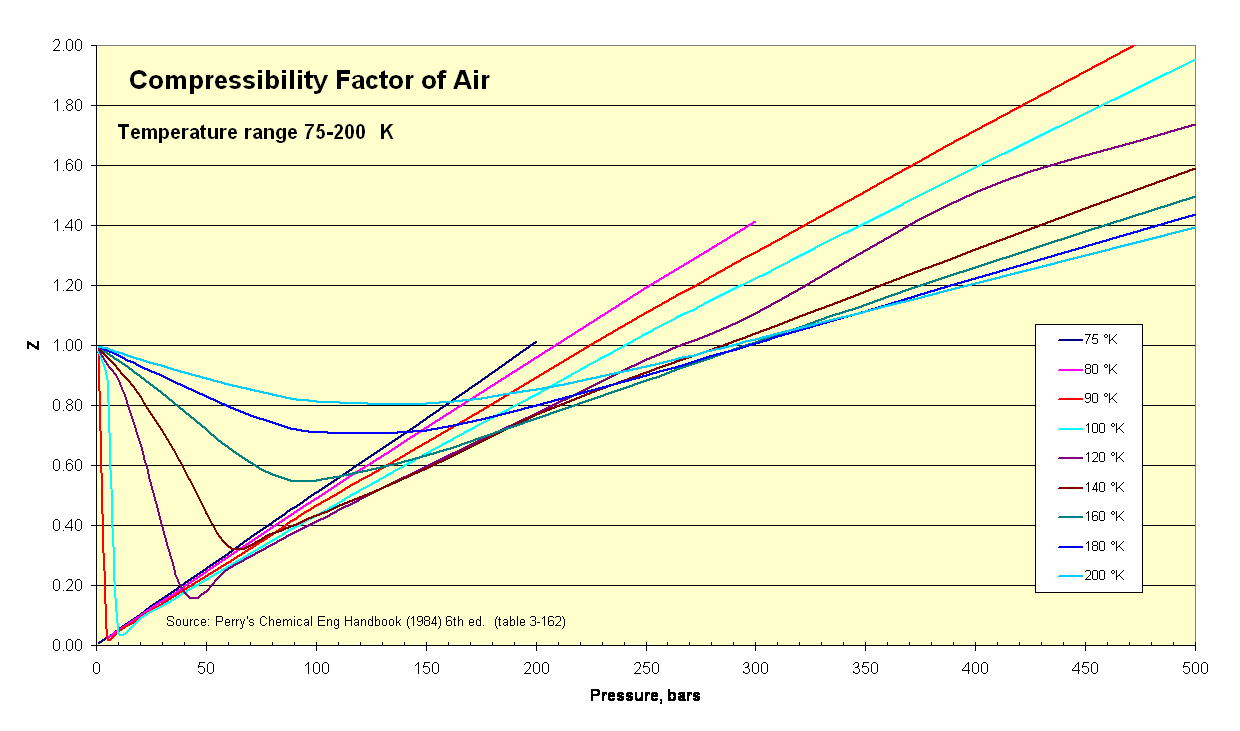
When working with gases it is important to note safety and handling differences from liquids and solids. Many gases are invisible and odorless, can be flammable, toxic, or asphyxiating at high concentrations, and require appropriate containment and monitoring. Engineers use concepts such as partial pressure, gas mixtures, and compressibility in designing piping, storage, and safety systems. The physical behavior of real gases deviates from the ideal-gas approximation at high pressure or low temperature, which must be accounted for in precise calculations.
For an introduction to related topics and more detailed treatments, see resources on the states of matter, gas laws and kinetic theory, and references about atmospheric composition and industrial gases.
Questions and answers
Q: What is a gas?
A: A gas is one of the four states of matter where molecules move freely and are not attached to each other.
Q: How are molecules in a gas different from those in a liquid?
A: In a gas, molecules are not attached to each other, while in a liquid, molecules are loosely attached or touching each other.
Q: How are molecules in a gas different from those in a solid?
A: In a gas, molecular bonds are weak, while in a solid, molecular bonds are strong, holding molecules together in one shape.
Q: Does a gas have only one volume like a liquid or solid?
A: No, a gas can expand until it fills whatever container it is in, unlike a liquid or solid.
Q: What different types of gas molecules are there?
A: There are pure gases with individual atoms, elemental gases with more than one of the same atom bound together, and compound gases with many types of atoms together.
Q: Can you name an example of a monoatomic gas?
A: Yes, an example of a monoatomic gas is neon.
Q: What is a gas mixture?
A: A gas mixture contains a mix of any of the types of gases mentioned above, such as air which is 87% nitrogen, 0.2% oxygen, 13.7% argon, and carbon dioxide in trace amounts.
Related articles
Author
AlegsaOnline.com Gas: properties, types, behavior, and human uses Leandro Alegsa
URL: https://en.alegsaonline.com/art/37672
Sources
- mistupid.com : "Composition of Air"
- newton.dep.anl.gov : "Colours of Gases"
- id.mind.net : "Heat and temperature"