
Stibine (SbH3): properties, preparation, uses and safety
Stibine (SbH3) is the simplest antimony hydride, a volatile covalent pnictogen hydride. It is chemically unstable, highly toxic, and found mainly in laboratory work and limited industrial processes.
Overview: Stibine, commonly written SbH3, is the simplest hydrogen compound of antimony. It belongs to the pnictogen hydrides—a family that includes phosphine (PH3) and arsine (AsH3)—and is a covalent, low‑molecular‑weight gas under ambient conditions. For a general reference to its classification as a chemical compound see chemical compound.
Image gallery
1 Image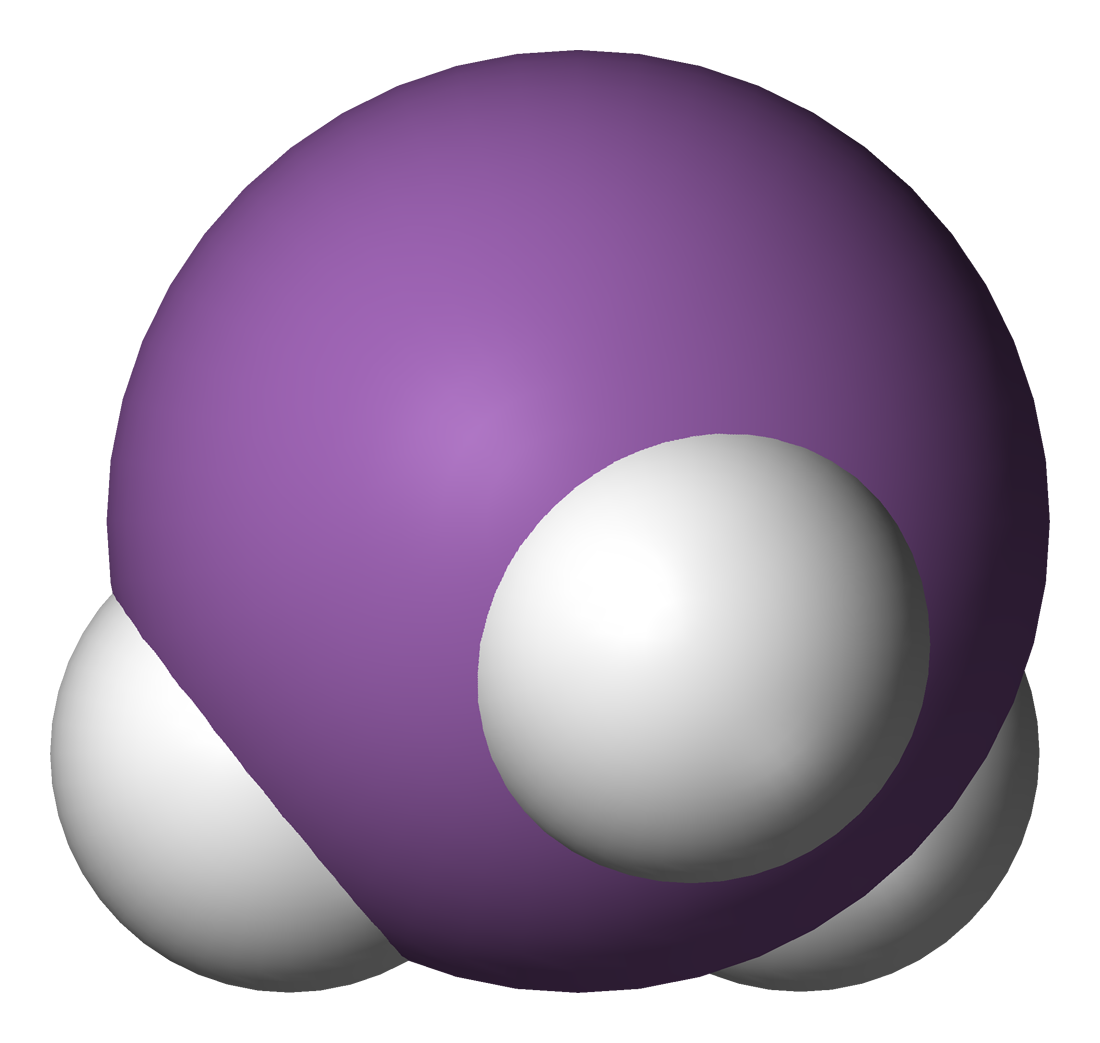
Structure and physical character
The SbH3 molecule has a three‑bonded antimony centre with a lone pair, giving it a trigonal‑pyramidal shape similar to other group 15 hydrides. Because antimony is relatively heavy, the molecule is volatile but thermally less stable than its lighter congeners. Its bonding can be described in different ways: some treatments emphasize antimonide character (antimonide-like), others stress covalent Sb–H interactions (hydride-like), and conventional ionic descriptions are sometimes used for teaching (alternative ionic description).
Synthesis and chemical behaviour
In the laboratory stibine is typically generated by the reduction of antimony(III) compounds or by acidifying metal antimonides; it can also be produced by hydride transfer from strong reductants. It is chemically reactive: readily oxidized in air and prone to decomposition to elemental antimony and hydrogen at modest temperatures. Compared with phosphine and arsine, SbH3 is generally less stable and more prone to breakdown, following the expected trend downward the group.
Uses and importance
Practical uses of stibine are limited. It appears occasionally as a reagent in specialized chemical syntheses and can serve as a gaseous antimony source in research on film deposition or semiconductor processing where antimony incorporation is required. Because of safety concerns and the availability of other antimony sources, routine industrial use is uncommon. The molecule is also of interest in fundamental studies of heavy‑atom bonding and pnictogen hydride chemistry (antimony centre).
Safety, toxicity and precautions
- Stibine is highly toxic and can damage red blood cells and the respiratory system; exposures must be minimized.
- It is flammable and can ignite in air; storage and experiments require gas handling controls, ventilation and continuous monitoring.
- Standard precautions include use of scrubbers, inert atmospheres, leak detection and emergency procedures; consult material safety resources (hydride ion) and institutional guidelines.
Distinctions: Stibine should not be confused with other antimony compounds such as stibnite (an antimony sulfide mineral) or organoantimony reagents. As the heaviest stable simple pnictogen hydride commonly discussed, it illustrates the trend of decreasing hydride stability moving from nitrogen down to bismuth in group 15.
Questions and answers
Q: What is Stibine?
A: Stibine is a chemical compound with the chemical formula SbH3.
Q: What are some other names for Stibine?
A: Stibine is also known as antimony hydride or hydrogen antimonide.
Q: What type of compound is Stibine?
A: Stibine is a covalent compound.
Q: What ions is Stibine made up of?
A: Stibine can be seen as having antimonide and hydrogen ions, or antimony and hydride ions.
Q: What is the chemical formula for Stibine?
A: The chemical formula for Stibine is SbH3.
Q: Is Stibine commonly found in nature?
A: No, Stibine is not commonly found in nature.
Q: What are some possible uses for Stibine?
A: Stibine can be used in the production of semiconductor materials, as well as in the creation of certain plastics and chemicals.
Related articles
Author
AlegsaOnline.com Stibine (SbH3): properties, preparation, uses and safety Leandro Alegsa
URL: https://en.alegsaonline.com/art/93906