
Still (distillation apparatus)
A still is a device that separates or purifies liquids by boiling and condensation. Used in laboratories, industry and spirits production, stills vary from simple pot designs to complex reflux columns.
Overview
A still is an apparatus that separates components in a mixture by selective boiling and condensation. The principle relies on differences in volatility: when a liquid is heated, more volatile components vaporize first and can be collected after cooling. This boiling step (boiling) produces a vapor or gas that is then condensed back to liquid, producing a purified or concentrated product. The overall method is commonly called distillation.
Image gallery
5 Images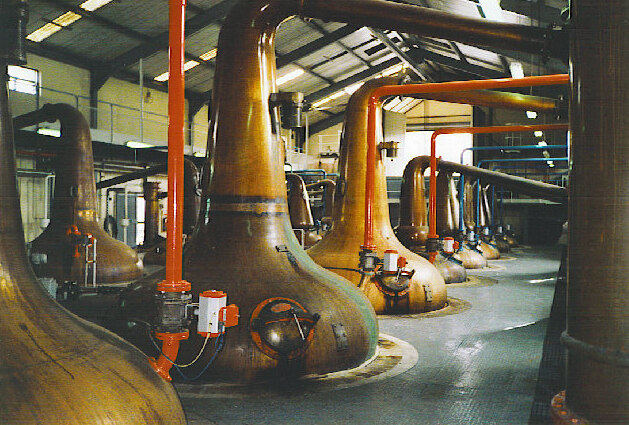


Basic design and main parts
Most stills share a few basic elements: a heated vessel or boiler that contains the feed mixture; a path for vapor to rise; a condenser that cools vapor to liquid; and a receiver that collects the distillate. More elaborate designs include a vertical column filled with trays or packing to promote repeated vapor-liquid contact, controls for reflux, and instrumentation to monitor temperature and composition.
Types and how they differ
Stills range from simple to complex. Common categories include:
- Pot stills: a single-chamber boiler and simple neck or swan neck condenser. They perform one vaporization-condensation cycle per pass and are widely associated with traditional spirit production.
- Reflux (fractionating) stills: include a tall column with plates or packing that causes multiple vapor-liquid equilibrations in a single run, producing higher-purity distillate and fine control over composition.
- Laboratory and industrial variants: rotary evaporators, short-path stills, and large-scale fractionating towers used in chemical and petroleum refining.
History and development
Distillation has ancient roots and developed through many cultures. Early practitioners used simple alembic-like devices; over centuries alchemists, medieval chemists, and later industrial engineers refined column design, condensers, and control systems. Improvements in metallurgy, vacuum technology and materials science allowed stills to become more efficient and suitable for a wider range of products.
Uses and examples
Stills serve many roles. They are central to producing potable spirits and essential oils, where a pot still can preserve flavor compounds while a reflux still increases purity. Distillation is also used to recover solvents, manufacture fine chemicals, purify water, and produce ingredients for perfumes or pharmaceuticals such as medicines. In research contexts, laboratory stills separate reaction products and analyse mixtures.
Distinctions, limitations and safety
Different still types balance purity against retained flavor or efficiency: pot stills often leave congeners that affect taste, while reflux columns yield near-azeotropic purity with repeated equilibration. Limitations include the formation of azeotropes that resist separation and the need for energy-intensive heating and cooling. Legal and safety considerations are important: commercial distillation of alcohol is regulated in many countries, and improper operation can cause fires, toxic exposures, or illegal production (moonshining). For technical and regulatory guidance consult authoritative sources such as manufacturers and regulatory agencies (distillation references and standards).
For concise introductions and technical overviews see resources on distillation principles and design (basic liquid separation, boiling phenomena, vapor behavior, and applied industry guides).
Related articles
Author
AlegsaOnline.com Still (distillation apparatus) Leandro Alegsa
URL: https://en.alegsaonline.com/art/93937
Sources
- moonshine-still.com : "Building a World Class Home Distillation Apparatus - What Kind of Still?"
- moonshine-still.com : "Building a World Class Home Distillation Apparatus - The Evolution of the Reflux Still"