
Stink bomb (novelty malodor device)
A stink bomb is a small novelty device that releases an extremely unpleasant odor when activated. This article explains composition, use, safety, history, and regulatory concerns.
Overview
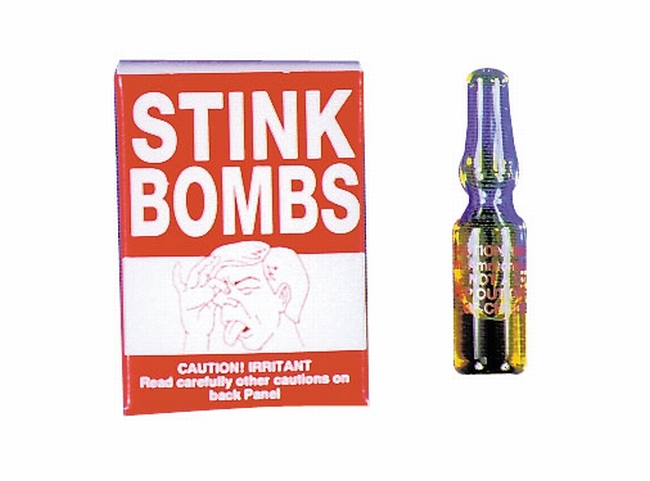
A stink bomb is a small packet or vial designed to release a strong, offensive odor when ruptured or otherwise activated. Sold as a novelty item and used mainly for practical jokes, these devices produce malodors that range from the smell of rotten eggs to rancid body odors. The effect is usually short lived but intense, and the devices are intended to provoke surprise, disgust, or embarrassment rather than cause physical harm.
Image gallery
3 Images

Composition and mechanism
Many commercial stink bombs rely on volatile sulfur-containing compounds, which are widely recognized for their pungent, unpleasant smells. A commonly cited ingredient in traditional formulations is ammonium sulfide, which can release hydrogen sulfide — the gas associated with a rotten-egg odor — when it decomposes. Other products may use mercaptans (thiols) or mixtures of synthetic malodors tailored to mimic body odors or decaying organic matter.
The packaging often resembles that of an instant cold pack: a breakable inner ampoule or sealed bag sits inside an outer pouch. When the inner capsule is pressed or crushed, two components mix and liberate the foul-smelling volatile chemicals, allowing the odor to escape into the surrounding air.
Uses and social context
Stink bombs are primarily used as prank devices to startle or embarrass people, for example by placing a packet on a chair so the odor is released when someone sits. They are also used in theatrical productions, training exercises, or as low-cost simulation aids where a sudden malodor is needed. Because the intent is humorous or dramatic rather than destructive, users typically expect the effect to be temporary.
Safety, regulation, and disposal
Although most novelty stink bombs produce no lasting contamination, the chemicals involved can irritate eyes, nose, and throat and may pose greater hazards in confined spaces or to sensitive individuals. Concentrated sulfur compounds and ammonium sulfide can be hazardous if inhaled in large amounts, and some older or homemade formulations may include corrosive or toxic ingredients.
- Follow label warnings and avoid using them near people with respiratory conditions.
- Ventilate areas after activation and dispose of empty packets according to local waste guidance.
- Some jurisdictions restrict sale or require warnings; manufacturers often mark products with safety instructions.
History and notable facts
Novelty malodor devices have a long informal history as practical-joke tools. Their basic concept—storing reactive components separately until use—mirrors other consumer products that rely on a two-part activation method, such as instant cold packs. Over time, commercial products have shifted toward milder, regulated formulations to reduce health risks and legal liability.
Further information
For general technical background on malodorous sulfur compounds and consumer safety guidance, see resources on chemical hazards and product stewardship. Manufacturers and retailers often provide safety data and use instructions; consult documentation when available. Example references include pages on manufacturing practices and chemical hazard summaries: manufacturing overview, chemical hazard information, and consumer safety guidance.
Related articles
Author
AlegsaOnline.com Stink bomb (novelty malodor device) Leandro Alegsa
URL: https://en.alegsaonline.com/art/93953