
Srebrenica massacre
The July 1995 mass killing of around 8,000 Bosniak men and boys in Srebrenica, Bosnia and Herzegovina, carried out by Bosnian Serb forces; legally recognised as genocide and a major failure of international protection.
Overview
The Srebrenica massacre refers to the mass killing in July 1995 of approximately 8,000 Bosniak (Bosnian Muslim) men and boys in and around the town of Srebrenica in eastern Bosnia and Herzegovina. The killings followed the seizure of the United Nations–declared "safe area" of Srebrenica by units of the Army of Republika Srpska under Bosnian Serb command. Many victims were separated from women and children, detained and executed; others were buried in mass graves later exhumed in systematic identification efforts.
Image gallery
10 Images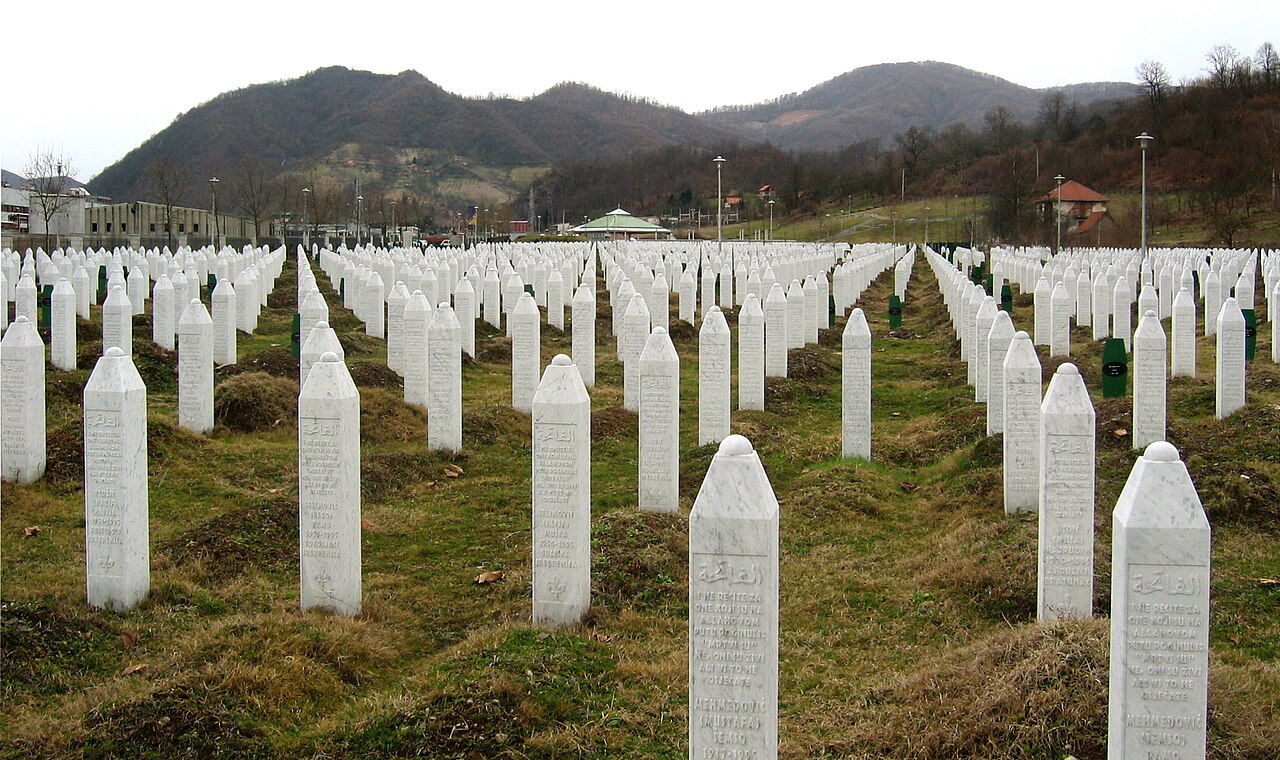




Background and context
The events in Srebrenica occurred during the wider Bosnian War (1992–1995), a conflict marked by ethnic violence, population expulsions and rivalry among Bosniaks, Serbs and Croats as the former Yugoslavia disintegrated. Srebrenica had been designated a UN "safe area" and hosted a refuge population, while a small contingent of UNPROFOR peacekeepers from the Netherlands (often called Dutchbat) was deployed nearby. The enclave's fall exposed weaknesses in international protection and peacekeeping mandates.
The July 1995 events
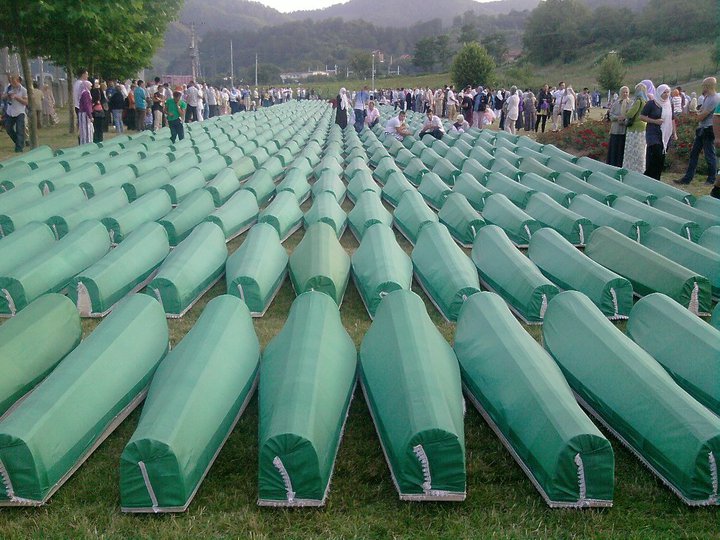
In early July 1995 Bosnian Serb forces captured Srebrenica. Over the following days thousands of men and boys were separated from the civilian column and taken to detention sites. Large-scale executions followed, and bodies were interred in primary and secondary mass graves, some later moved in attempts to conceal evidence. International investigators, forensic teams and DNA identification programs have worked for decades to locate and identify remains and to provide burial and memorialisation for victims.
Legal findings and accountability
Judicial bodies have examined the Srebrenica killings in detail. The International Criminal Tribunal for the former Yugoslavia (ICTY) and the International Court of Justice (ICJ) found that the events in Srebrenica amounted to genocide. Several senior Bosnian Serb political and military leaders have been indicted and convicted for crimes related to Srebrenica. International and domestic inquiries have also scrutinised the performance of UN forces and contributing states, prompting debate about command responsibilities and the limits of peacekeeping.
Memory, commemoration and significance
Srebrenica has become a central symbol of the human cost of the Yugoslav wars and of the consequences of failed protection. Annual commemorations are held on 11 July, and a memorial and cemetery in Potočari serves as a focal point for families and visitors. Long-term forensic work and a programme of identifications continue, helping families discover the fate of missing relatives and supporting historical records.
Controversies and international response
The classification of Srebrenica as genocide by international courts has been accepted by many countries and institutions, while others have disputed or resisted certain resolutions and political statements. Debates remain about responsibility at many levels — among perpetrators, local authorities, international organisations and states — and over how to confront denial, revisionism and political tensions that persist in the region.
Key points
- Occurred in July 1995 during the Bosnian War; victims were overwhelmingly Bosniak men and boys.
- Approximately 8,000 people were killed; many victims have since been identified through forensic work.
- ICTY and ICJ rulings characterised the killings as genocide and led to convictions of senior Bosnian Serb figures.
- Srebrenica exposed limits of UN protection and spurred reflection on peacekeeping mandates and international justice.
Related topics and further reading
- Masakr u Srebrenici (Bosnian phrase)
- Genocide (legal and historical concept)
- Bosniaks (ethnic group)
- Military-aged men and wartime victims
- Bosnian War (1992–1995)
- Army of Republika Srpska
- Armenian genocide (comparative study)
- Ottoman Empire (historical background)
- Holocaust (comparative genocide studies)
- Reinhard Heydrich (history of genocide planning)
- Bosnian genocide (1992–1995 context)
- Yugoslav Wars (1990s conflicts)
- Socialist Federal Republic of Yugoslavia
- Communism in post‑war Europe
- Josip Broz Tito (Yugoslav leader)
- Kingdom of Serbs, Croats and Slovenes (interwar period)
- Transition to a communist state (historical note)
- Kofi Annan (UN responses)
- United Nations (peacekeeping and policy)
- Russia (diplomatic positions)
- Tomislav Nikolić (political reactions)
For readers seeking primary documents and more detailed legal analysis, consult specialised collections, tribunal reports and established historical studies. The events at Srebrenica remain a subject of legal, moral and historical examination and a key reference point in modern debates about genocide prevention and the responsibilities of the international community.
Related articles
Author
AlegsaOnline.com Srebrenica massacre Leandro Alegsa
URL: https://en.alegsaonline.com/art/92970
Sources
- europarl.europa.eu : "European Parliament resolution of 15 January 2009 on Srebrenica"
- icty.org : "International Criminal Tribunal for the former Yugoslavia (ICTY)"
- un.org : UN Press Release SG/SM/9993UN, 11/07/2005 "Secretary-General Kofi Annan’s message to the ceremony marking the tenth anniversary of the Srebrenica massacre in Potocari-Srebrenica"
- theguardian.com : "Russia threatens veto on UN vote calling Srebrenica 'a crime of genocide'"