
Starving Time (Jamestown, winter 1609–1610)
A severe famine that struck the Jamestown colony in 1609–1610, killing most settlers. Archaeological and documentary evidence documents causes, outcomes, and confirmed instances of cannibalism during the crisis.
Overview
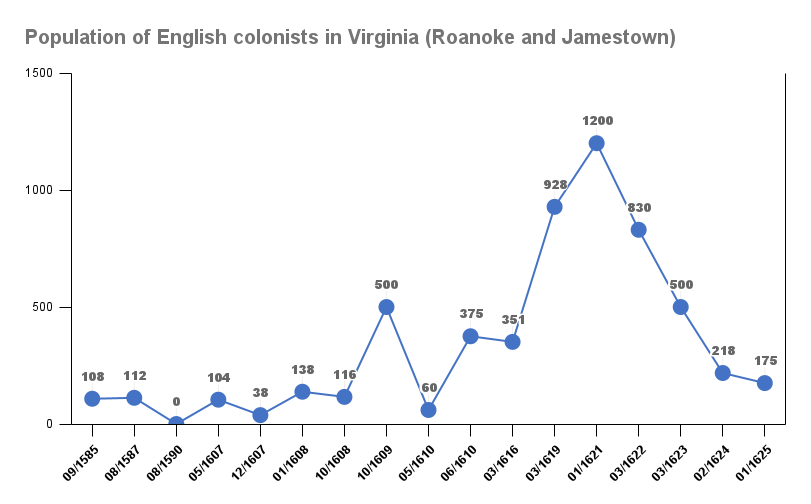
The Starving Time refers to the catastrophic period of food shortage and mass mortality that afflicted the English colony at Jamestown in the Virginia Colony during the winter of 1609–1610. Contemporary accounts and later research agree that the colony’s population fell dramatically: of roughly 500 colonists present in the summer of 1609, only about 60 remained alive by spring 1610. Survivors described extreme hunger, the breakdown of normal social order, and resort to whatever food could be found to stave off death.
Image gallery
6 Images


Contributing factors
Several interrelated causes produced the crisis. Poor harvests and interrupted planting left stores dangerously low. A period of drought limited reliable freshwater and reduced crop yields, while the local water supply was at times brackish, only potable for part of the year. Relations with nearby Indigenous groups were strained, reducing trade and access to additional food supplies. The colony’s resupply and reinforcement plans had also faltered, so external aid did not arrive in time to prevent catastrophe.
- Environmental stresses: drought, poor soil, and saline water.
- Logistical failures: late or inadequate supply ships and inexperienced settlers.
- Social disruptions: disease, conflict with Indigenous peoples, and loss of leadership cohesion.
Contemporary accounts and behavior
Period narratives, written by survivors and visitors, catalog a grim list of consumed items: dogs, horses, rats, snakes, leather, and other otherwise inedible materials. George Percy, who was president of the colony for a portion of the crisis, later described the desperation in blunt terms, noting that people resorted to digging up and consuming corpses. Such written testimony established the initial case for extreme survival behavior, but historians long debated how widespread or systematic those acts were.
Archaeological and forensic evidence
Archaeology at the James Fort site has provided tangible evidence that complements the written records. Excavations uncovered human remains and cut-marked bones consistent with butchery and defleshing. The most widely publicized find is the remains of a teenage girl, referred to in reports as "Jane." Forensic study of her skeleton found distinctive knife marks and other modifications indicating she was disarticulated and butchered after death. Isotope analysis of tooth enamel suggested she had grown up in southern England and had consumed a diet relatively high in animal protein before departure, which has been used to infer social background and childhood nutrition.
Researchers concluded that the pattern of damage was consistent with cannibalism as an act of last resort rather than routine violence. Examination also suggested the body had been removed from a grave context prior to processing, which aligns with some contemporaneous statements about grave-robbing under extreme hunger. While only a fraction of Jane’s bones were recovered, the combination of documentary and physical data makes her case a strong example of survival cannibalism during the Starving Time.
Scale, interpretation and historiography
Historians treat the Starving Time as a turning point for the Jamestown settlement. The high death toll and the shocking reports of cannibalism drew intense attention in later assessments of early colonial viability and English colonial policy. Initially, scholars were cautious about accepting accounts of cannibalism without corroborating material evidence. The forensic findings, however, have confirmed that at least isolated cases occurred and helped historians place eyewitness testimony in a firmer factual context.
Aftermath and significance
When spring arrived and new supplies reached the colony, survivors struggled to rebuild. The demographic collapse altered the composition of the settlement and intensified efforts to secure reliable food, better sanitation, and stronger governance. The Starving Time remains a subject of public and academic interest for what it reveals about the limits of early colonial logistics, the impact of environment on settlement, and the extreme human responses to starvation. It also demonstrates how documentary sources and modern scientific methods — including forensic anthropology and isotope analysis of teeth (tooth) — can combine to clarify events long debated by historians.
Primary references and notable details
- Primary narratives of the period describe cannibalism and scavenging; one of the better-known contemporary observers was George Percy, who later recounted the severity of the famine (Percy’s account).
- Archaeological recovery in the fort’s cellar and nearby trash pits yielded remains and artifacts dating to the occupation begun in 1608; a small number of bones displayed butchery marks consistent with postmortem processing (butchered remains).
- Physical evidence aligns with written reports that some bodies had been removed from graves (grave disturbance), and that survivors consumed a wide range of available materials (starvation behaviors).
- Bioarchaeological data suggest some victims came from English households of varying social status (gentleman’s household), while isotopic and dietary markers indicate past protein consumption (protein-rich diet).
- Modern summaries and detailed site studies are available for readers seeking fuller archaeological context and historiographical debate (cannibalism studies, Jamestown research, environmental analyses).
Questions and answers
Q: What was the Starving Time at Jamestown?
A: The Starving Time at Jamestown in Virginia Colony was a period of starvation during the winter of 1609–1610. During this time, all but 60 of the 500 colonists died.
Q: What caused the lack of food during this time?
A: Lack of rain and access to water had crippled the agricultural production during the summer, and the water that the colonists drank was brackish and only drinkable half the year.
Q: What did people resort to eating during this period?
A: According to historical accounts, people resorted to eating dogs, snakes, cats, rats, horses, books and shoe leather through the winter. There is also evidence of at least one instance of cannibalism.
Q: Who was Jane and what happened to her?
A: Jane was a teenage girl (c. 1595–1609) whose remains showed signs of being butchered (cut up for eating). Examination of Jane's shin bone indicates she was probably 14 years old at the time of her death. It is almost certain Jane was removed from her grave before being butchered and eaten; she wasn't murdered.
Q: Where were Jane's remains found?
A: Jane's remains were found about 2.5 feet (0.8 m) down in a trash pit in the cellar of a building built in 1608 inside James Fort site.
Q: How do modern historians know that cannibalism occurred during this period?
A: Modern historians have been reluctant to credit these accounts without other evidence; however forensic evidence confirms that cannibalism did occur during this period as it has been found with regards to Jane's remains which were discovered in a trash pit inside James Fort site..
Related articles
Author
AlegsaOnline.com Starving Time (Jamestown, winter 1609–1610) Leandro Alegsa
URL: https://en.alegsaonline.com/art/93498
Sources
- history.org : "We are starved"
- bbc.co.uk : "'Proof' Jamestown settlers turned to cannibalism"
- news.nationalgeographic.com : National Geographic: Jamestown Colonists Resorted to Cannibalism
- nytimes.com : New York Times: Girl’s Bones Bear Signs of Cannibalism by Starving Virginia Colonists