
Solid geometry: study of three-dimensional shapes and measures
Overview of solid geometry: definitions, common solids, measurement principles, historical development, applications and distinctions from plane and spherical geometry.
Overview
Solid geometry is the branch of geometry that examines figures in three-dimensional Euclidean space. It extends the concepts of points, lines and planes into 3D, and focuses on the form, position, surface area and volume of spatial objects. For general context see geometry and the setting of three-dimensional Euclidean space at Euclidean 3-space. Many basic tasks in the subject involve measuring areas of surfaces and computing volumes of solids.
Image gallery
9 Images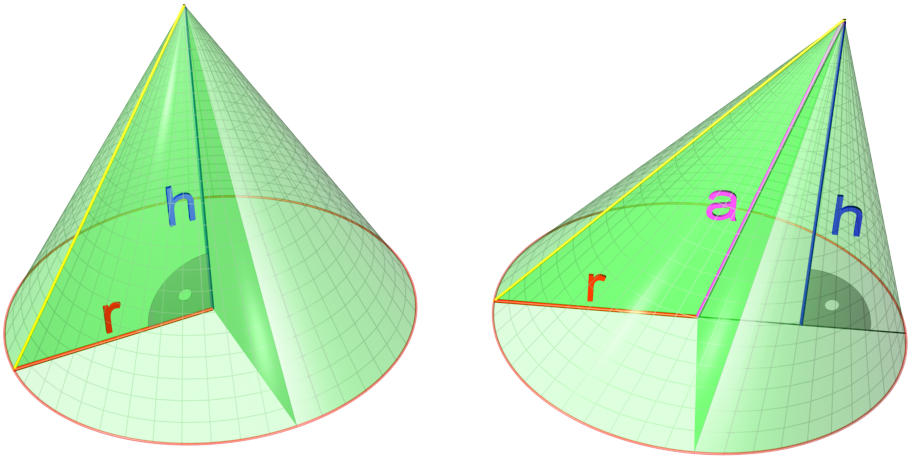




Basic objects and characteristics
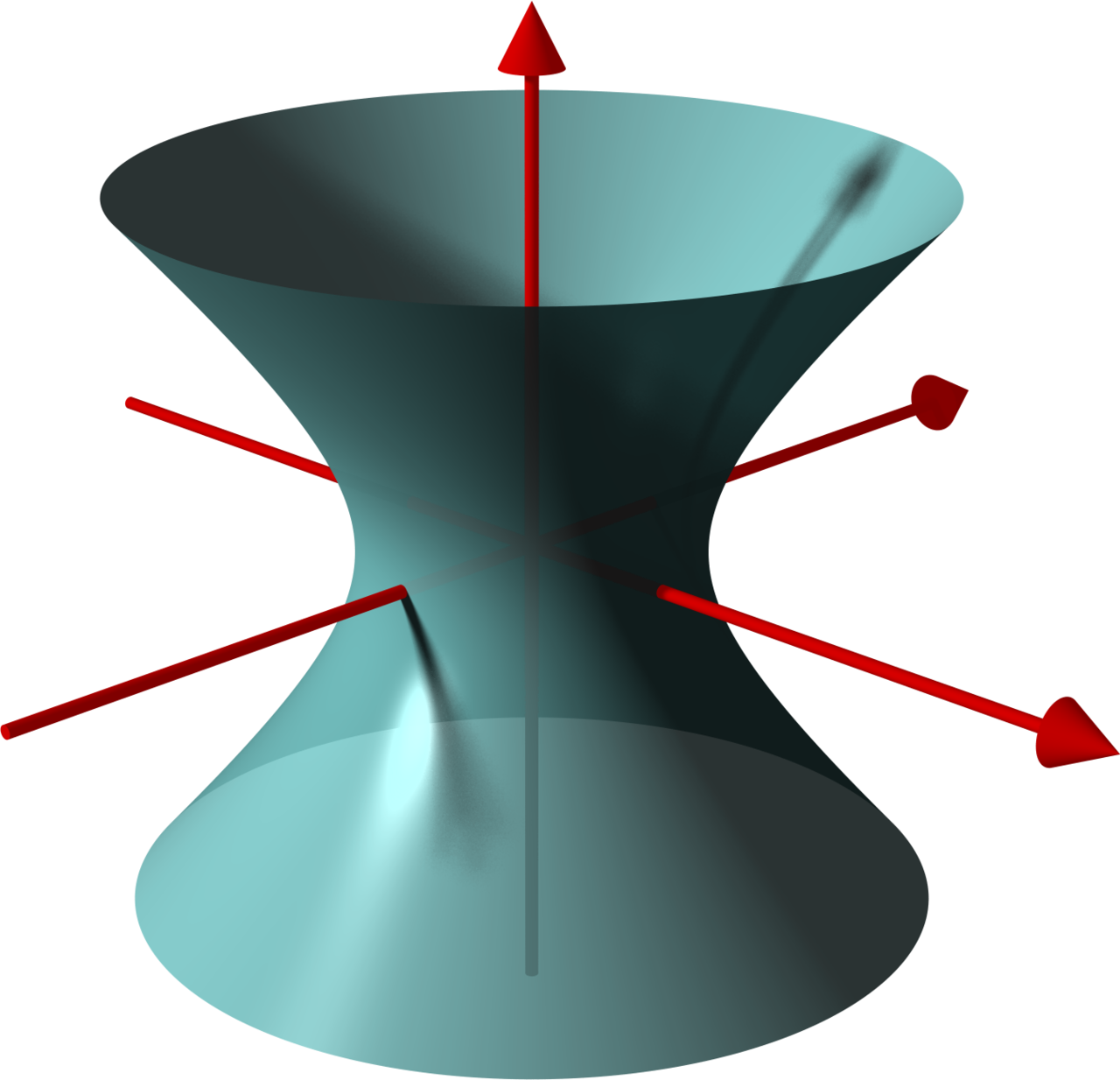
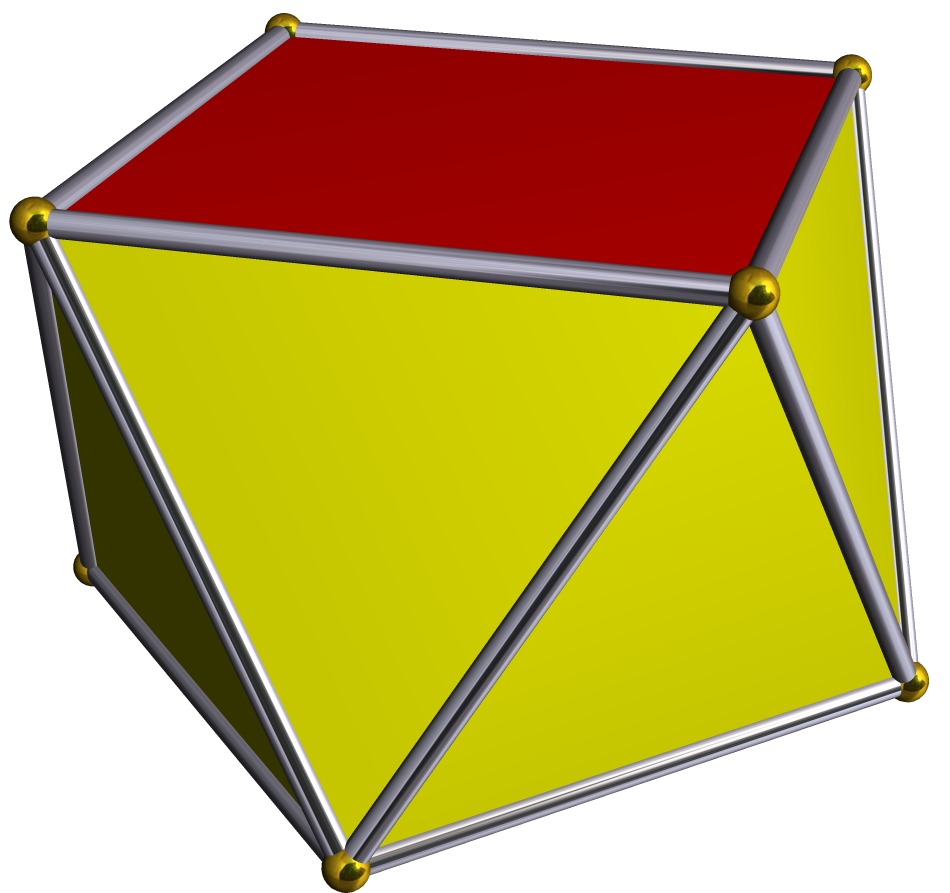
Common solid figures include polyhedra such as cubes and prisms, and curved solids like cylinders, cones and spheres. Examples are the pyramid, prism, sphere, circular cylinder and cone. A solid’s properties are described by boundaries (faces or surfaces), edges, vertices, and interior points. Important measurements are surface area (sum of areas of bounding surfaces) and volume (three-dimensional content). Many formulas relate volumes to base area and height: for instance, a prism’s or cylinder’s volume equals base area times height, while cones and pyramids occupy a fixed fraction of the corresponding prism or cylinder on the same base and height.
Methods and representation
Solid geometry can be studied synthetically, using classical constructions and reasoning, or analytically, via coordinates and algebraic equations in three variables. Tools include cross-sections, Cavalieri-style arguments, calculus for curved solids, and vector or matrix methods for transformations. Modeling and visualization often use nets (plane layouts of a solid’s faces), sections by planes, and parametric surface descriptions. Distinct subtopics include polyhedral combinatorics and differential geometry of surfaces.
History and development
Many ideas of solid geometry have ancient roots. The Pythagoreans and later the Platonists investigated regular solids and their symmetries; Euclid organized many spatial results in later books of his Elements and touched on spherical topics elsewhere. Euclid’s work sits within the broader tradition of Euclidean geometry, distinct from plane geometry although closely connected. Eudoxus contributed key volume comparisons and the method of exhaustion that underlies many volume proofs; he is credited with showing that pyramids and cones have one-third the volume of corresponding prisms and cylinders on the same base and height. Archimedes made decisive advances in formulas for areas and volumes of various curved solids and wrote the treatise "On the Sphere and Cylinder," where he compared a sphere to its circumscribing cylinder and recorded his findings.
Applications and examples
Solid geometry underpins engineering design, architecture, manufacturing and many areas of applied science. Calculations of material quantities, structural capacity and fluid containment all rely on volume and surface computations. In computer graphics and vision, solid geometry principles are used for modeling, collision detection and perspective; see resources on perspective and projection for related techniques. Educational problems commonly involve computing volumes of composite solids, using cross-sections to derive formulas, and analyzing symmetry in polyhedra.
Related branches and notable distinctions
Solid geometry overlaps with several other mathematical areas. Spherical geometry studies figures on the surface of a sphere and follows different rules for "lines" and triangles; it was treated historically by Euclid and others and is important for navigation and astronomy. Analytic solid geometry places objects in coordinate space and connects to multivariable calculus. Topology considers more flexible properties of solids that persist under continuous deformations. For introductions and deeper reads see related topics: points and coordinates, Euclid, Pythagoreans, area and proof techniques.
- Historical sources and treatments: Archimedes, Euclid's Elements, and classical commentaries.
- Common solids and constructions: pyramids, prisms, spheres, cylinders, volume computations.
- Modern uses: engineering, perspective and graphics, modeling and manufacturing.
- Further mathematical context: Euclidean geometry, plane geometry, classical monuments and remarks.
For practical study, combine synthetic reasoning with coordinate methods and experiment with physical or software models. Readers seeking more may consult introductory textbooks and online expositions summarized at basic geometry portals and specialized references indicated above (3D geometry, volume, spheres). Additional reading and resources are available through educational and archival collections: area and surface, proofs, and historical materials by Archimedes and others.
Related articles
Author
AlegsaOnline.com Solid geometry: study of three-dimensional shapes and measures Leandro Alegsa
URL: https://en.alegsaonline.com/art/91668