
Geometry: study of shapes, size, position and dimensions
An informative overview of geometry: definitions, main branches, basic shapes, historical development, applications, and distinctions between flat and solid geometry.
Overview
Geometry is the branch of mathematics concerned with the properties and relations of points, lines, surfaces and solids. It addresses questions of size, shape, position, distance and angle, and it appears in both practical design and abstract theory. While everyday experience emphasizes two- and three-dimensional objects, modern geometry studies higher-dimensional spaces and structures as well.
Image gallery
9 Images



Fundamental concepts and dimensions
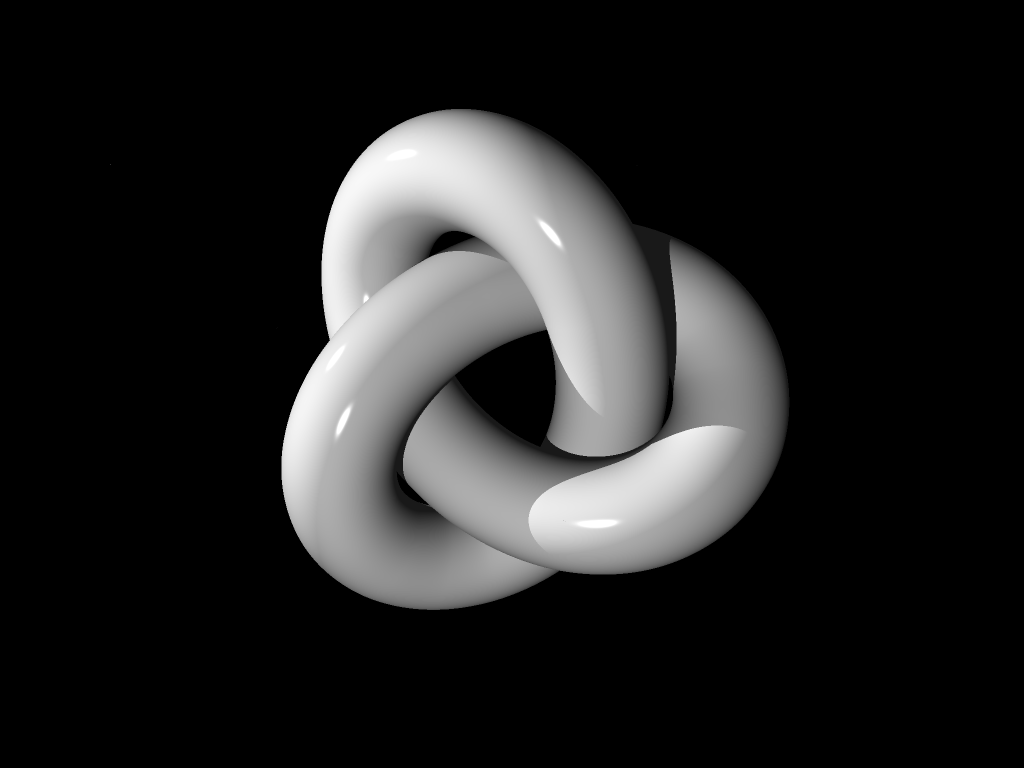
When people refer to flat geometry they usually mean 2D geometry: figures drawn on a plane such as polygons and circles. Solid geometry treats 3D objects like polyhedra and curved surfaces. Beyond these, mathematicians consider spaces of many dimensions and abstract geometric systems; for example, models in four or more dimensions such as 4D analogues arise in physics and pure mathematics.
Basic shapes and examples
- Flat (plane) shapes: circle, triangle, square, rectangle and other polygons.
- Solid (spatial) shapes: cube, cylinder, cone, and sphere.
- Derived concepts: angles, symmetry, congruence, similarity and curvature.
Branches and methods
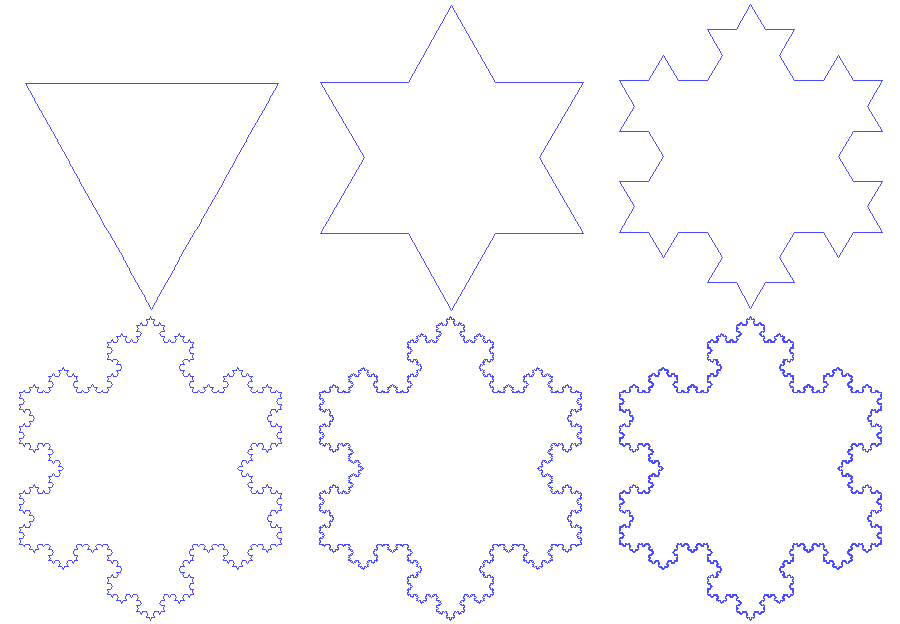
Geometry splits into several subfields. Euclidean geometry studies flat space with familiar axioms; non-Euclidean geometries alter those axioms and model curved surfaces. Analytic geometry uses coordinates and algebra to represent geometric objects. Differential geometry applies calculus to curves and surfaces, while computational and discrete geometry focus on algorithms and finite structures.
History, importance and applications
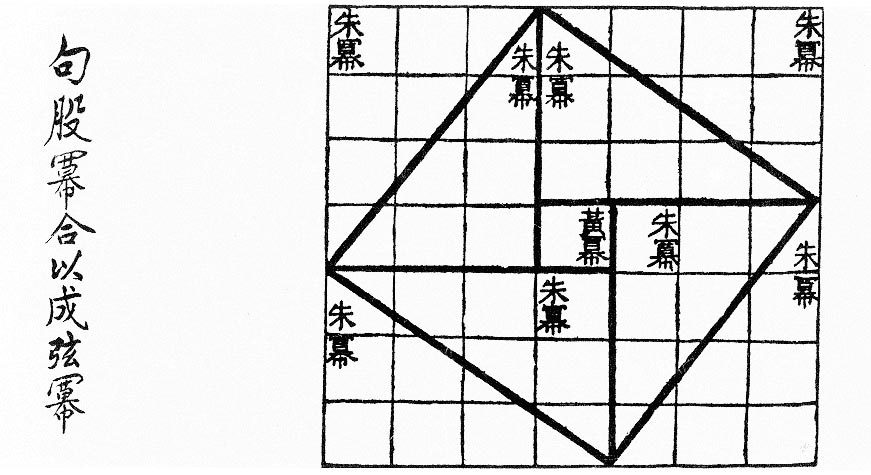
Geometric ideas have ancient origins in surveying, construction and astronomy. Over time they evolved into rigorous systems that underpin navigation, engineering, architecture, computer graphics, robotics and many parts of physics. From designing buildings to computing three-dimensional models, geometry provides the language to describe form and location.
Distinctions and notable facts
Important distinctions include the difference between local properties (like curvature at a point) and global properties (like topological shape), and between synthetic approaches that reason with constructions and analytic approaches that compute with coordinates. Geometry remains both a practical toolkit and a deep theoretical subject connecting to algebra, topology and analysis.
Questions and answers
Q: What is geometry?
A: Geometry is a branch of mathematics that deals with the size, shapes, positions and dimensions of objects.
Q: What types of shapes can we see or make?
A: We can only see or make flat (2D) or solid (3D) shapes.
Q: Who is able to study shapes that are beyond 3D?
A: Mathematicians (people who study math) are able to study shapes that are 4D, 5D, 6D, and so on.
Q: What are some examples of simple shapes in flat geometry?
A: Squares, circles and triangles are some of the simplest shapes in flat geometry.
Q: What are some examples of simple shapes in solid geometry?
A: Cubes, cylinders, cones and spheres are simple shapes in solid geometry.
Q: Can we see or make shapes that are beyond 3D?
A: No, we can't see or make shapes that are beyond 3D, but mathematicians are able to study and imagine them.
Q: What is the difference between flat and solid geometry?
A: Flat geometry deals with shapes that are 2D, while solid geometry deals with shapes that have 3D form.
Related articles
Author
AlegsaOnline.com Geometry: study of shapes, size, position and dimensions Leandro Alegsa
URL: https://en.alegsaonline.com/art/38149