
Slow loris (Nycticebus): nocturnal strepsirrhine primates of Asia
Nocturnal primates of the genus Nycticebus found across South and Southeast Asia, notable for slow, deliberate movement, a varied diet including gums and nectar, and pressing conservation concerns.
Overview
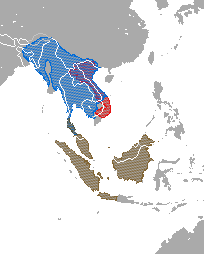
The slow loris is a group of nocturnal primates in the genus Nycticebus. They are small to medium-sized strepsirrhine primates that occur across parts of South and Southeast Asia. Most authorities recognize about eight species, including several island and mainland forms. Slow lorises are best known for their slow, cautious movements, large forward-facing eyes adapted to night activity, and a tendency to move deliberately through the forest canopy.
Image gallery
10 Images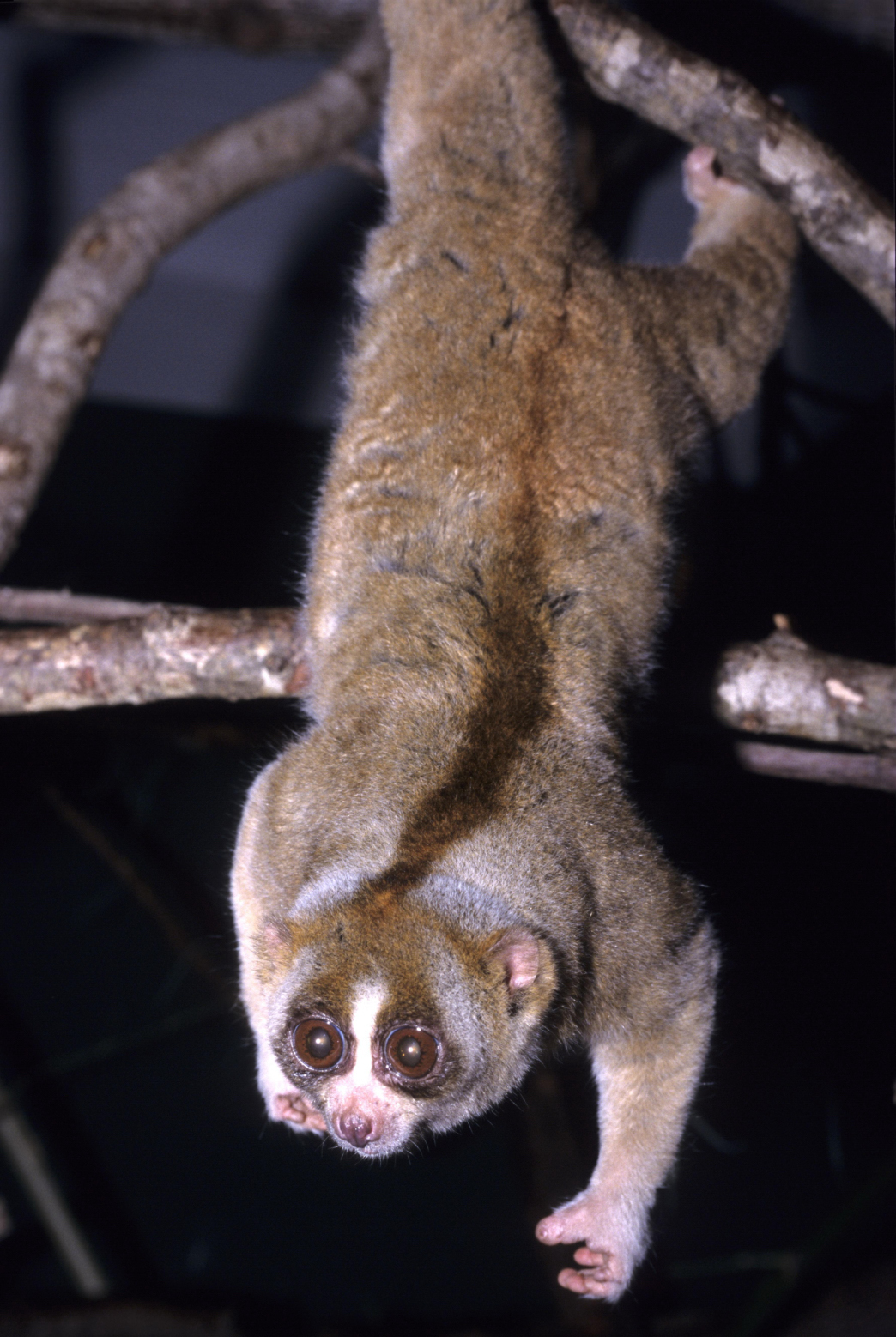




Taxonomy and species
The genus contains multiple named species, some of which are geographically restricted. Well-known taxa include the Sunda slow loris (N. coucang), the Bengal slow loris (N. bengalensis), the pygmy slow loris, the Javan slow loris, and several Bornean and Philippine island forms. Their closest living relatives are the slender lorises found in southern India and Sri Lanka; beyond them are the African lorisids. Other loris-like primates, the broader lorisoids such as the various galagos, are more distant, and all these groups share an older relationship with the lemurs of Madagascar. Their deep evolutionary timeline is not completely resolved: the fossil record is sparse and different molecular clock analyses yield varying dates for divergences.
Anatomy and behavior
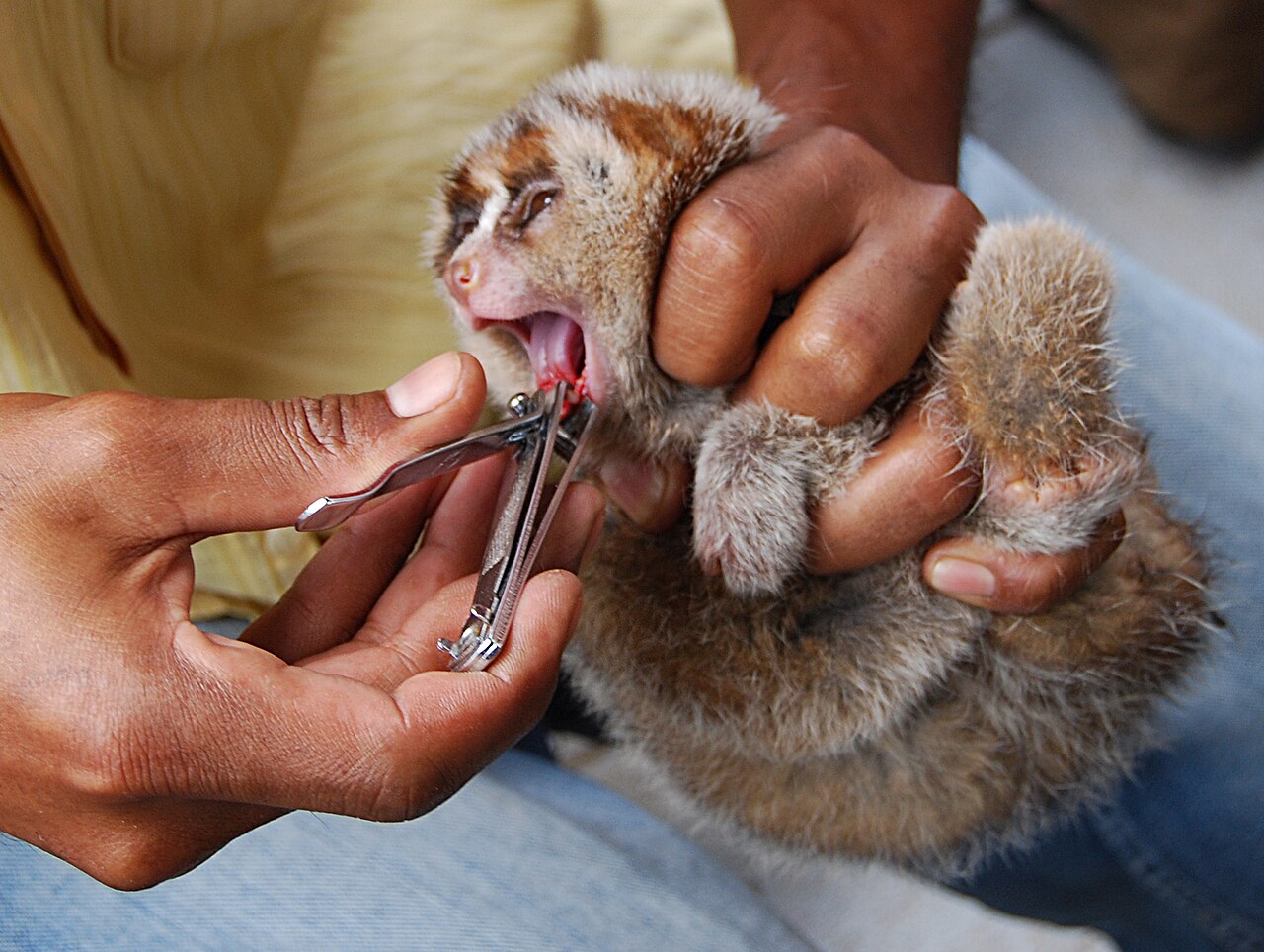
Slow lorises have stout bodies, a rounded head, and strong grasping hands and feet that allow them to cling to branches. Like other strepsirrhines, they possess specialized dentition for grooming and for processing food. They move deliberately to avoid detection and to conserve energy, and many species show complex social signals during brief daytime rests. A distinctive and unusual trait is their ability to produce a secretion from a brachial gland that, when combined with saliva, can form a defensive irritant; this has been interpreted as a form of venomous defense in some reports, and the bite can cause serious reactions in humans and predators.
Diet and ecological role
Slow lorises are dietary generalists with a pronounced reliance on plant exudates and sweet resources. Their diet includes fruits, tree gums, gums, nectar, insects, small vertebrates and eggs. Field studies have reported variable proportions: an earlier study of the Sunda slow loris recorded about 71% fruit and gums and 29% animal prey, while a later investigation of another population found roughly 43.3% gum, 31.7% nectar, 22.5% fruit and only 2.5% arthropods and other animal matter. By feeding on gums and nectar and by visiting flowers and fruiting trees, slow lorises can act as nectar feeders and potentially as pollinators and seed dispersers in their habitats.
Conservation and interactions with people
Many slow loris populations are declining because of habitat loss, fragmentation and capture for the illegal pet trade and for use in traditional practices. Their slow metabolism and specialized dietary needs make them difficult to keep in captivity, and removal from the wild often results in poor survival. Conservation efforts include habitat protection, legal restrictions on trade, rescue and rehabilitation centers, and public education to reduce demand for wild-caught animals. Field research and community-based conservation are important to improve long-term prospects for these species.
Notable facts and distinctions
- Slow lorises are nocturnal and use large eyes and acute hearing to navigate at night.
- They are unusual among primates for their slow, stealthy locomotion and tendency to freeze when threatened.
- Several species are island endemics and show local adaptations to different forest types.
- Their evolutionary relationships are clarified by comparative anatomy and genetics but remain partially uncertain due to a limited fossil record and divergent molecular clock results.
For further general information on classification, natural history and conservation, follow resources on the genus Nycticebus, listed species accounts at species databases, and reviews of strepsirrhine biology at links addressing strepsirrhine and primate diversity. Regional context can be explored via sources for Southeast and Asia, and for related taxa such as slender lorises and African lorisids. See also material on lorisoids, galagos, and the broader strepsirrhine linkages to lemurs of Madagascar.
Questions and answers
Q: What is the genus of slow lorises?
A: The genus of slow lorises is Nycticebus.
Q: Where do slow lorises live?
A: Slow lorises live in southeast Asia and nearby areas.
Q: How many species of slow loris are there?
A: There are about eight species of slow loris.
Q: What are the closest relatives of the group?
A: The closest relatives of the group are the slender lorises of southern India and Sri Lanka.
Q: What does a slow loris eat?
A: Slow lorises eat insects, small birds and reptiles, eggs, fruits, gums, nectar and some vegetation.
Q: What did a 1984 study find was 71% of a Sunda slow loris' diet?
A: A 1984 study found that 71% of a Sunda slow loris' diet was fruit and gums.
Q: What did a more detailed 2002-2003 study find was 43.3% of another Sunda slow loris population's diet?
A: A more detailed 2002-2003 study found that 43.3% of another Sunda slow loris population's diet was gum.
Related articles
Author
AlegsaOnline.com Slow loris (Nycticebus): nocturnal strepsirrhine primates of Asia Leandro Alegsa
URL: https://en.alegsaonline.com/art/91160