
Smilodon — the saber-toothed cat of the Pleistocene
Smilodon, a genus of saber-toothed felids from the Americas, includes three well-known species. This article summarizes their anatomy, fossil record, likely behavior, and scientific importance.
Overview
Smilodon is a genus of extinct saber-toothed cats that lived in the Americas during the Pleistocene epoch. Best known for their elongated upper canine teeth and robust builds, members of this genus are among the most famous prehistoric predators. Smilodon species ranged in size and habitat preference, and they have been studied extensively because of abundant fossil remains—especially from tar pit deposits.
Image gallery
10 Images



Anatomy and adaptations
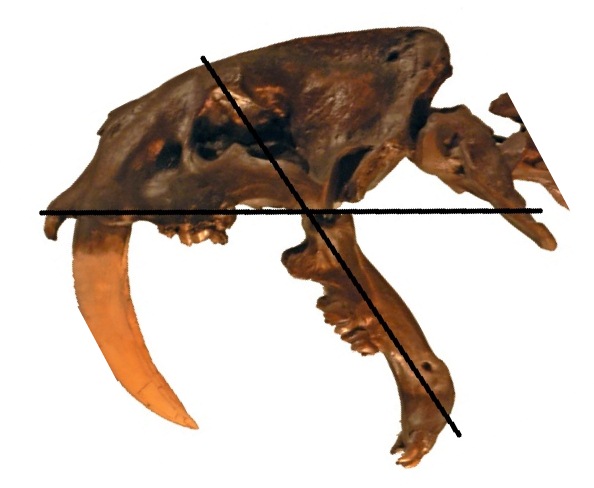
Smilodon is recognized by several distinctive features: exceptionally long, flattened upper canines; a relatively short, powerful neck and forebody; and stout limbs. The canines could be long and narrow, sometimes estimated to reach over a quarter of a meter in the largest species, and protruded visibly when the mouth was open. The skeleton shows adaptations for strength rather than sustained speed—broad shoulders, strong forelimbs, and muscular attachments that suggest powerful grappling and subduing of large prey. These traits have been interpreted as adaptations for ambush hunting and delivering precision bites, rather than long chases.
Species and fossil record
Three species of Smilodon are commonly recognized by paleontologists. Key examples include:
- Smilodon gracilis (sometimes called S. fragilis): the earliest and smaller species, which appeared in the early Pleistocene roughly 2.5 to 0.5 million years ago.
- Smilodon fatalis (sometimes linked with the name S. californicus): a medium-large species that lived from about 1.6 million years ago until roughly 10,000 years ago and is well represented at the Rancho La Brea tar pits (Rancho La Brea).
- Smilodon populator: the largest and most massive, inhabiting eastern South America until the end of the Pleistocene (about 1 million to 10,000 years ago); it may have stood around 1.2 m at the shoulder and weighed several hundred kilograms (South America).
Many sites rich in late Pleistocene fossils have yielded Smilodon remains. Asphaltic tar deposits accumulated large assemblages of animals trapped and preserved over millennia; such deposits have produced hundreds of thousands to around a million bones of Pleistocene mammals, including very large samples of Smilodon material (asphalt, Pleistocene, tar pits).
Ecology and behavior
Researchers infer Smilodon’s hunting style from its anatomy and the context of fossil finds. The combination of strong forelimbs and saber-like teeth suggests a technique focused on ambush, grapple, and a targeted killing bite—possibly to the throat or belly of large herbivores. The presence of multiple individuals at single sites, healed injuries on many skeletons, and comparisons with living carnivores have prompted debate about social behavior; some experts propose at least occasional group hunting or social structure, while others stress solitary ambush behavior could also explain fossil patterns.
Importance and notable facts
Smilodon occupies an important place in public imagination and scientific study. It illustrates how different predatory strategies evolved among felids and provides insight into Pleistocene ecosystems, predator–prey dynamics, and extinction at the end of the last Ice Age. Iconic fossil concentrations, particularly at tar pits, continue to be valuable sources for anatomy, pathology, and paleoecology studies and remain central to museum exhibits and public education.
Questions and answers
Q: What is Smilodon?
A: Smilodon was a genus of saber-toothed cat.
Q: How many species of Smilodon were there?
A: There were three species of Smilodon.
Q: What was the ancestral species of Smilodon?
A: The ancestral, smaller species of Smilodon was Smilodon gracilis (or S. fragilis).
Q: How big was Smilodon populator?
A: Smilodon populator was 1.2 m high at the shoulder, 2.1 m (83 in) long on average, and an estimated weight of 220 to 400 kg.
Q: What were the upper canines of Smilodon populator like?
A: The upper canines of Smilodon populator reached 28 cm (11 in) and protruded up to 17 cm (6.7 in) out of the upper jaw.
Q: What is Smilodon fatalis known for?
A: Smilodon fatalis is the famous cat known from the Rancho La Brea tar pits in Los Angeles.
Q: How big was Smilodon fatalis?
A: Smilodon fatalis was about the size of a female lion, weighing perhaps 200 kg and about 1 metre tall at the shoulders.
Related articles
Author
AlegsaOnline.com Smilodon — the saber-toothed cat of the Pleistocene Leandro Alegsa
URL: https://en.alegsaonline.com/art/91224
Sources
- www3.interscience.wiley.com : online
- doi.org : 10.1016/j.palaeo.2004.01.009
- plosone.org : plosone.org/article/info:doi/10.1371/journal.pone.0011412
- doi.org : 10.1371/journal.pone.0024971
- digitalcommons.unl.edu : "Functional morphology and the evolution of cats"