
Slaughterhouse (abattoir): function, processes, and issues
Overview of slaughterhouses (abattoirs): what they are, typical processes and parts, history and regulation, animal welfare and public‑health concerns, and economic and environmental aspects.
A slaughterhouse, often referred to by the French term abattoir, is a facility where farm animals are killed and processed into food products. The end product of most slaughter operations is meat, but facilities also separate hides, offal and other materials for secondary uses. Commonly processed species include cattle for beef and veal, pigs for pork, poultry such as chicken, waterfowl like ducks and geese, and occasionally horses. Terminology and scale vary by country: small local abattoirs coexist with large industrial plants.
Image gallery
10 Images


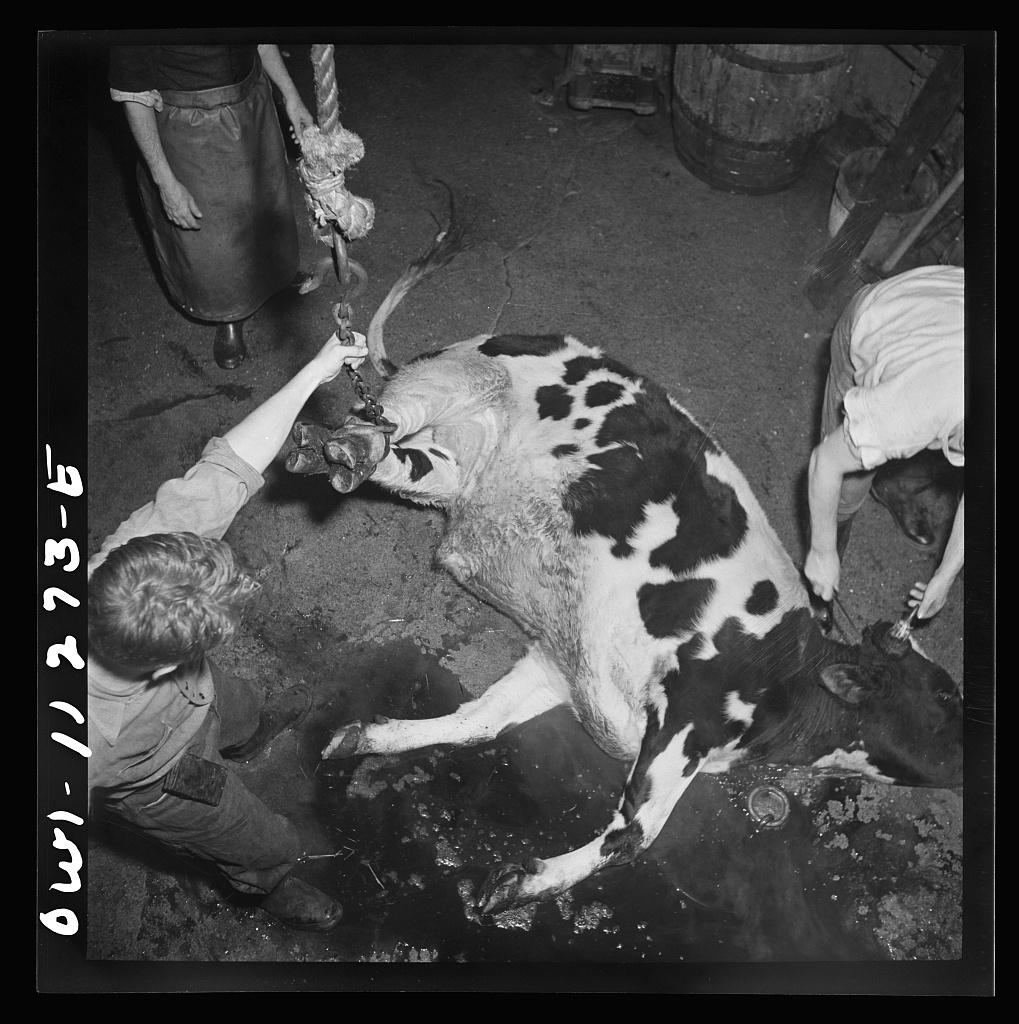


Layout and routine operations
Typical slaughterhouse operations are organized into receiving, slaughter, carcass dressing, inspection, chilling and packing. Facilities are designed to move animals and products along controlled pathways to reduce contamination, to allow inspection by public‑health authorities, and to collect byproducts for rendering. Modern plants may include automated conveyors, stunning equipment, and temperature‑controlled rooms for chilling and aging.
Key steps and terms
- Stunning: rendering an animal unconscious before killing to reduce pain.
- Bleeding and dressing: removal of blood and internal organs and hygienic preparation of the carcass.
- Inspection: veterinary or regulatory checks for disease or contamination.
- Rendering and byproduct processing: turning offal, fat and tissues into secondary products.
History and regulation
Slaughtering has been carried out in towns and farms for millennia; the industrialization of the late 19th and 20th centuries introduced large centralized plants with mechanized lines. Because slaughterhouses are critical points for food safety, they are subject to national laws, public‑health inspection regimes and international trade standards. Regulations address hygiene, traceback, worker safety and environmental discharges.
Welfare, public‑health and environmental concerns
Animal welfare is a major focus, with rules on humane handling and acceptable stunning methods. Public health concerns concentrate on preventing contamination, controlling pathogens and ensuring proper refrigeration. Environmental issues include wastewater, odor and the management of animal waste; rendering and composting are common mitigation strategies. Worker safety is also important, as slaughter work can be physically demanding and hazardous.
Variations and significance
Facilities range from small mobile units serving local farms to high‑capacity industrial plants serving national and export markets. Cultural and religious requirements (for example, halal and kosher slaughter) affect procedures and certification. Slaughterhouses are a vital link in the food chain: they transform livestock into edible products, generate materials for industries such as leather and pet food, and are tightly regulated to protect consumers and animals alike.
For further reading on terminology, regulation and best practices see resources indicated by links throughout this article: abattoir, farm, animals, meat, cattle, beef, veal, pigs, pork, chicken, ducks, geese and horses.
Related articles
Author
AlegsaOnline.com Slaughterhouse (abattoir): function, processes, and issues Leandro Alegsa
URL: https://en.alegsaonline.com/art/91045