
Pig (domestic pig): biology, behavior, history and human uses
Overview of pigs: taxonomy, physical traits, behavior, domestication, economic and cultural roles, health considerations, and notable facts about intelligence and uses.
The pig is a widespread domesticated mammal belonging to the genus Sus and the family Suidae, which are members of the even-toed ungulates (Artiodactyla). Closely related wild species and relatives include the babirusa and the warthog. Most suids are native to regions historically described as the Old World and adapt to a wide range of habitats found across the Old World continents. The domestic pig derives from wild boars and has been shaped by thousands of years of human selection.
Image gallery
10 Images





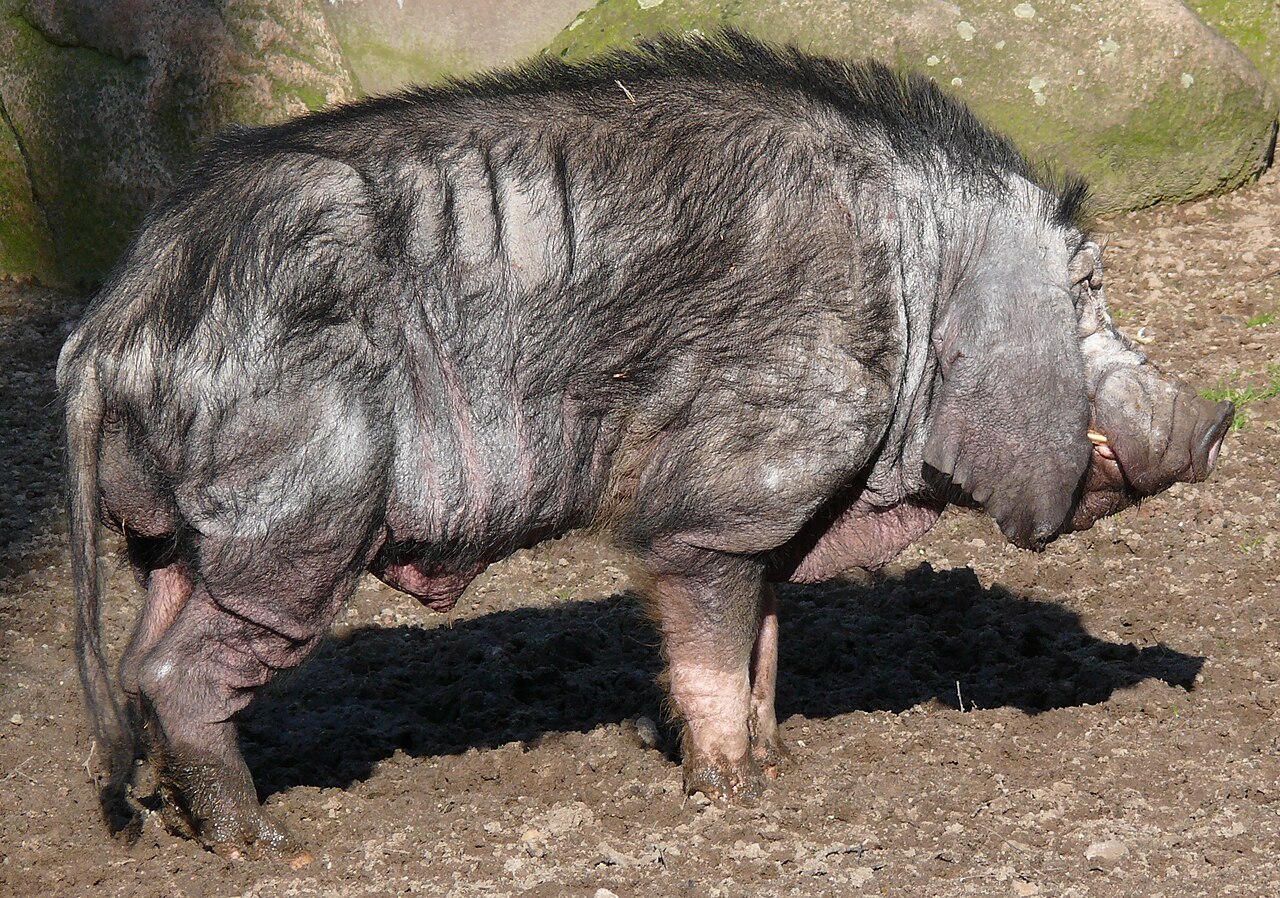

Appearance and anatomy
Pigs have a robust, barrel-shaped body with relatively short legs. Their head features a flexible snout used for rooting and a dental pattern that often includes prominent canine tusks. Domestic varieties vary in size, coat colour and ear shape: many commercial breeds display pale skin often described as pink, while some companion breeds such as pot-bellied pigs show darker or mottled colours. Piglets are commonly called piglets or pups and develop rapidly after birth. As omnivores, pigs eat a mixture of plant and animal matter (omnivorous feeding), and their ancestor is the Eurasian wild boar (Sus scrofa).
Behavior and cognition
Pigs are social animals that form groups and communicate using vocalizations and body language. They are widely regarded as intelligent and capable of learning complex tasks; studies and anecdotes have shown they can solve problems, learn routines and respond to training (intelligence and learning). Experimental work has even demonstrated pigs interacting with simple computer interfaces to obtain rewards (video game-like tasks). Typical behaviours include rooting with the snout and wallowing in mud to protect skin, deter parasites and regulate body temperature (mud wallowing).
Domestication, history and distribution
Humans domesticated wild boar populations independently in several regions, after which selective breeding produced animals adapted for meat production, draught work and other purposes. Domestic pigs today exist in many breeds tailored to different climates, production systems and cultural preferences. Young pigs are raised on farms for meat and breeding, but some have been kept as companion animals or used in specialty roles.
Uses, cultural attitudes and health
The flesh of pigs is an important food source known as pork. Cultural and religious attitudes toward pork vary: some Jewish (Jewish) and Muslim (Muslim) communities and certain Christian groups (Christian denominations) prohibit its consumption for doctrinal reasons. Beyond food, pigs have been used to locate subterranean fungi such as truffles, pull small carts, and in some training programs to detect explosives and other hazards. Recreational activities like pig races exist in fairs and festivals.
- Common practical roles: meat production, truffle hunting, draft work.
- Notable traits: strong sense of smell, social complexity, rapid growth.
- Husbandry concerns: disease control and parasite management are important for animal welfare and food safety.
Important distinctions and notable facts
Pigs differ from other hoofed mammals in anatomy and behaviour; for example, their rooting habit alters soils and vegetation in ways distinct from ruminants. Although long stereotyped as ‘dirty’, most soiling occurs because pigs lack functional sweat glands and use mud to cool and protect their skin. Farmers and veterinarians monitor pig health closely to reduce zoonotic risks and ensure that meat is safe for consumption.
Further reading and resources may be found under taxonomic entries, animal behaviour studies and agricultural guides: see genus Sus, family Suidae and related entries on Artiodactyla.
Questions and answers
Q: What is the scientific name of pigs?
A: Pigs are in the genus Sus and belong to the Suidae family of even-toed ungulates. Their ancestor is the common Eurasian wild boar (Sus scrofa).
Q: What do baby pigs called?
A: Baby pigs are called piglets or pups.
Q: What religions prohibit eating pork?
A: The Jewish and Muslim religions, and some Christian denominations, believe eating pork is wrong.
Q: How do pigs protect themselves from sunlight?
A: Pigs roll in mud to protect themselves from sunlight. This also helps to keep their skin moist and lower their body temperature on hot days.
Q: Are pigs omnivores?
A: Yes, pigs are omnivores which means that they eat both plants and animals.
Q: Are pigs intelligent animals?
A: Yes, pigs are very social and intelligent animals. They are even able to learn how to play video games.
Q:What uses do people have for domestic pigs?
A:Domestic pigs are commonly used as working animals. They are used to hunt for truffles, pull carts and sniff out landmines. Pig races also exist as a form of entertainment
Related articles
Author
AlegsaOnline.com Pig (domestic pig): biology, behavior, history and human uses Leandro Alegsa
URL: https://en.alegsaonline.com/art/76873
Sources
- commons.wikimedia.org : Domestic pigs
- merriam-webster.com : "Piglet - Definition and More from the Free Merriam-Webster Dictionary"
- nytimes.com : "Pigs Prove to Be Smart, if Not Vain"
- peppapig.com : "Peppa Pig | Official Site | Welcome to the grown ups site for Peppa Pig"
- telegraph.co.uk : telegraph.co.uk
- goats4h.com : Pig Information
- homestead.org : Getting Started with Pigs