
Semitic languages: overview, features, history and modern distribution
A concise encyclopedia entry on the Semitic branch of Afroasiatic languages: features, classification, writing systems, historical development, major languages and current status.
The Semitic languages form a major branch of the Afroasiatic family and have been spoken for millennia across parts of North Africa, the Arabian peninsula, the Horn of Africa and the broader Middle East. They include both ancient tongues documented in inscriptions and manuscripts and living modern languages used in everyday communication, religion and literature. Semitic languages have shaped regional cultures and religious traditions and remain central to the study of ancient Near Eastern history.
Image gallery
4 Images

Key structural characteristics
Semitic languages share a number of typological features that distinguish them from many other language families. Among the most notable is a nonconcatenative morphological system in which words are formed by interleaving roots—typically sequences of two or three consonants—with vocalic and affixal patterns. This so‑called root-and-pattern or templatic morphology produces related words (for example, verbs and nouns) from a common consonantal root. Phonologically, many Semitic languages exhibit emphatic consonants and a range of pharyngeal and uvular sounds. Grammatical features often include gender, number, and a system of pronouns and clitics that attach to verbs or nouns.
Classification and historical development
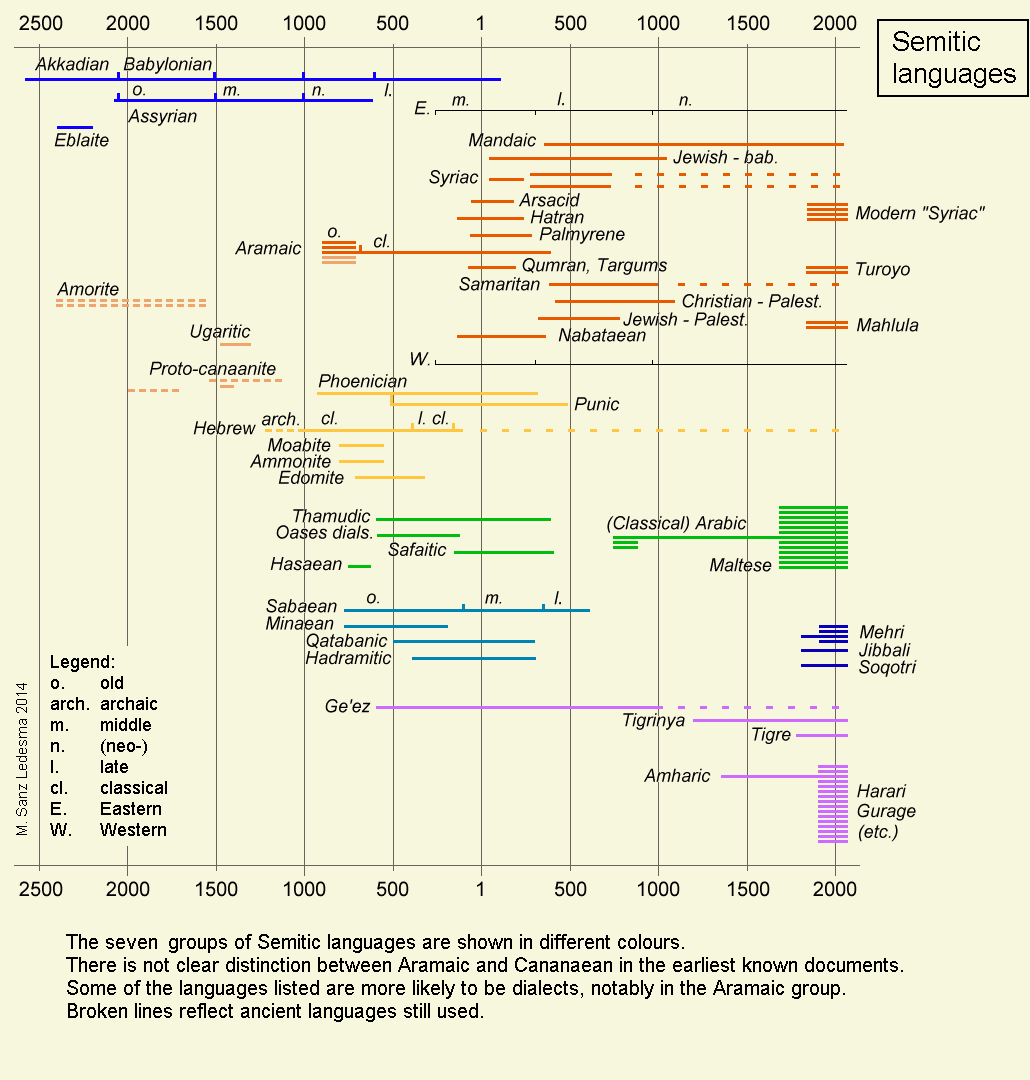
Linguists divide the family into several branches. Broad groupings can be summarized as:
- East Semitic — represented historically by Akkadian, attested in Mesopotamian cuneiform.
- Northwest Semitic — includes Aramaic and the Canaanite languages such as Hebrew and Phoenician.
- Central and Southern groups — Arabic and its varieties, South Semitic languages of southern Arabia, and the Ethio‑Semitic languages of the Horn of Africa.
Comparative reconstruction points to a Proto‑Semitic ancestor spoken in the Near East. From that source languages diversified over several thousand years as populations migrated, adapted to new environments, and came into contact with neighboring families.
Writing systems and major texts
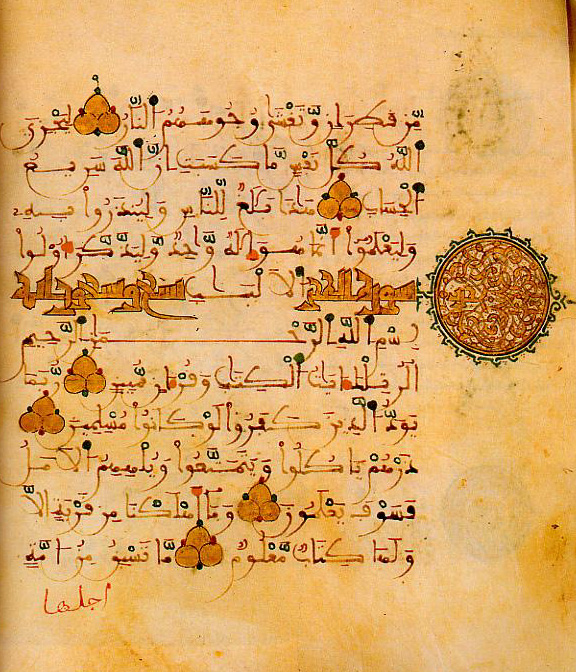
Semitic languages have been written in a variety of scripts. Several earliest alphabetic systems (for example, Phoenician) were used to write Northwest Semitic languages and later influenced other alphabets. Hebrew and Arabic are traditionally written with consonant‑oriented scripts (often called abjads), while Ge'ez script in Ethiopia functions as an abugida for Ethio‑Semitic languages. Important literary and religious corpora include Akkadian inscriptions and epics, the Hebrew Bible, Aramaic documents and the Qur'an, each central to historical and religious studies.
Modern distribution and important languages
Today Semitic languages are spoken by hundreds of millions of people. Arabic is the largest and most widely distributed Semitic language, used across many countries in Western Asia and North Africa and as a liturgical language. Hebrew is the revived national language of Israel with a continuous literary tradition. Various forms of Aramaic survive in small communities and liturgical contexts. In the Horn of Africa, Ethio‑Semitic languages such as Amharic and Tigrinya have large speaker populations. Maltese is noteworthy as a Semitic language written in the Latin alphabet and an official language of the European Union. Diaspora communities in North America and Europe maintain these languages abroad.
Notable facts, variation and conservation
The name "Semitic" is derived from a biblical eponym often cited in historical linguistics; scholars use it today as a linguistic term without implying direct cultural or ethnic identity, a reminder of the different ways language and history intersect (Shem being the traditional namesake). Many Semitic varieties are robust and expanding, while others—especially small Aramaic dialects and minority South Arabian languages—are endangered and the subject of documentation efforts. Linguists and communities continue to work on describing, teaching and revitalizing threatened varieties to preserve linguistic diversity.
For introductions and language-specific resources see language surveys and grammars, and consult specialist publications and databases for primary texts and comparative studies (Afroasiatic overview, regional histories).
Related articles
Author
AlegsaOnline.com Semitic languages: overview, features, history and modern distribution Leandro Alegsa
URL: https://en.alegsaonline.com/art/88766