
Sherpa: Himalayan people, culture, and role in mountaineering
The Sherpa are an ethnic group from Nepal and the high Himalaya, known for Tibetan cultural roots, high‑altitude skills, the Sherpa language, and their central role guiding climbers like Tenzing Norgay.
Overview
The Sherpa are an ethnic community originating in the high mountain regions of the Himalaya, primarily in eastern Nepal. They live at high elevations in valleys and villages near some of the world’s tallest peaks and are widely recognized for their competence in mountain travel and logistics. Sherpa participation has been essential to exploratory and commercial climbing in the region for more than a century.
Image gallery
6 Images



Culture, language and society
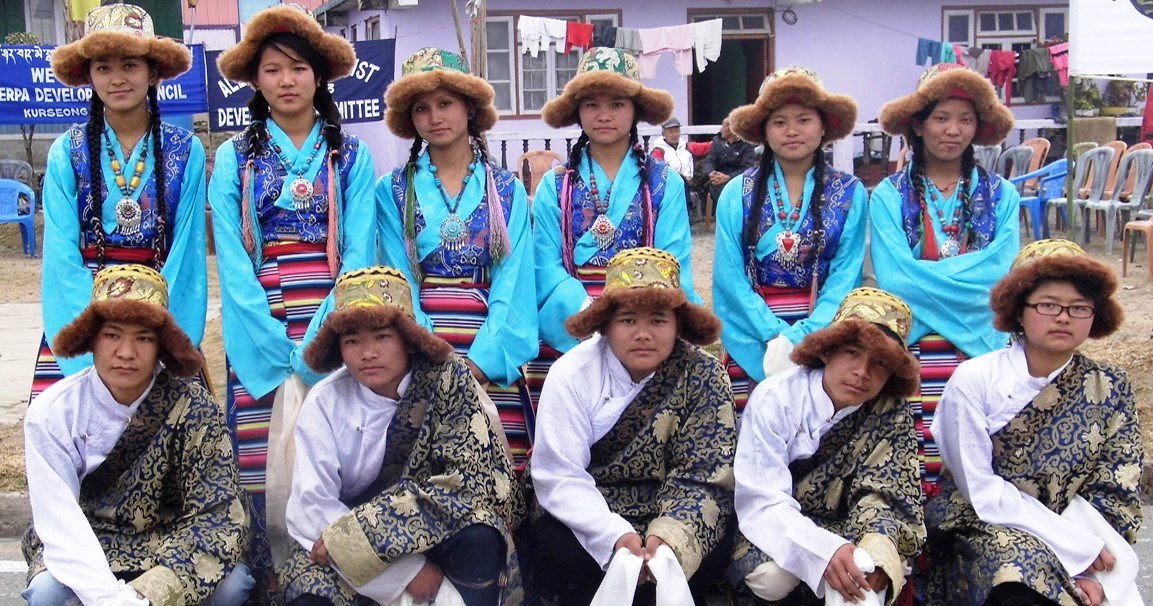
Sherpa culture traces roots to Tibetan cultural and linguistic traditions. The Sherpa language belongs to the Tibetic family and many Sherpa practice forms of Tibetan Buddhism mixed with local customs. Traditional livelihoods include subsistence agriculture, trade, and increasingly tourism and mountaineering services. Communities maintain distinct social practices, festivals, and monasteries that anchor local life.
Role in mountaineering
Sherpa people commonly work as guides, high‑altitude porters, cooks and rope‑fixers for climbing expeditions. Their knowledge of local terrain, weather patterns and route fixing has been indispensable to international climbs of peaks such as those accessed from the Mount Everest region. A famous Sherpa mountaineer, Tenzing Norgay, partnered with Edmund Hillary on the 1953 expedition that reached Everest’s summit, bringing global attention to Sherpa skill and sacrifice.
Characteristics and adaptations
Sherpa communities have long lived at high elevation and show cultural and physiological adaptations that help them operate in low‑oxygen environments. These adaptations, combined with extensive local experience, make many Sherpa members highly effective at sustained work at altitude. Nonetheless, high‑altitude work remains hazardous and demands specialized equipment and training.
History and modern developments
Historically, Sherpa migration and settlement in the Himalaya followed trade and pastoral routes from the Tibetan plateau. During the 20th and 21st centuries, growing mountaineering tourism brought new income, infrastructure and challenges: economic opportunities through guiding and lodge‑keeping, alongside social changes, environmental pressures and concerns about equitable compensation and safety for mountain workers.
Notable points
- Cultural heritage: Strong ties to Tibetan Buddhism and Himalayan traditions.
- Essential mountain role: Longstanding reputation as expert high‑altitude guides and support workers.
- Modern issues: Debates over workers’ rights, environmental impact, and the preservation of traditional lifestyles in the face of tourism.
The Sherpa identity combines a distinct ethnic and linguistic heritage with practical knowledge of high mountain life. Their contributions — from local stewardship of sacred landscapes to the logistical backbone of Himalayan climbing — remain central to how the world understands and visits the high Himalaya.

Settlement Areas
Most Sherpas live in the eastern regions of Nepal. The core area of their distribution is the Solu-Khumbu region, which consists of the Khumbu, Pharak and Solu regions. They also live in the Rolwaling valley further west and the Arun and Barun valleys to the east. The Sherpas in the Helambu region north of Kathmandu are less related to them, originating from southern Tibet ("shar" here means east of the Bhote Kosi near Dhunche). By census in 2001 about 155,000 Sherpas were identified in Nepal. The oldest Sherpa village in Nepal, Pangboche, is said to have been built over 300 years ago.
In India, more than 20,000 Sherpas live (as of 1997), mainly in the state of Sikkim as well as in the Darjiling district of the state of West Bengal and in the state of Arunachal Pradesh.
There are about 2,600 Sherpas (夏尔巴人) living in the People's Republic of China, about 80% of whom are Sherpa-speaking. Although they are not officially recognized as one of China's 56 nationalities, they have a special status in the Tibet Autonomous Region that is roughly equivalent to "internal recognition". Their settlement area is Xigazê County in Tibet, especially two places directly on the China-Nepal border: in Zhêntang (陈塘镇) Greater Township of Dinggyê County (定结县) live ca. 1,600, in the large commune of Zham (樟木镇) of Nyalam County (聂拉木县) about 1,000 Sherpas.
About 1,100 Sherpas live in the United States, of which just under 500 live in New York (as of 1998).
Translated meanings
Since British extreme sportsmen, explorers and adventurers hired men from the Sherpa people as porters in the Himalayas in the first half of the 20th century, the name Sherpa has often been used synonymously for high mountain porter, sometimes without knowledge of the original meaning. The porters, who carry equipment and luggage in the mountains up to the base camps, are distinguished from the high mountain porters or Sherpas. The most famous Sherpa is Tenzing Norgay (1914-1986), who succeeded as an equal companion with Sir Edmund Hillary in the first ascent of Mount Everest in 1953.
Derived from this, today chief negotiators of a government are also called "Sherpa".
Related articles
Author
AlegsaOnline.com Sherpa: Himalayan people, culture, and role in mountaineering Leandro Alegsa
URL: https://en.alegsaonline.com/art/89705