
Schlumbergera: the holiday cacti genus and its cultivation
Schlumbergera is a small genus of epiphytic cacti from southeastern Brazil, widely grown as holiday houseplants for their showy winter blooms and numerous cultivars.
Overview
Schlumbergera is a small genus of epiphytic cacti notable for its flattened stem segments and conspicuous winter or late-autumn flowers. Native to humid highland forests of southeastern Brazil, the group includes a handful of wild species and many horticultural hybrids. The plants are commonly cultivated as houseplants and are often given common names that reflect their blooming season.
Image gallery
10 Images




Appearance and structure
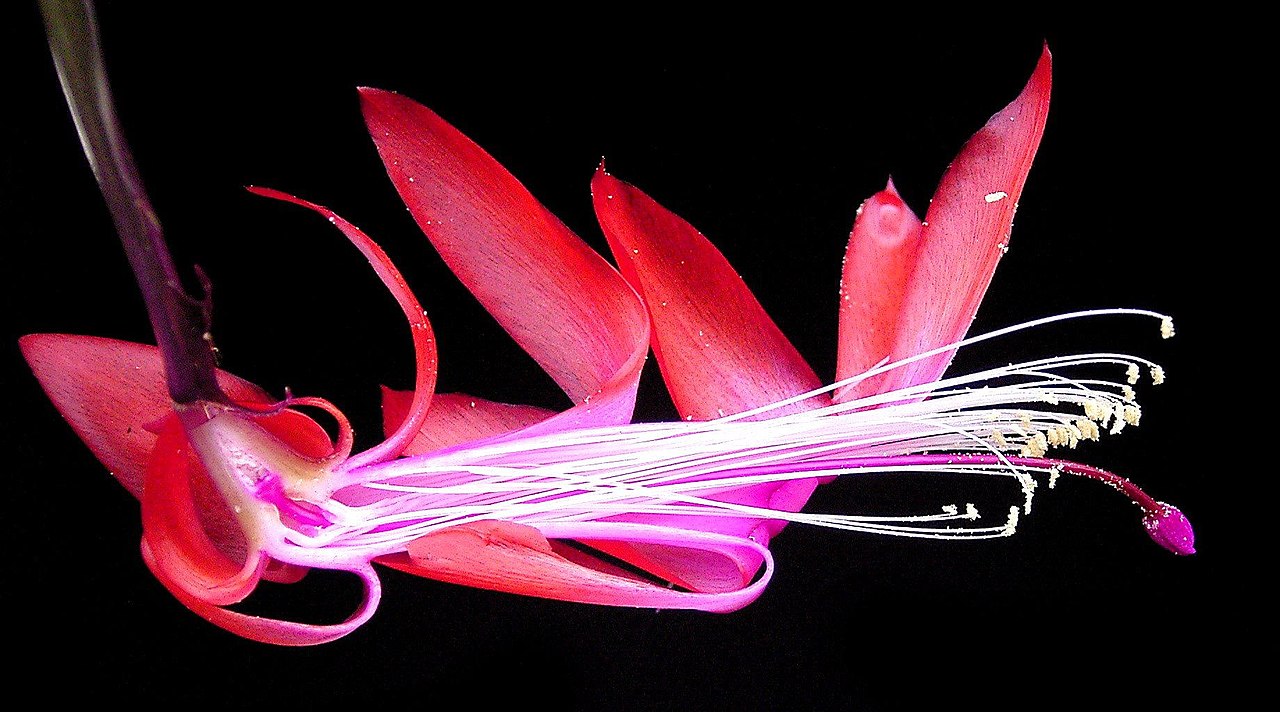
Members of the genus lack true leaves; instead their photosynthetic function is carried out by flattened green stem segments called cladodes. These segments join in chains and bear small areoles from which flowers and roots may emerge. Flowers are tubular to funnel-shaped and typically showy, often white, pink, red or purple; the reproductive parts commonly project beyond the petals. The overall habit is clumping or arching rather than columnar, and in nature plants grow attached to tree branches or rock faces as epiphytes or lithophytes.
Taxonomy and names
The genus was first described in the mid-19th century and is named for the collector Frédéric Schlumberger. Botanical treatments recognize a small number of species (commonly cited as around six), and many named forms in cultivation are hybrids or selections. For readers wanting general background on classification see genus concepts and entries on cacti. Lists of recognized species place the group in the humid Atlantic forest region of Brazil.
Habitat and ecology
In the wild Schlumbergera grow in shady, moist microhabitats where they benefit from filtered light and high humidity. As epiphytes they derive moisture and nutrients from rain, mist and decaying organic matter caught in tree crevices; some also grow on rock outcrops. Their flowers attract local pollinators; in Brazil these may include birds and various insects. The plants perform photosynthesis via their stem segments and are adapted to avoid the water stress typical of arid cacti.
Horticulture and uses
Schlumbergera are among the most popular winter-flowering indoor plants. Numerous cultivars have been developed for flower color, double forms and bloom timing. Commercially and informally, cultivated plants are sometimes grouped by bloom date into categories associated with late autumn and winter holidays; these seasonal names have led to common terms such as "Thanksgiving" or "Christmas" cactus, reflecting their use as festive seasonal gifts and decorations.
Care essentials
- Light: bright but indirect light; avoid prolonged direct midday sun which can scorch segments.
- Temperature: moderate indoor temperatures; cooler nights (around 10–15 °C / 50–59 °F) in autumn can help bud formation.
- Water: keep evenly moist during active growth and flowering but allow the topsoil to dry slightly between waterings; reduce watering in late winter after flowering.
- Soil: a well-draining, humus-rich potting mix suited to epiphytic plants prevents root rot.
- Fertilizer: light feeding during the growing season encourages vigor and flower production.
- Propagation: easily propagated from healthy stem cuttings that root quickly in free-draining medium.
Pests, diseases and conservation
Common pest problems for cultivated Schlumbergera include mealybugs, scale and fungal root rots if kept overly wet. Good hygiene, moderate watering and adequate airflow reduce disease risk. In the wild their Atlantic Forest habitat is subject to fragmentation and deforestation, so some wild populations face pressure; conservation of forest remnants helps preserve natural populations and their pollinators.
Distinctions and similar genera
Schlumbergera can be confused with related epiphytic cacti such as Hatiora and Epiphyllum, which differ in segment shape and floral details. The horticultural names that tie plants to specific holidays are useful for gardeners but do not always match strict botanical boundaries. Collectors value Schlumbergera for their reliable winter blooms, ease of propagation and the wide palette of available cultivars.
Further reading and resources are available for cultivated varieties and taxonomy; see links on genus, the family of cacti, recognized species, their native range in southeastern Brazil, modern cultivars, care as houseplants, their use as seasonal plants, their lifestyle as epiphytes and their stems' role in photosynthesis.
Related articles
Author
AlegsaOnline.com Schlumbergera: the holiday cacti genus and its cultivation Leandro Alegsa
URL: https://en.alegsaonline.com/art/87909