
Epiphyte: plants and organisms that grow on other plants without parasitizing
An epiphyte is an organism that grows upon another plant for physical support while obtaining water and nutrients from the air, rain, or accumulated debris. Common in tropical forests, they boost biodiversity.
Overview
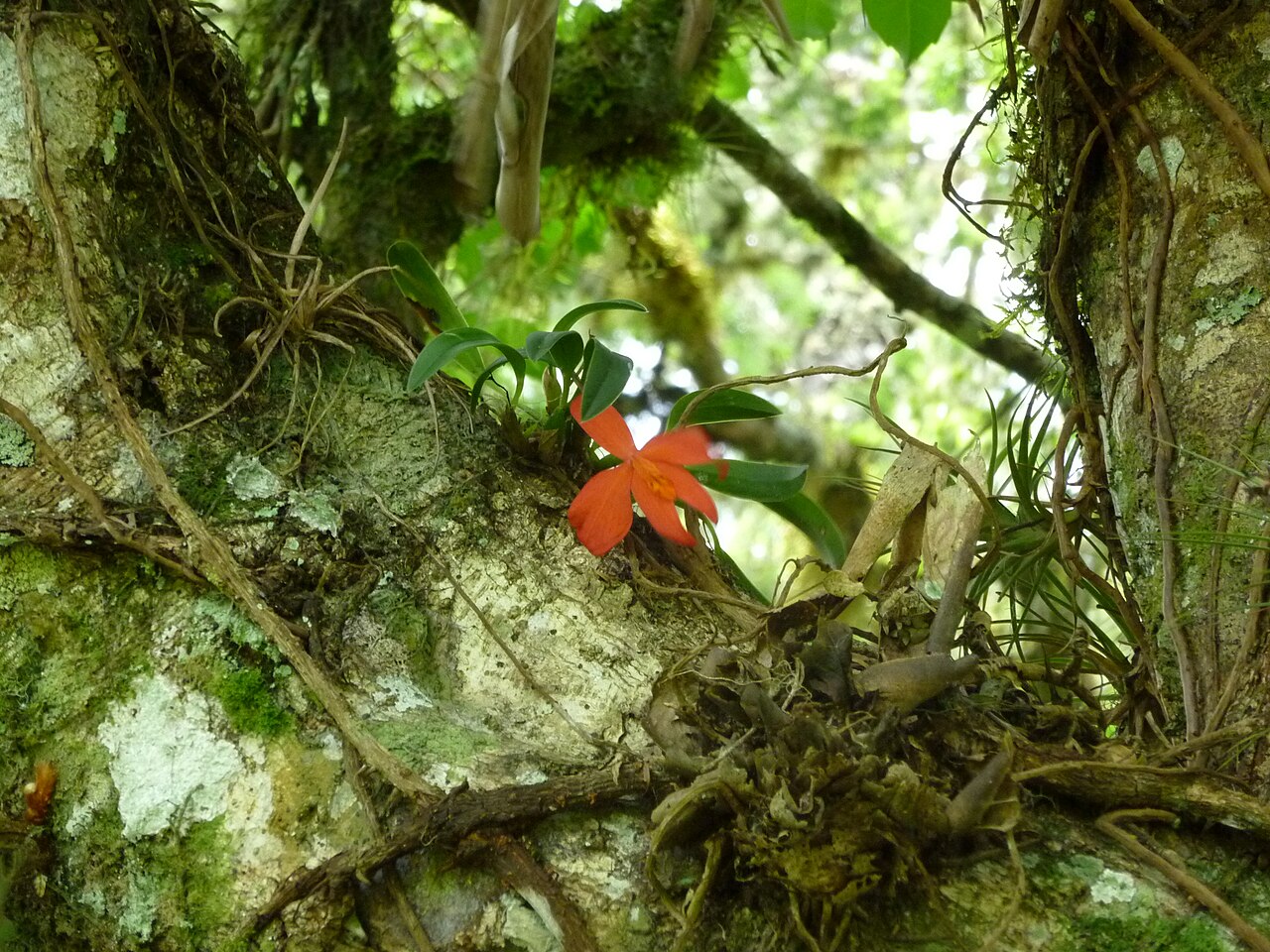
An epiphyte is an organism that lives on the surface of another plant for physical support but does not take nutrients directly from its host. The term usually applies to a wide range of life forms that adopt this growth habit: not only vascular plants but also bacteria, fungi, lichens and mosses. Most epiphytes are non-parasitic and obtain water and mineral nutrients from precipitation, airborne dust and organic debris that collects around them.
Image gallery
10 Images




Characteristics and adaptations
Epiphytes show a variety of morphological and physiological adaptations that allow them to thrive without soil. Many have specialized anchoring roots or clinging structures, water-absorbing trichomes on leaves, tank-like rosettes that trap rain, and succulent tissues for water storage. A number of epiphytic plants use modified forms of photosynthesis such as CAM to reduce water loss. Though popularly called "air plants," some epiphytes are aquatic or live in very humid microhabitats where roots or leaf surfaces intercept moisture directly.
Distribution and diversity
Epiphytism is particularly abundant in tropical and subtropical forests but occurs in temperate regions as well. In cool climates epiphytic communities are often dominated by mosses, liverworts and lichens, while in warm tropical forests many ferns, orchids and bromeliads occupy tree branches and trunks. Most epiphytic organisms are flowering plants, and a substantial fraction of ferns include epiphytic species.
Examples and related organisms
- Host plants provide the supporting substrate for epiphytes.
- Bacteria can colonize leaf surfaces and bark as epiphytes.
- Lichens commonly grow epiphytically on trunks and branches.
- Mosses form dense mats on shaded bark in many forests.
- Flowering plants include the majority of epiphytic vascular species.
- Ferns often occupy canopy niches as epiphytes.
- Liverworts are frequent components of temperate epiphyte assemblages.
- Algae may colonize moist bark or leaf surfaces.
- Orchids are among the most familiar epiphytic tropical plants.
- Bromeliads include species that form water-holding tanks important to other organisms.
- Rooting patterns differ: some epiphytes have minimal substrate penetration while others develop extensive anchoring roots.
- Soil is not required for true epiphytes, though some grow in accumulated organic debris.
- Aquatic epiphytes occur on submerged plants in freshwater habitats.
- Mistletoe differs because it is parasitic rather than merely epiphytic.
- Photosynthesis is the main energy source for most epiphytes.
- Leaves are often modified to capture and retain water.
- Rainwater supplies much of the moisture epiphytes use.
- Moisture from fog and humid air is an important resource in many ecosystems.
- Air carries nutrients and spores that epiphytes absorb or intercept.
- Other species rely on epiphytes for habitat and resources.
- Frogs and invertebrates often use epiphyte-held water as breeding or refuge sites.
- Water reservoirs formed by some epiphytes create microhabitats important to forest biodiversity.
Ecological roles and importance
Epiphytes increase vertical habitat complexity in forests, creating niches for insects, amphibians and birds. Their ability to intercept rainfall and trap organic material plays a role in local nutrient cycles and water retention. Because many epiphytes are sensitive to air quality and humidity, community composition can be an indicator of environmental change. In some ecosystems, canopy epiphyte biomass can represent a significant portion of the living plant material.
Human use and distinctions
People cultivate many epiphytes for ornamental value, and species such as Tillandsia (often called "air plants") are popular houseplants. In horticulture, understanding their special water and light needs—frequent wetting for some, good air circulation for others—is essential. Epiphytes differ from parasites, which derive nutrients from the host, and from epilithic plants that grow on rocks. Recognizing these distinctions clarifies both ecological roles and appropriate conservation measures.
Questions and answers
Q: What is an epiphyte?
A: An epiphyte is a plant which grows on another plant, without being a parasite. It gets its moisture and nutrients from the air and rain, and sometimes from debris accumulating around it.
Q: Are most epiphytes flowering plants?
A: Yes, most epiphytes (89%) are flowering plants.
Q: Are there aquatic epiphytes?
A: Yes, there are many aquatic epiphytes as well.
Q: Do epiphytes use photosynthesis to get energy?
A: Yes, usually they have adapted their leaves to be able to capture rainwater (and moisture from the air) if they are not aquatic and use photosynthesis to get energy.
Q: Are parasitic or semi-parasitic plants considered true epiphytes?
A: No, parasitic and semi-parasitic plants like the mistletoe are not true epiphytes.
Q: What types of organisms can be considered as an epiphyte besides plants?
A: Besides plants, bacteria, fungi, lichens and mosses can also be considered as an epiphtye.
Q: How do certain frogs benefit from living in the water reservoir of an epiphtye?
A: Certain frogs live in the water reservoir of an Epiphtye which provides them with food sources such as insects that land on it or small animals that live among its roots or branches.
Related articles
Author
AlegsaOnline.com Epiphyte: plants and organisms that grow on other plants without parasitizing Leandro Alegsa
URL: https://en.alegsaonline.com/art/31738