
Sciadopitys (Japanese umbrella-pine)
Sciadopitys, the Japanese umbrella-pine, is the sole living member of Sciadopityaceae; an endemic, morphologically distinctive conifer valued for horticulture and noted in the fossil record.
Overview: Sciadopitys, commonly called the Japanese umbrella-pine, is a single living genus that represents the family Sciadopityaceae. It is endemic to Japan and is often described as a living fossil because of its long fossil history. For a concise taxonomic profile see the genus overview and for information on its Japanese distribution consult regional accounts.
Image gallery
10 Images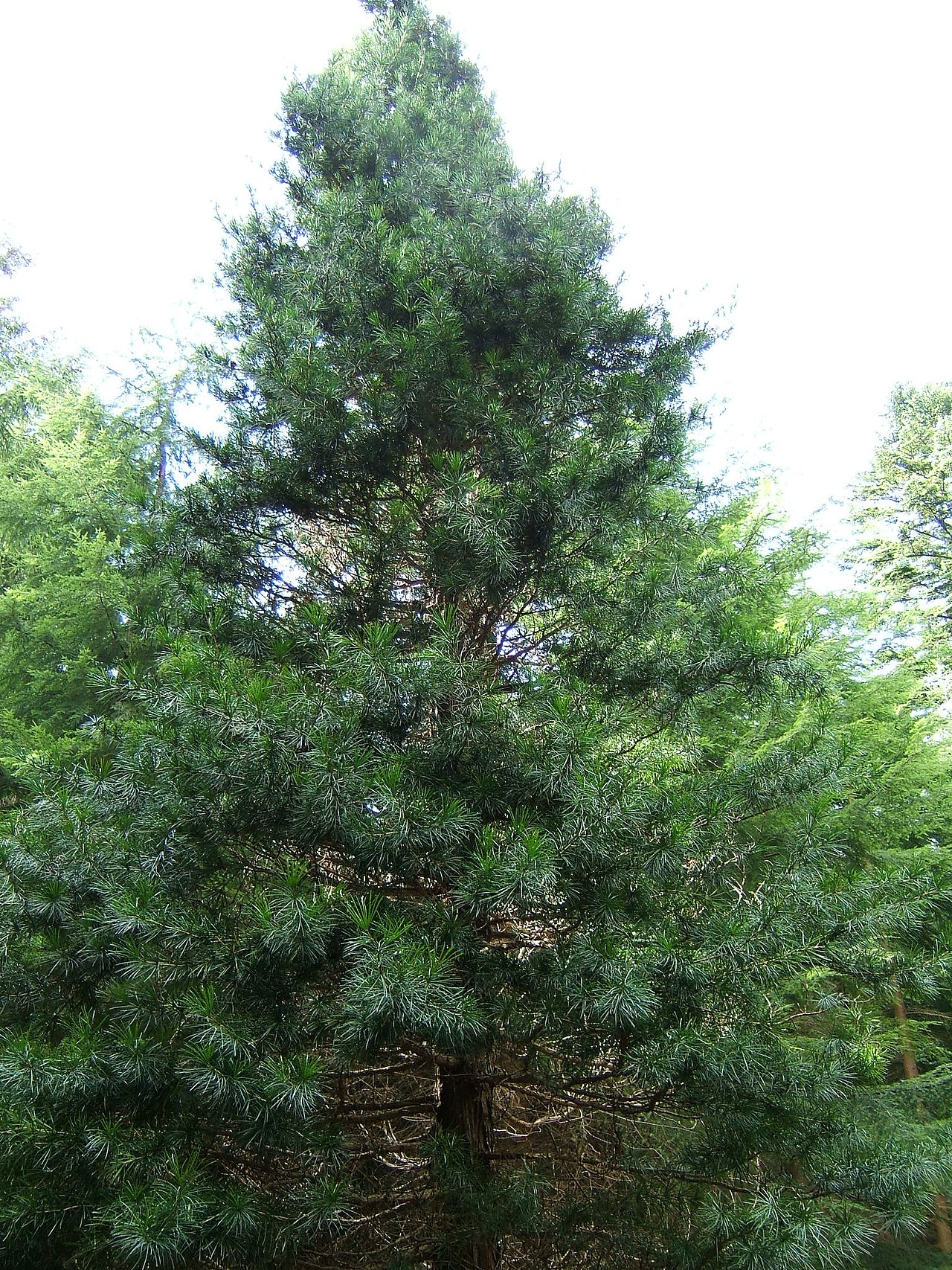


Description
Sciadopitys is an evergreen coniferous tree that typically reaches medium height in mature stands. Its most distinctive feature is the arrangement of needle-like structures: rather than ordinary leaves, the plant produces flattened, flexible cladodes that look and function like foliage but are anatomically derived from stem tissue. These cladodes occur in whorls and can be 7–12 cm long; they perform photosynthesis in place of true leaves. The species is classed among evergreen plants because it retains these cladodes year-round.
Key characteristics
- Whorled, umbrella-like cladodes replacing conventional leaves.
- Brown, woody main shoots that occasionally fork and form buds where cladodes split.
- Cones that develop over an extended season and release seeds.
- Slow growth rate and long-lived individuals compared with many ornamental trees.
Reproduction and life cycle
Reproductive structures are typical of conifers but have their own timings: seed-bearing cones can take over a year to mature and feature relatively broad, flattish scales that open to disperse seeds. Seed production is episodic and, combined with slow growth, contributes to the species' limited natural expansion.
History, fossil record and discovery
Sciadopitys has a deep fossil record with relatives known from Mesozoic deposits; fossil material resembling the genus appears in layers tens to hundreds of millions of years old, which underlies the description of the genus as a living relic of earlier conifer lineages. The species was first recorded in the West when it was introduced to European horticulture by John Gould Veitch in 1860; for accounts of that introduction see the historical notes at horticultural records. Its long-term continuity and distinct anatomy make it important to studies of conifer evolution (fossil context).
Uses, cultural significance and scientific interest
Sciadopitys is prized in gardens for its unusual umbrella-like foliage and neat habit, though its slow growth and relative rarity make cultivated specimens costly. It has cultural value in Japan: the common name and traditional uses contribute to regional identity, and particular symbolism has been attached to the tree in modern ceremonial contexts. On a scientific side, analyses such as infrared micro-spectroscopy have linked material from this family to ancient resins; studies suggest that members of Sciadopityaceae were a principal source of certain amber deposits, including Baltic amber, a finding of interest to paleobotanists and geochemists.
Notable distinctions: Sciadopitys is the sole extant member of its family, has cladodes rather than true leaves, and occupies a limited native range. These combined features make it both botanically distinctive and a subject of conservation and scientific interest.
Questions and answers
Q: What is Sciadopitys?
A: Sciadopitys is a unique conifer that is endemic to Japan and the sole surviving member of the family Sciadopityaceae.
Q: How old are Sciadopitys fossils?
A: Sciadopitys fossils are 230 million years old.
Q: What is the appearance of Sciadopitys trees?
A: Sciadopitys trees have brown main shoots with whorls of 7-12 cm long flexible green "cladodes" that resemble leaves but are actually composed of stem tissue.
Q: How do the cones release the seeds?
A: The cones of Sciadopitys are 6-11 cm long and have flattish scales that open to release the seeds.
Q: Why is Sciadopitys popular in gardens?
A: Despite its slow growth rate and high cost, Sciadopitys is popular in gardens because of its attractive appearance.
Q: What is the Japanese Imperial crest for Prince Hisahito of Akishino?
A: The Japanese Imperial crest for Prince Hisahito of Akishino is Koyamaki, which is Sciadopitys.
Q: Who introduced Sciadopitys to Europe?
A: John Gould Veitch introduced Sciadopitys to Europe in September 1860.
Related articles
Author
AlegsaOnline.com Sciadopitys (Japanese umbrella-pine) Leandro Alegsa
URL: https://en.alegsaonline.com/art/88022
Sources
- iucnredlist.org : "Sciadopitys verticillata"
- dx.doi.org : 10.2305/IUCN.UK.2013-1.RLTS.T34111A2846623.en
- dx.doi.org : 10.1098/rspb.2009.0806
- ncbi.nlm.nih.gov : PMID 19570786
- wikidata.org : Q161648
- species.wikimedia.org : Sciadopitys verticillata · web.archive.org
- biolib.cz : 185486
- conifers.org : Sciadopityaceae
- eol.org : 323341
- gd.eppo.int : SIOVE
- efloras.org : 200005398
- gbif.org : 2684904
- npgsweb.ars-grin.gov : 33314
- inaturalist.org : 129057