
Bangladesh Liberation War (1971): struggle for independence and aftermath
The 1971 Bangladesh Liberation War was a nine-month conflict that led to the independence of Bangladesh from Pakistan, involved large-scale violence, a refugee crisis, Indian military intervention, and later war-crimes trials.
The Bangladesh Liberation War, known in Bengali as Muktijuddho, was a revolutionary struggle for the independence of Bangladesh in 1971. It began after political tensions between the two wings of Pakistan—East and West Pakistan—escalated into open conflict in March 1971. The immediate trigger was the refusal of the central government to accept the outcome of the 1970 elections, in which the Awami League led by Sheikh Mujibur Rahman won an absolute majority. A military crackdown in late March led to a mass uprising in the east and a prolonged campaign of guerrilla resistance.
Image gallery
10 Images




Course of the conflict
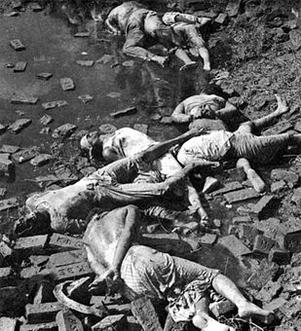
On the night of 25–26 March 1971, Pakistani security forces launched operations across East Pakistan, which the independence movement remembered as a brutal suppression. The Bengali resistance included regular and irregular units collectively known as the Mukti Bahini (liberation forces). Fighting continued through the year and intensified when the neighbouring state of India intervened in December 1971, providing military, logistical, and diplomatic support to the independence movement. Following a brief conventional campaign between India and Pakistan, most Pakistani forces in the east surrendered on 16 December 1971, bringing an end to large-scale hostilities and establishing an independent state.
Human cost and atrocities
The war inflicted enormous human suffering. Widespread atrocities—including mass killings, forced displacement, and sexual violence—were documented during and after the conflict. The fighting and repression produced a major humanitarian emergency, with millions fleeing across the border; estimates commonly cited describe around ten million refugees who sought safety in India, and many more internally displaced. The conflict also overlapped with seasonal storms and flooding, which worsened living conditions for civilians.
Aftermath, trials, and accountability
After independence, Bangladesh faced the urgent tasks of reconstruction, relief for millions of displaced people, and establishing governance. Decades later, Bangladesh set up its own tribunal to investigate crimes committed during the 1971 war. High-profile figures were tried for their roles in collaboration and atrocities. Among those convicted were Ghulam Azam and Motiur Rahman Nizami. Legal proceedings and sentences, including the execution of some convicted individuals, have generated domestic and international debate about legal standards, political context, and the pursuit of historical justice.
Legacy and significance
The Bangladesh Liberation War reshaped South Asian geopolitics. It led to the emergence of a new nation-state and had lasting effects on India–Pakistan relations. In Bangladesh the war remains central to national identity and memory, commemorated annually and studied in public history and education. The conflict's humanitarian consequences and subsequent moves to address wartime crimes continue to influence discussions about accountability, reconciliation, and the protection of civilians during armed conflict.
- Key dates: 26 March 1971 (declaration of independence and start of major hostilities) to 16 December 1971 (surrender in Dhaka).
- Main actors: Mukti Bahini (liberation forces), the Pakistani military, and the Indian military intervention.
- Long-term issues: refugee returns, reconstruction, and trials for wartime atrocities.
For further reading and source material, see contemporary accounts, academic histories, and official records that document the political lead-up, military campaigns, and social impacts of the 1971 war. Many survivors’ testimonies and archives are preserved in national repositories and research projects. Authoritative summaries and detailed studies are available from government archives and specialist historians; for an online overview consult resources indexed by major libraries and research centers via links such as Muktijuddho or broader references to the 1971 conflict (war, Bangladesh).
Related articles
Author
AlegsaOnline.com Bangladesh Liberation War (1971): struggle for independence and aftermath Leandro Alegsa
URL: https://en.alegsaonline.com/art/8726
Sources
- books.google.com : Encyclopaedia of India, Pakistan and Bangladesh
- books.google.com : Historical Dictionary of Bangladesh
- worldcat.org : Secondary Social Studies For Pakistan
- countrystudies.us : Library of Congress