
Motiur Rahman Nizami: Bangladeshi politician and Jamaat-e-Islami leader
Overview of Motiur Rahman Nizami (1943–2016): his political career with Jamaat-e-Islami, ministerial roles, allegations and conviction for 1971 war crimes by the International Crimes Tribunal, execution and contested legacy.
Overview
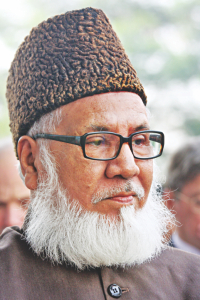
Motiur Rahman Nizami (31 March 1943 – 11 May 2016) was a Bangladeshi religious scholar, activist and politician who served for many years as a senior leader of the Bangladesh Jamaat-e-Islami. He held elected office as a member of the Jatiya Sangsad (national parliament) representing a constituency in Pabna at different times in the 1990s and 2000s, and he served in cabinet-level posts during coalition governments. In later decades he became an intensely polarising figure in Bangladesh after accusations relating to the 1971 Liberation War led to prosecution and a death sentence upheld and executed in 2016.
Image gallery
2 Images
Early life and political rise
Born in 1943, Nizami trained in Islamic studies and became active in student and religious organisations before assuming leadership roles in Jamaat-e-Islami, a party that combines Islamic political aims with participation in parliamentary politics. Over several decades he rose to prominence within the party’s formal structures, acting as a national leader and a public voice for its policies. He contested national elections and won parliamentary seats, and his career illustrates the long-standing presence of Islamist parties in Bangladeshi electoral politics.
Roles in government
During coalition administrations in the 2000s, Nizami served as a cabinet minister, holding portfolios commonly described in public reporting as related to agriculture and industry. As a minister he participated in policy debates and implementation on issues affecting rural livelihoods, agrarian policy and industrial development. His supporters emphasised his organisational skills and policy interests, while opponents criticised the political positions and historical record of his party and its leadership.
Allegations, trial and conviction
Decades after the 1971 conflict that resulted in the independence of Bangladesh, prosecutors brought charges against Nizami alleging involvement in atrocities committed during the war. National investigators and prosecutors accused him of links to local militias that collaborated with Pakistani forces; some accounts alleged a leadership connection with groups identified in historical accounts of the period, such as Al-Badr. He was tried by the domestic International Crimes Tribunal established by the Bangladeshi government to investigate and adjudicate alleged war crimes from 1971. In 2014 the tribunal convicted him on several counts and sentenced him to death for offences described by the court as crimes against humanity and other war-time crimes. The conviction and sentence were later upheld by the national appellate process and implemented in 2016.
Controversy, criticism and international reaction
The investigation, trial and conviction of Nizami generated intense debate. Many survivors’ organisations and victims’ families welcomed prosecutions as overdue accountability for serious wartime abuses and supported the tribunal’s work as part of transitional justice. At the same time, some international observers, legal scholars and rights groups raised concerns about procedures, defence rights and evidentiary standards in specific cases, calling for strict adherence to fair trial norms. These critiques and defences of the tribunal contributed to broader conversations about how societies confront mass violence and reconcile competing demands for justice, truth and legal due process.
Legacy and political impact
Nizami’s conviction and execution were a defining episode in Bangladesh’s post-independence political history. For supporters of the tribunal and many who endured the 1971 war, the outcome represented a form of redress and historical reckoning. For critics it raised questions about the politicisation of legal processes and the treatment of opposition figures. The case affected public perceptions of Jamaat-e-Islami and contributed to ongoing debates about the place of religiously oriented parties in mainstream politics, the limits of accountability, and measures to prevent communal and political violence in the future.
Context: 1971 and transitional justice
The events of 1971 — the Bangladesh Liberation War — remain central to national identity and memory. Numerous organisations, academic studies and human rights reports have documented wide-scale violence during the conflict, and domestic efforts to address alleged crimes have taken place decades later through the tribunal process. Readers seeking background on the war and the historical context can consult general resources on the Bangladesh Liberation War and summaries of post-war investigations and trials, including consolidated discussions of alleged war crimes and scholarly analyses of transitional justice approaches.
Selected facts
- Born: 31 March 1943; Died: 11 May 2016 (executed at Dhaka Central Jail).
- Political affiliation: Jamaat-e-Islami; long-time senior leader.
- Parliamentary service: Elected MP for a Pabna constituency in the 1990s and 2000s.
- Legal case: Convicted by the International Crimes Tribunal in 2014 on charges related to the 1971 conflict; sentence carried out in 2016.
The life, trial and execution of Motiur Rahman Nizami continue to be referenced in discussions about how Bangladesh addresses past atrocities, the limits of political reconciliation, and the role of courts in transitional periods. For further reading, consult comprehensive overviews of the 1971 conflict, analyses of the tribunal’s work and commentary on the political history of Jamaat-e-Islami. Additional resources and contemporary reporting are available through specialist archives and subject-focused repositories (war crimes summaries, historical materials on the Liberation War and documentation on militia groups like Al-Badr).
Author
AlegsaOnline.com Motiur Rahman Nizami: Bangladeshi politician and Jamaat-e-Islami leader Leandro Alegsa
URL: https://en.alegsaonline.com/art/127262