
1971 Bangladesh atrocities: mass violence during the Liberation War
Widespread killings, sexual violence and displacement committed in East Pakistan in 1971 during Operation Searchlight and the Bangladesh Liberation War; causes, scale, aftermath, and legacy.
The 1971 Bangladesh atrocities describe a campaign of mass violence carried out in then‑East Pakistan during the Bangladesh Liberation War. In late March 1971 the Pakistan Army launched Operation Searchlight, a military operation intended to suppress Bengali political movements. What followed included large‑scale killings, forced displacement, systematic sexual violence and attacks on civilians that transformed the political crisis into a humanitarian catastrophe.
Image gallery
10 Images

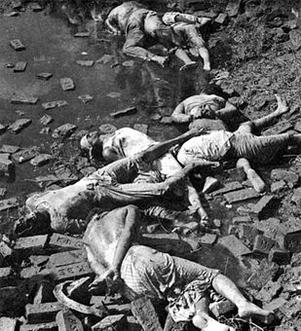


Scope and methods
Eyewitnesses, journalists and later investigators documented a range of abusive measures used during the campaign. These included summary executions, extrajudicial killings of suspected activists and community leaders, targeted attacks on intellectuals, widespread rape used as a weapon of war, and the burning or looting of villages. Religious and ethnic minorities, particularly Bengali Hindus, were often singled out. Many civilians fled across the border, producing a major refugee crisis.
Estimates and disputes
Estimates of the number of victims vary widely and remain contested. Different sources and scholars report figures ranging from hundreds of thousands to millions of dead; the exact toll is uncertain and politically sensitive. Debate also continues over responsibility, intent and the classification of some events as genocide. Reports and analyses published in the years after 1971 documented extensive human rights abuses and influenced public opinion internationally.
Consequences and international response
The violence had immediate regional consequences. Millions of people crossed into India seeking safety, creating a humanitarian emergency that affected South Asian politics and contributed to an Indo‑Pakistani military conflict. International reactions were mixed: some governments criticized Pakistan’s actions, others maintained support for the central government in Islamabad. Contemporary reporting and later historical research drew global attention to the scale of suffering.
Aftermath, memory and accountability
After independence, Bangladesh commemorated the victims through memorials, museums and annual observances. Over subsequent decades, the country pursued legal and political avenues to address wartime crimes, including domestic trials for suspected perpetrators; these efforts remain controversial. Disagreements over figures, interpretations and official apologies continue to shape bilateral relations and collective memory.
The 1971 events are often referenced in discussions of wartime atrocities, crimes against humanity and the challenges of post‑conflict justice. For more background see links on the Bangladesh Liberation War, the history of Bangladesh and contemporary summaries of documented mass killings.
Questions and answers
Q: What is the 1971 Bangladesh atrocities?
A: The 1971 Bangladesh atrocities refer to the murder of many people in East Pakistan (now Bangladesh) by the Pakistan National Army (PNA) during the Bangladesh Liberation War.
Q: When did Operation Searchlight begin?
A: Operation Searchlight began on March 26, 1971.
Q: Who was responsible for the murders?
A: The Pakistan National Army (PNA) was responsible for the murders.
Q: Where did these atrocities take place?
A: These atrocities took place in East Pakistan, which is now known as Bangladesh.
Q: What event sparked this conflict?
A: The conflict was sparked by Operation Searchlight on March 26, 1971.
Q: What is the name of this conflict?
A: This conflict is known as the Bangladesh Liberation War.
Q: How long did this war last?
A: This war lasted until December 16, 1971 when East Pakistan became an independent nation and changed its name to Bangladesh.
Related articles
Author
AlegsaOnline.com 1971 Bangladesh atrocities: mass violence during the Liberation War Leandro Alegsa
URL: https://en.alegsaonline.com/art/112114
Sources
- bangladeshobserveronline.com : The Jamaat Talks Back · webcitation.org
- thedailystar.net : Remembering a Martyr · webcitation.org
- gwu.edu : The Tilt: The U.S. and the South Asian Crisis of 1971 National Security Archive Electronic Briefing Book No. 79 · webcitation.org
- time.com : Pakistan: The Ravaging of Golden Bengal
- thedailystar.net : The loss continues to haunt us
- tribuneindia.com : Mass grave found in Bangladesh
- bangla2000.com : Hamoodur Rahman Commission
- bangla2000.com : Chapter 2
- users.erols.com : Death Tolls for the Major Wars and Atrocities of the Twentieth Century
- virtualbangladesh.com : Virtual Bangladesh : History : The Bangali Genocide, 1971
- hawaii.edu : "Statistics of Democide: Genocide and Mass Murder Since 1900"