
Royal Alcázar of Madrid: fortress, palace and lost art
Former medieval fortress and royal residence in central Madrid (9th–18th c.), known for its layered architecture, rich art collection and destruction by fire in 1734.
Overview
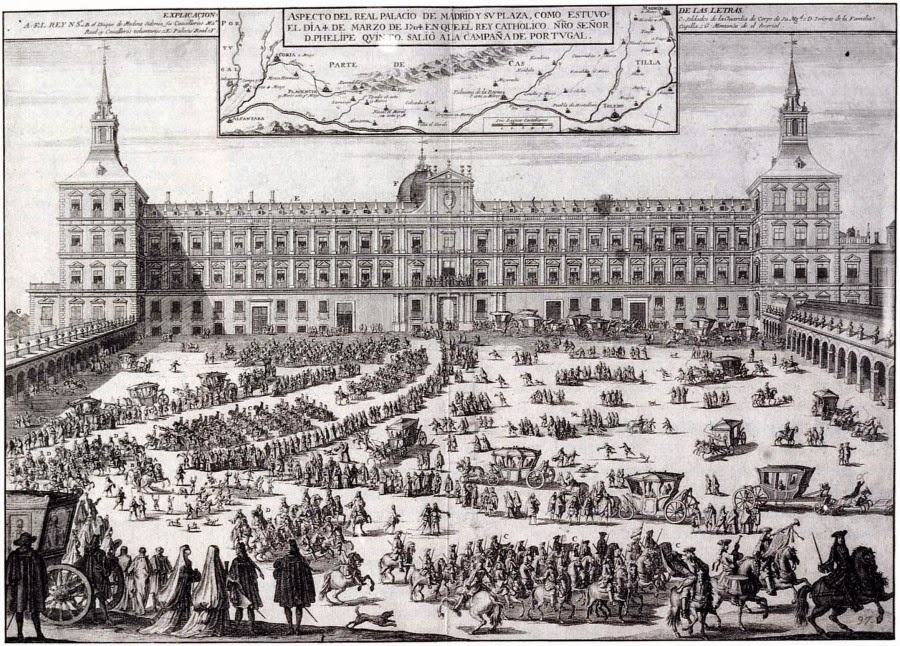
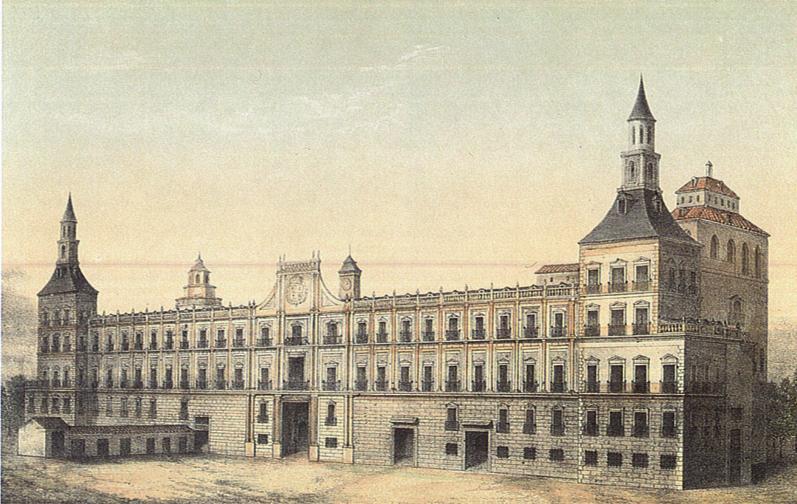
The Royal Alcázar of Madrid was a fortified stronghold that evolved into the principal royal residence and administrative center of the Spanish monarchy. Originally erected as a defensive structure by Muslim rulers in the ninth century, it stood for centuries at the heart of Madrid and served as the seat of court life, royal ceremonies and many state functions until it was destroyed by a catastrophic fire in 1734.
Image gallery
10 Images




Origins and location
The complex began as a military fortress built between 850 and 856 AD by Muslim authorities, intended to control the plateau and river crossings near what became the city's medieval core. From its beginnings as an Alcázar—a word of Arabic origin retained in Spanish—the site remained central to Madrid and the institutions of the Spanish crown, acting as the focal point for the royal court for many generations.
Architecture and layout
Across the centuries the Alcázar accumulated a mixture of styles. Medieval defensive elements gave way to Mudejar and later Renaissance and Baroque interventions as monarchs enlarged and refurnished the building. The complex contained halls, private apartments, chapels, administrative offices and galleries that displayed tapestries and paintings. Major remodelling projects anticipated the later ceremonial and representational needs of a European royal palace, even while the structure preserved its historic title and some fortress-like features.
Later rebuilding and notable architects
Significant enlargement took place in the 16th century when King Charles I ordered extensions to adapt the Alcázar to dynastic and governmental requirements. In the 17th century, under Philip IV, the exterior façades and formal courtyards received new treatment: the architect Juan Gómez de Mora executed work in 1636 that gave parts of the complex a more uniform Baroque appearance and reorganized circulation and ceremonial spaces.
Art collection, the 1734 fire and losses
The Alcázar housed an outstanding royal collection of paintings, tapestries and decorative arts. It was famous for holdings by court painters and for the scale of its picture galleries. In December 1734 a severe fire engulfed much of the palace, destroying large portions of the building and many works of art. Contemporary accounts record that hundreds of paintings were lost while more than a thousand objects were rescued; among the works that survived was Diego Velázquez’s Las Meninas, which sustained damage and was later restored by the restorer Juan García de Miranda.
Aftermath and replacement
The destruction of the Alcázar accelerated plans to replace it with a new royal residence in the prevailing Bourbon style. The subsequent construction of the Royal Palace of Madrid, commissioned by the dynasty that had come to the Spanish throne in the 18th century, shifted court life to a larger, purpose-built palace while the name and memory of the Alcázar remained part of Madrid’s historic identity. The decision to build anew was tied to Bourbon reforms and architectural tastes that followed the War of Spanish Succession and the arrival of the Bourbon dynasty.
Significance and notable facts
- The name Alcázar is derived from Arabic and in English is often rendered as "fortress".
- Major phases of the building’s development were directed by monarchs such as Charles I and Philip IV, and by architects like Juan Gómez de Mora.
- The site combined defensive, residential and representational functions for the Spanish monarchy and the royal court.
- The Alcázar’s art collection, celebrated in its day, included works catalogued under royal inventories and referenced by scholars of Spanish painting; summaries of the holdings appear in period documents and later studies of court patronage (paintings and collections).
Further reading and resources
For broader historical context and primary descriptions see accounts of medieval fortifications in Iberia and surveys of royal architecture in Madrid. Online resources and curated studies can be consulted via archive pages and museum catalogues that discuss the Alcázar and its impact on subsequent palace design (fortress origins, later construction records, court chronicles).
Historical overviews often link the Alcázar’s fate to changing dynasties and artistic tastes, and contemporary work on Velázquez and the Spanish Golden Age regularly references the palace as a principal location for the display and commissioning of major artworks.
Related articles
Author
AlegsaOnline.com Royal Alcázar of Madrid: fortress, palace and lost art Leandro Alegsa
URL: https://en.alegsaonline.com/art/84426
Sources
- museodelprado.es : "Alcázar de Madrid, Real"
- museoimaginado.com : "El viejo Alcázar de Madrid, sede virtual del Museo Imaginado"
- elpais.com : "Un incendio que cambió la historia (A fire that changed history)"
- spanish-art.org : "Las Meninas"