
Royal Hospital Kilmainham: history, architecture and modern use
A 17th-century Dublin complex built as a home for retired soldiers, later restored and adapted as a cultural site and the Irish Museum of Modern Art (IMMA).
Overview
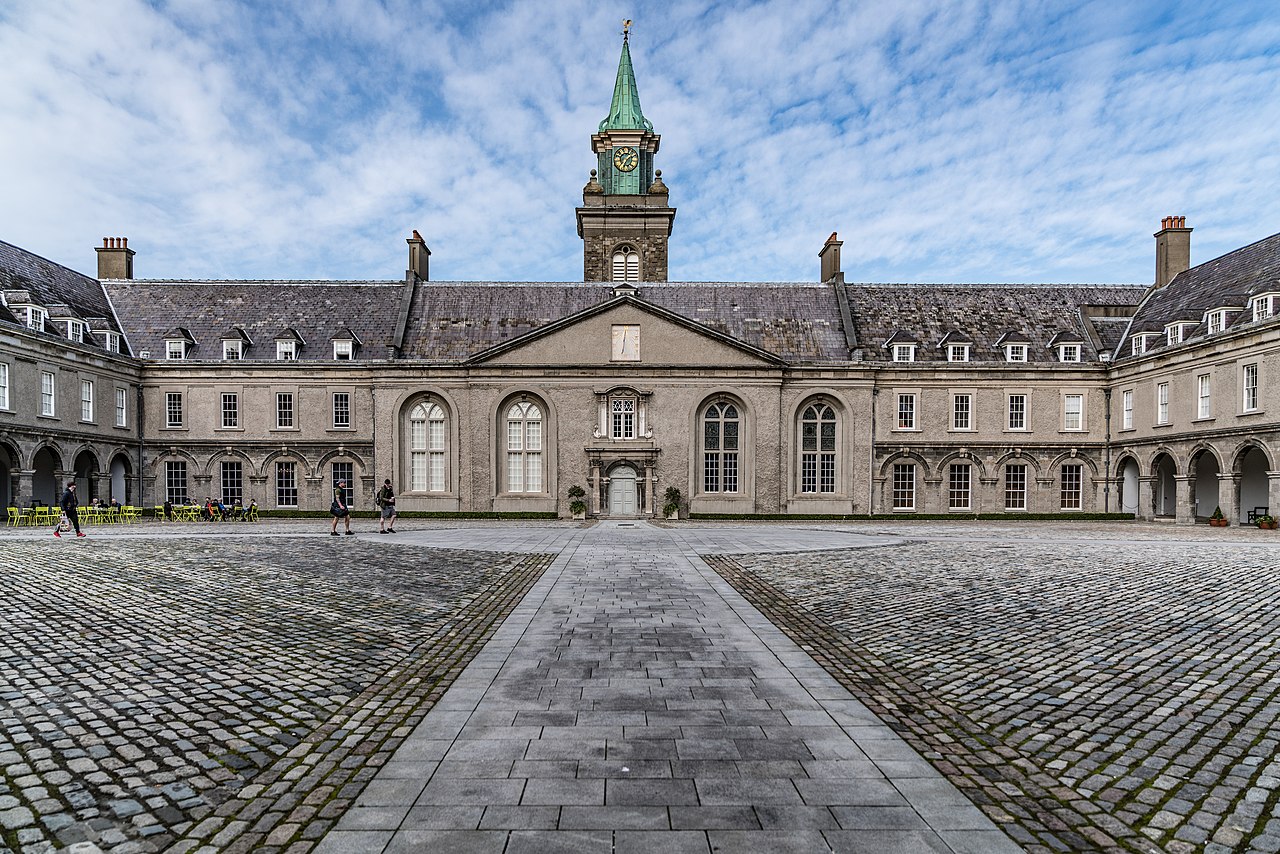
The Royal Hospital Kilmainham is a large 17th-century complex in the Kilmainham area of Kilmainham, on the western edge of Dublin. Erected as a residence for retired soldiers, it served that original purpose for more than two centuries before entering a succession of civic and cultural uses in the 19th and 20th centuries. Its long history and prominent courtyard make it one of the most recognizable secular buildings from the period in Ireland.
Image gallery
6 Images



Design and architectural character
The principal architect associated with the hospital's construction was Sir William Robinson, who worked for the administration of James Butler, 1st Duke of Ormonde during the reign of King Charles II. The composition reflects late 17th-century tastes in official and institutional architecture: a formal, symmetrical arrangement of buildings around a broad central quadrangle, restrained classical proportions and a sense of martial dignity. Its plan and appearance were consciously influenced by continental precedents such as Les Invalides in Paris, and it has a visible kinship with the contemporary Royal Hospital in Chelsea.
Notable features
- Formal quadrangle and axial approach, intended to accommodate and display a community of pensioners.
- Imposing entrance gateway relocated in the 19th century; the Tudor-Gothic gateway was designed by Francis Johnston and was moved after railway construction altered the riverside approaches at the River Liffey.
- Robust stone ranges laid out to provide living quarters, service rooms and communal spaces appropriate to a military hospital of the era.
History and evolution
Construction took place in the early 1680s, and the institution functioned as a home for veterans for more than 250 years. Following the establishment of the Irish Free State, administrators considered several new uses for the complex, including hosting the fledgling Oireachtas Éireann (the Irish national parliament), but that plan was not pursued. With the final departure of military occupants, the buildings were repurposed at various times as police offices for the Garda Síochána and as storage space for national collections.
Restoration and contemporary role
In the second half of the 20th century the Government of Ireland embarked on a careful programme of restoration. Beginning in the 1950s and culminating in the building's conversion to a center for arts and culture in the 1980s, the rehabilitation preserved the monumental character of the complex while adapting interiors for public exhibition and events. In 1991 the campus became the home of the Irish Museum of Modern Art (IMMA), giving the site a sustained cultural purpose and opening its courtyards and galleries to national and international audiences.
Ceremony and public significance
The Royal Hospital continues to function as a venue for commemorative and civic occasions. Each year the courtyard is the site of the National Day of Commemoration, when the President of Ireland lays a wreath in memory of all Irish people who died in past wars and while serving with international bodies such as the United Nations. The combination of public ceremony, cultural institutions and architectural prominence secures the Royal Hospital Kilmainham a visible place in Ireland's historical and cultural landscape.
Further reading and links
- Kilmainham neighborhood
- Dublin
- Ireland
- Sir William Robinson
- James Butler, 1st Duke of Ormonde
- Lord Lieutenant of Ireland
- King Charles II
- Les Invalides
- Paris
- Royal Hospital Chelsea
- River Liffey
- Irish Free State
- Oireachtas Éireann
- Irish national parliament
- Garda Síochána
- President of Ireland
- United Nations
Questions and answers
Q: What is the Royal Hospital Kilmainham?
A: The Royal Hospital Kilmainham is a 17th-century building in Kilmainham, Dublin, Ireland that was built to be a home for retired soldiers.
Q: Who designed the hospital?
A: The hospital was designed by Sir William Robinson, who was the official State Surveyor General for James Butler, 1st Duke of Ormonde and Lord Lieutenant of Ireland to King Charles II.
Q: What style is based on Les Invalides in Paris?
A: The style of the Royal Hospital Kilmainham is based on Les Invalides in Paris.
Q: Who designed the Tudor Gothic gateway at the end of the road leading to the Royal Hospital?
A: Francis Johnston, one of the leading architects of his day, designed the Tudor Gothic gateway at the end of the road leading to the Royal Hospital.
Q: When did it move from its original location beside Bloody Bridge (now Rory O'More Bridge)?
A: The Tudor Gothic gateway originally stood beside Bloody Bridge (now Rory O'More Bridge), but it was moved after 1844 when a railway arrived.
Q: What were some uses for this building after all soldiers had left?
A: After all soldiers had left, this building was used as offices for Garda Síochána (the Irish police force) and as storage for National Museum of Ireland.
Q: When did restoration begin and what purpose does it serve today?
A: Restoration began in 1957 by Government of Ireland and opened in 1985 as National Centre for Culture and Arts. Today it serves as an Irish Museum Of Modern Art which opened here in 1991.
Related articles
Author
AlegsaOnline.com Royal Hospital Kilmainham: history, architecture and modern use Leandro Alegsa
URL: https://en.alegsaonline.com/art/84462
Sources
- rhk.ie : rhk.ie/Heritage_Brochure.pdf