
Romantic ballet: origins, characteristics, and legacy
An overview of Romantic ballet: its origins in the early 19th century, defining features (pointe, ethereal tutus, supernatural themes), landmark works and lasting influence on classical choreography.
The Romantic ballet was a dominant artistic current in European dance during the first half of the 19th century. It arose as a cultural response to the rational order of the previous century and embraced emotion, imagination and the supernatural. Audiences and critics looked for stories that felt immediate and local rather than drawn from classical myth, and composers, choreographers and designers developed new stagecraft to produce effects of weightlessness, atmosphere and mystery. For a general view of the movement and its place in ballet history see the Romantic genre.
Image gallery
6 Images


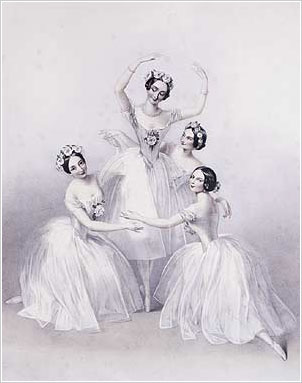


Origins and historical context
The Romantic impulse in ballet grew alongside Romanticism in literature and the visual arts. Reaction against Enlightenment classicism — which favored ancient subjects, idealized form and formal restraint — led dancers and choreographers to prefer narratives about contemporary people, folk life or unreachable spirits. This shift sought to evoke feeling and to stage encounters between ordinary mortals and otherworldly beings rather than scenes of gods and goddesses; it can be understood in relation to broader debates about classicism in 18th‑century art. Early examples that crystallized the new aesthetics include the 1831 staging of The Ballet of the Nuns and the influential 1832 work La Sylphide, often cited as a cornerstone of the Romantic repertory.
Distinctive features
- Ethereal costuming: The characteristic long white tulle skirt, later named the Romantic tutu, created a soft, floating silhouette that suggested fragility and otherworldliness.
- Pointe as expression: Pointe technique shifted from a display of bravura to a tool for dramatic illusion, helping ballerinas appear suspended above the floor.
- Stage technology: Innovations such as gas lighting for dimming and pulley systems to lift dancers enhanced the sense of magic and flight.
- Local color and dance forms: Choreographies often included national dances and recognizable social settings; audiences heard mazurkas and waltzes and saw costumes and scenes with distinct regional flavor (mazurkas, waltzes).
- Supernatural or exotic themes: Ghosts, sylphs, wilis and enchanted creatures were frequent protagonists, creating dramatic contrasts between the mortal and the uncanny.
Key works and evolution
After the early successes of Romantic pieces, the style matured through mid‑century productions and later influenced composers arriving at ballet from the symphonic tradition. While some historians mark Coppélia (1870) as a turning point toward more comic or realistic subjects, the music and storytelling of Pyotr Ilyich Tchaikovsky carried Romantic sensibilities into the late 19th century: Swan Lake (1876) and The Nutcracker (1892) retain lyrical, atmospheric qualities associated with Romantic ballet. In the early 20th century Michel Fokine created Les Sylphides, a short, non‑narrative homage whose mood and style recall the Romantic era more than strict chronological boundaries might suggest.
Romantic ballets typically foreground technical refinement: the ballerina’s line, soft phrasing and the illusion of lightness became central aims. The stories and stagecraft also emphasized emotion and unattainable desire—motifs that persist in many later classics and contemporary reinterpretations.
Today, companies revive Romantic works for their poetic atmosphere and historical importance, while choreographers often borrow the era’s visual vocabulary—misting, gauzy costumes and melancholic themes—to create new works that speak to modern audiences. For further reading on individual ballets and their productions, explore linked resources and specialized histories available through major dance archives and scholarship (overview, La Sylphide, Swan Lake).
Notable distinction: Romantic ballet is defined less by strict dates than by recurring aesthetic choices—local realism combined with supernatural elements, emphasis on the ballerina as central figure, and innovations in costume and lighting that together produce the signature effect of ethereal immateriality.
Related articles
Author
AlegsaOnline.com Romantic ballet: origins, characteristics, and legacy Leandro Alegsa
URL: https://en.alegsaonline.com/art/83911