
Mazurka: Polish Folk Dance and Musical Form
The mazurka is a traditional Polish dance and musical genre from Mazovia. It features triple metre, characteristic accents and rhythms, and inspired numerous classical composers, most famously Frédéric Chopin.
The mazurka is a traditional Polish dance and a musical genre that originated in the region of Mazovia, historically associated with rural communities sometimes called Mazurs. Early documentary references date back to the 16th century, and the form evolved as both a social dance and a short instrumental piece. As a cultural expression it combined local steps, regional costume, and lively music suited to village festivities and national gatherings.
Image gallery
2 Images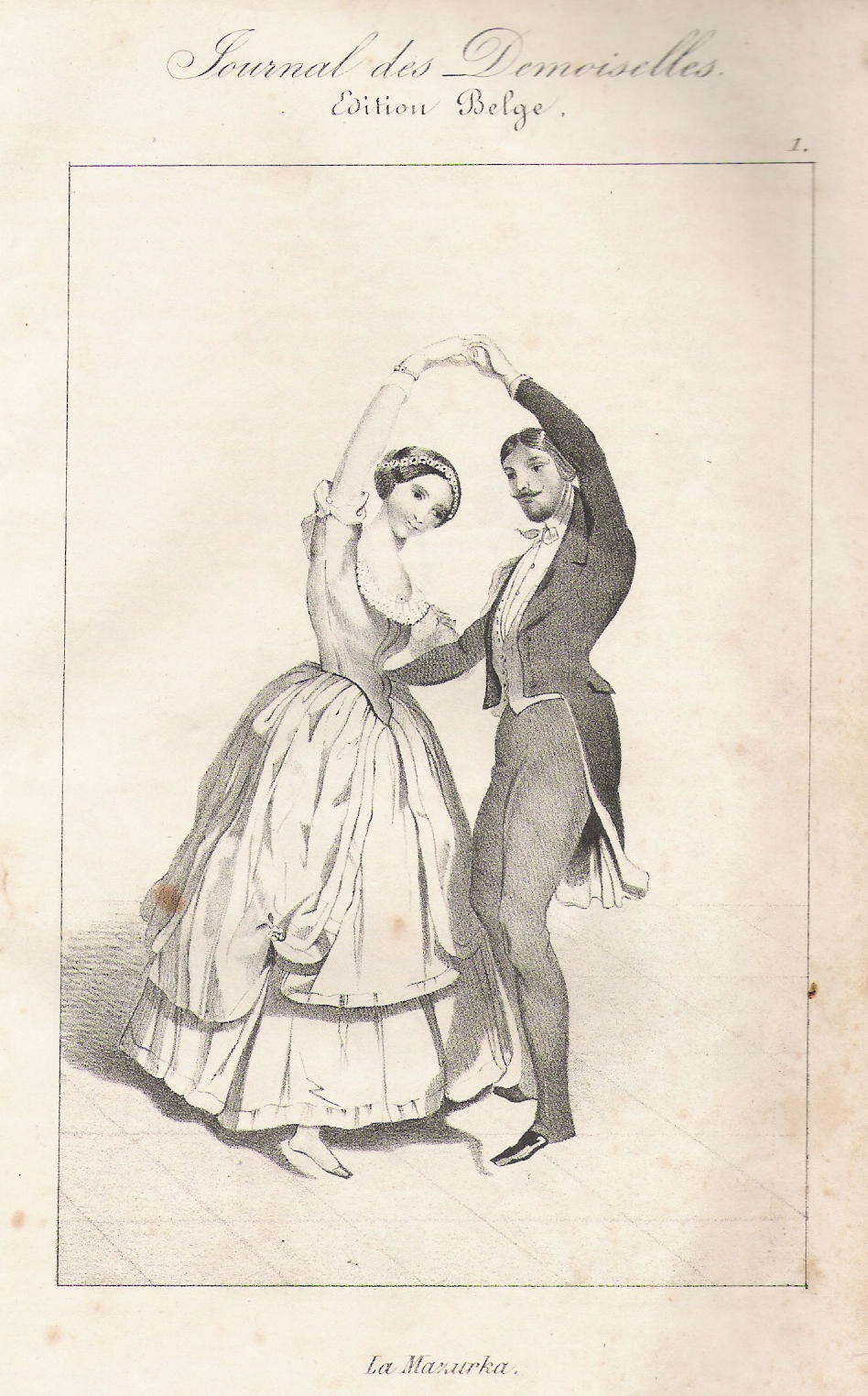

Musical and rhythmic characteristics
The mazurka is most commonly set in 3/4 metre but differs from the waltz through its shifting accents and folk-inflected rhythms. Typical musical traits include dotted figures and syncopations, occasional use of a raised fourth scale degree that gives a modal color, and percussive effects that mimic stomps or heel clicks. Tempos vary from stately and moderate to brisk and fiery; phrasing often emphasizes the second or third beat of the bar, producing an off-kilter lilt that defines the genre.
Dance structure and steps
As a couple dance the mazurka involves a range of regional step patterns: rotating figures, passing and turning movements, and local embellishments introduced by dancers. It is generally more rustic and vigorous than the waltz, with moments of stamping, heel-clicking and improvisatory ornamentation. In ballroom adaptations many of the original folk gestures were smoothed into standardized sequences, but folk performances preserve the dash and irregular accents of village practice.
History and spread
From its origins in Mazovia the mazurka became widely popular in Poland during the 17th century and, by the 19th century, entered European salons. It reached audiences beyond Poland, becoming fashionable in places such as England and later in the United States, where both folk communities and urban ballrooms adopted versions of the dance. Its traveled form changed with context: folk villages kept the vernacular dance, while urban settings adapted choreographies and musical arrangements for concert and social use.
Classical adaptations and composers
Several classical composers drew on the mazurka as a source of national color. The most famous exponent is Frédéric Chopin, who wrote more than fifty piano mazurkas that transform folk idioms into refined art music. Other composers and arrangers (see composers, other classical composers) created mazurkas for piano, orchestra and chamber ensembles. Russian composers such as Glinka and Pyotr Ilyich Tchaikovsky used the form or referenced it in works and novels of the period, and the dance figures frequently appear in 19th-century Russian novels. In the 20th century Polish composers like Karol Szymanowski revisited the form with modern harmonic and textural language.
Significance and distinguishing points
The mazurka remains important both as a living folk tradition and as a model for composers seeking national identity in music. It is often compared to the kujawiak and other regional Polish dances; these forms can share metre but differ in tempo, accent pattern and mood. Today the mazurka continues to be taught in folk ensembles, performed in concert settings, and studied as a prime example of how vernacular dance can influence art music and national culture.
- Musical features: dotted rhythms, triple metre, modal inflections and irregular accents.
- Dance features: heel-stamping, improvised turns, regional step variants and contrasts with the waltz.
- Historical notes: roots in Mazovia with references from the 16th century and wider recognition by the 19th century.
- Notable composers: Chopin, Glinka, Tchaikovsky (references in literature), and Szymanowski.
Related articles
Author
AlegsaOnline.com Mazurka: Polish Folk Dance and Musical Form Leandro Alegsa
URL: https://en.alegsaonline.com/art/63182