
Rubber duck
Small duck-shaped bath toy, typically yellow, made from rubber or plastic. Used by children, collectors, and for cultural events; notable for its squeaker, historic development, safety and environmental issues.
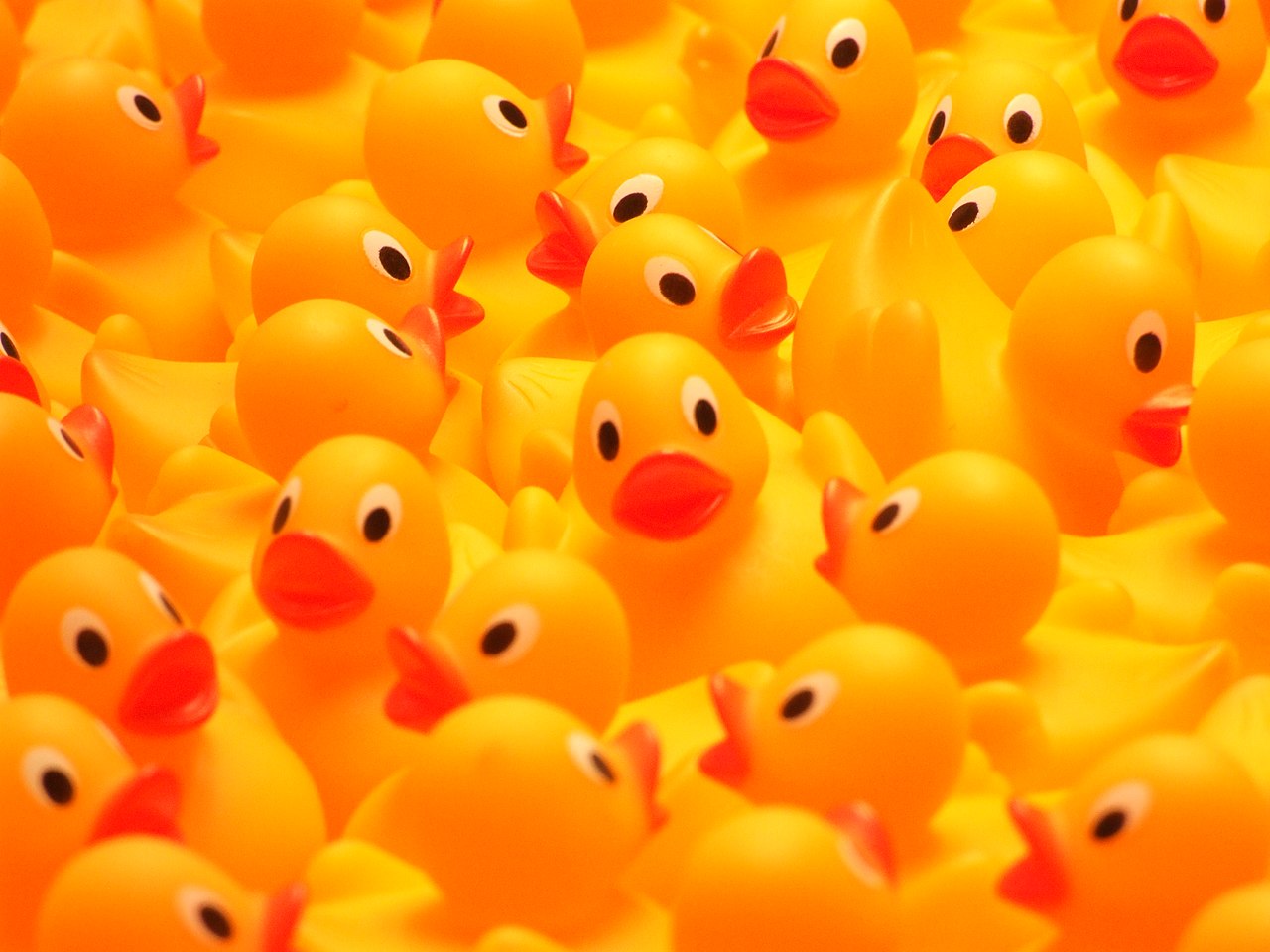
A rubber duck is a small, buoyant toy modeled on the form of a duck. Most familiar examples are bright yellow with a rounded body and an exaggerated bill, but the design varies widely: some are realistic, others are stylized or themed. Traditionally hollow to float in water, many rubber ducks include a simple squeaker that emits sound when the toy is squeezed.
Image gallery
6 Images




Characteristics and design
Common materials include natural rubber originally and, more recently, flexible plastics such as vinyl or silicone. Typical features are a hollow interior, sealed seams, and a small air‑chamber that can create a squeak. Basic characteristics include:
- Duck-like silhouette and bright coloration (duck, often yellow).
- Waterproof outer shell that enables floating and play in a bathtub (baths).
- Simple mechanical sound device or no sound at all.
History and cultural role
Rubber toys became possible after industrial advances in rubber processing in the 19th century. Early duck toys were stiffer rubber or molded materials; later manufacturing produced softer, more colorful versions. The rubber duck entered popular culture through children's media—most famously when Ernie sang about his rubber duck on Sesame Street, a moment linked to the song "Rubber Duckie" (see). Over time the duck evolved from a simple infant plaything into an icon and novelty item.
Uses and significance
Primarily a bath toy for children, the rubber duck is also used as a prop in photo shoots, promotional campaigns, and charity events (for example, large-scale rubber duck races). Collectors seek limited-edition and themed designs, and designers produce ducks that reference films, professions, and political figures. The toy's simplicity makes it enduringly popular across cultures and age groups.
Safety, care and environmental notes
Parents and caregivers are advised to inspect toys for small parts, loose seams, and water trapped inside hollow toys that can encourage mold growth. Some older or inexpensive ducks contain phthalates or other plasticizers; many manufacturers now offer phthalate-free or silicone options. Discarding and recycling of vinyl toys is a concern in waste management; choosing durable, non-toxic materials and drying hollow toys after use can reduce problems.
Beyond play, the rubber duck remains a recognizable symbol of childhood and whimsy. Its simple shape and cheerful appearance have allowed it to persist as both a practical bath aid and a cultural icon.
Related articles
Author
AlegsaOnline.com Rubber duck Leandro Alegsa
URL: https://en.alegsaonline.com/art/84553