
Rio Negro (Amazon) — major blackwater tributary of the Amazon
Large blackwater river rising in Colombia and flowing through Brazil's Amazonas to join the Amazon. Noted for tea-colored, humic-rich waters, extensive igapó floodplains, exceptional fish diversity and cultural importance.
Overview
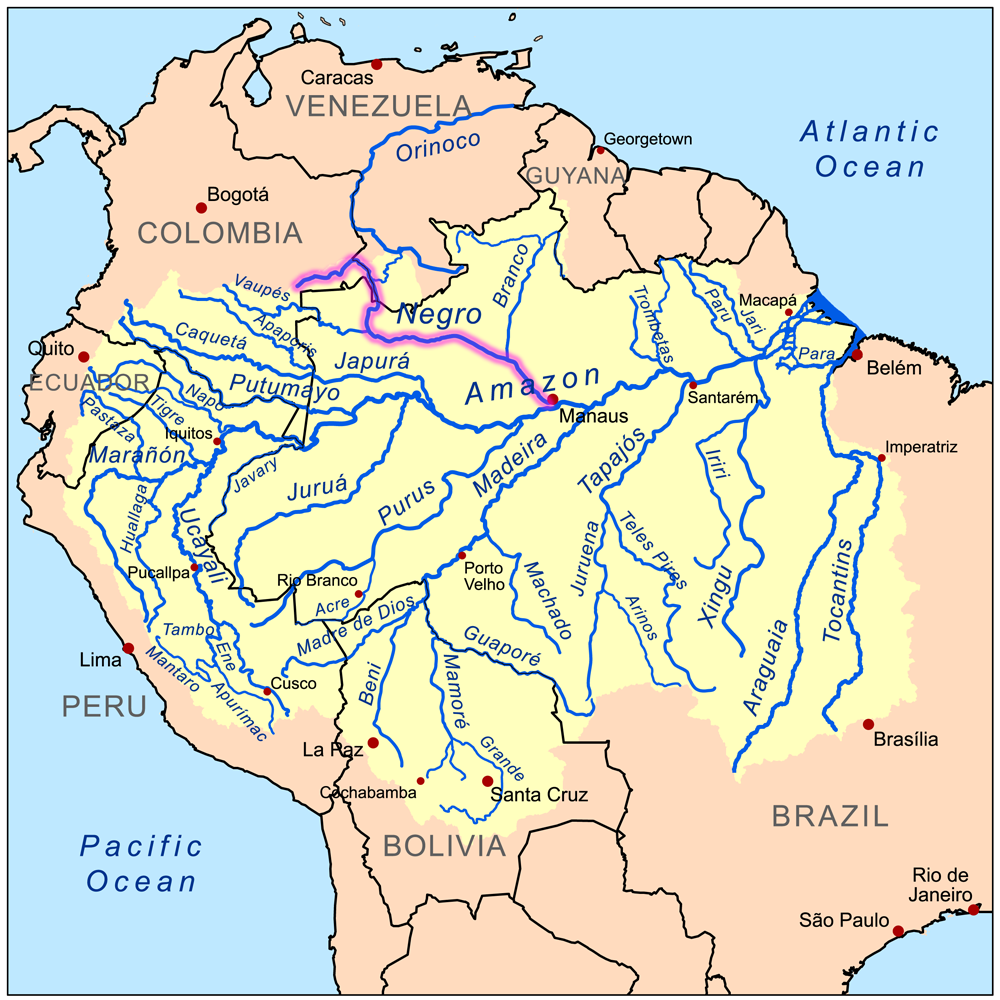
The Rio Negro is one of the Amazon Basin's best-known rivers. It rises in the highlands of northwestern South America and flows for many hundreds of kilometres through tropical rainforest before joining the main Amazon system. It traverses international borders and runs for long stretches within Brazil's state of Amazonas, while its headwaters lie in Colombia. The river is famous for its dark, tea-colored water and for the dramatic confluence where it meets the sediment-rich Solimões — a phenomenon popularly called the "Meeting of Waters" near Manaus.
Image gallery
6 Images



Water chemistry and blackwater characteristics
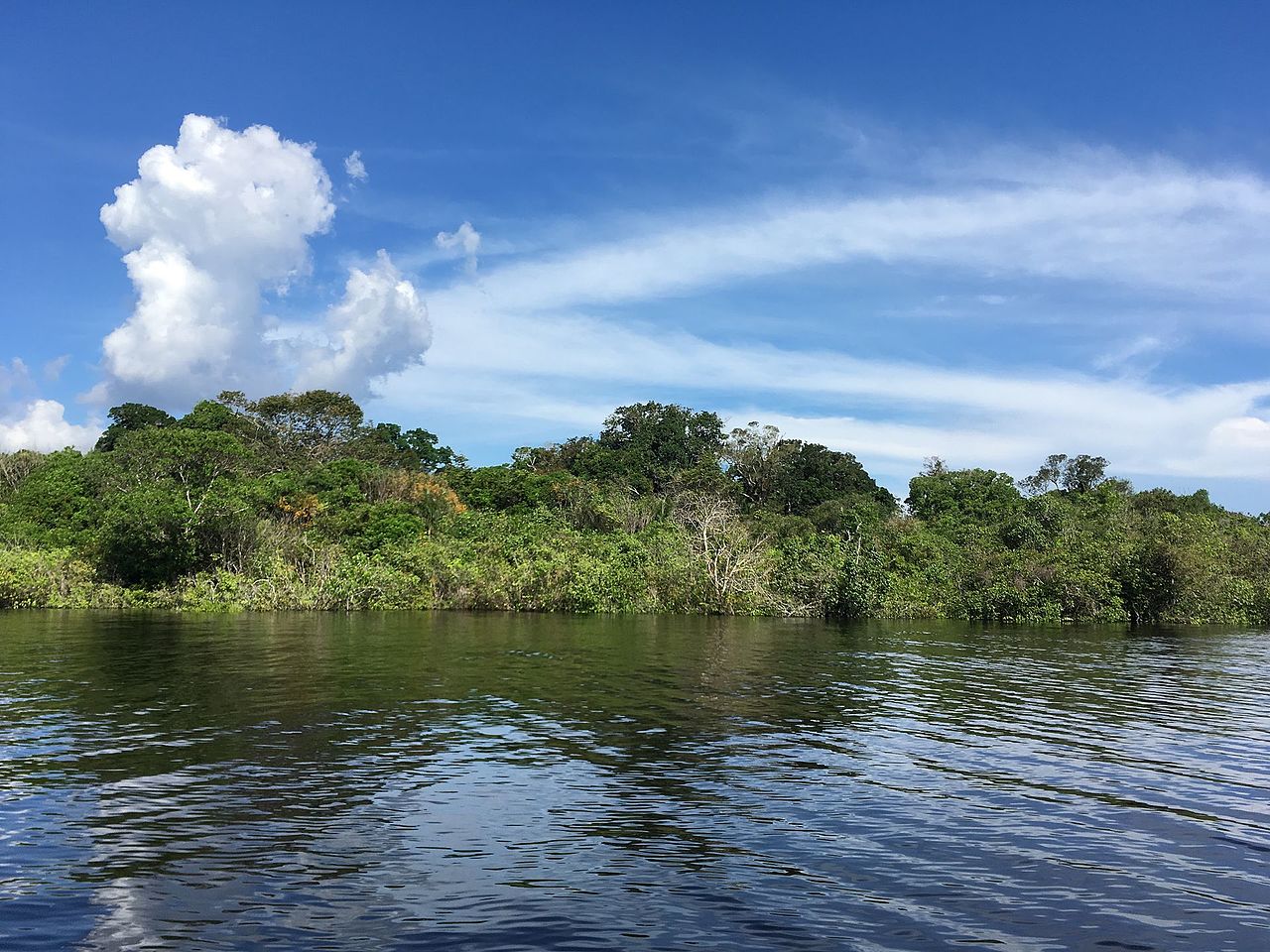
The Rio Negro is the world's largest known blackwater river. Its dark hue derives from dissolved organic matter, chiefly tannins and humic compounds released by decaying leaves and wood in the surrounding forest soils and flooded areas; this organic material is often described collectively as humus. The result is water that looks much like tea in color. Blackwater rivers typically carry very low loads of suspended mineral sediment and have acidic, nutrient-poor chemistry compared with the Amazon's whitewater tributaries, and these conditions influence which species can live there.
Hydrology, floodplains and landscape
The Rio Negro is the largest left-bank tributary of the Amazon and drains a broad area of rainforest and seasonally flooded wetlands. Its flow is highly seasonal: heavy rainfall causes the river to overflow, inundating vast tracts of forest and creating blackwater floodplain habitats known locally as igapó. These flooded forests are distinct from the nutrient-rich várzea forests along whitewater rivers. Flood dynamics shape soils, river channels and human settlement patterns across the basin, and they provide crucial feeding and breeding grounds for many species.
Biodiversity and aquatic life
The Rio Negro basin supports exceptionally high freshwater biodiversity. Scientific surveys have documented roughly 700 fish species in the basin and estimate the true total at about 800–900 species, including nearly 100 endemics and several species yet to be formally described. Many species are small and specialized for life in clear, acidic, low-nutrient waters. Among the taxa that attract worldwide attention are fishes traded for aquaria; the brightly coloured cardinal tetra is a well-known example. More broadly, the basin supports diverse invertebrates, amphibians, reptiles and birds adapted to the river and its floodplain cycles.
Human presence, use and cultural importance
Indigenous peoples and riverine communities have lived along the Rio Negro for millennia, relying on fisheries, floodplain agriculture and forest resources. The river remains an important transportation corridor that links remote settlements to regional centres. Traditional ecological knowledge and subsistence practices are integral to how many communities manage and use floodplain resources. The Rio Negro also attracts scientific research and ecotourism because of its unusual waters, wildlife and the striking contrast at the confluence with the Solimões.
Conservation, threats and research
Protecting the Rio Negro's ecosystems requires attention to both local activities and broader land-use trends upstream. Principal threats include deforestation, mining, pollution, unsustainable fishing and changes in upstream land use that can alter water chemistry and flow regimes. Conservation and sustainable-use initiatives seek to balance biodiversity protection with the needs of traditional and riverine peoples. Ongoing research on blackwater ecology, hydrological cycles and species inventories helps inform management and policy across the basin.
Practical information and further reading
- Regional context: Amazon rainforest summaries describe the wider ecosystem in which the Rio Negro sits.
- Country information: general information on Brazil and its northern states.
- Blackwater studies: overviews of blackwater river systems and their distinguishing features.
- Organic matter and soil processes: introductions to humus and related compounds.
- Visual comparisons: materials explaining why waters appear tea-coloured.
- Hydrology and rivers: guides to river tributaries and floodplain dynamics.
- Source regions: information on the river's Colombian headwaters.
- Drainage and basin maps: resources on the Amazon basin footprint.
- Species checklists and estimates: summaries of species richness in the basin.
- Endemism and conservation status: materials about endemic species and their protection.
- Trade and sustainable harvests: background on the aquarium trade and sustainable collection practices.
- Popular species profiles: accessible accounts of species such as the cardinal tetra.
Understanding the Rio Negro requires integrating hydrology, chemistry, ecology and human dimensions. Its distinctive blackwater environment supports unique life forms and cultural systems, making it a priority for research and conservation across the Amazon region.
Related articles
Author
AlegsaOnline.com Rio Negro (Amazon) — major blackwater tributary of the Amazon Leandro Alegsa
URL: https://en.alegsaonline.com/art/83008
Sources
- feow.org : Rio Negro