
Cardinal tetra (Paracheirodon axelrodi)
A small, brightly colored South American freshwater tetra prized in aquaria for its continuous red stripe; peaceful, schooling, and associated with soft acidic blackwater habitats.
Overview
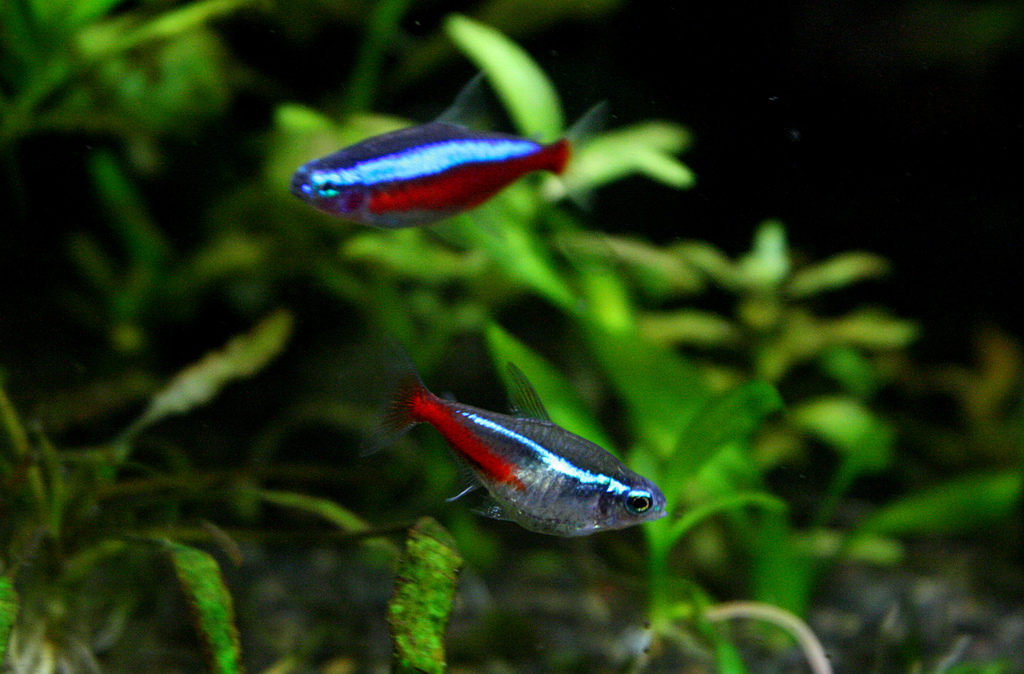
The cardinal tetra (Paracheirodon axelrodi) is a small, brightly colored freshwater fish from the Characidae family. It is especially popular among aquarium hobbyists for its vivid blue and red coloration and calm, schooling behavior. The species is native to parts of South America and is adapted to warm, tannin-rich waters.
Image gallery
3 Images

Identification and characteristics
Cardinal tetras reach about 3–4 cm (1.2–1.6 in) in typical aquarium conditions. They display an iridescent blue-green upper body and a striking red stripe that runs the full length of the body from behind the gills to the tail base. This continuous red band is the primary feature distinguishing them from similar species such as the neon tetra, whose red only occupies the rear half.
Habitat and distribution
In the wild, cardinal tetras inhabit slow-moving blackwater tributaries and flooded forest margins where water is soft, acidic, and stained by dissolved plant tannins. These conditions offer subdued light, abundant leaf litter, and plentiful microinvertebrates. Wild populations have been collected for the aquarium trade, although captive-bred specimens are now common.
Aquarium care
- Temperature: typically 23–27°C (73–81°F)
- Water: soft to moderately soft, mildly acidic; low mineral content preferred
- Diet: omnivorous — flake, micro pellets, frozen or live foods such as daphnia and brine shrimp
- Behavior: peaceful schooling fish; best kept in groups of six or more
Breeding and importance
Breeding cardinals in captivity requires dim, soft, acidic water and very low light levels because eggs and fry are light-sensitive. They are egg-scatterers and parental care is limited. Beyond the aquarium hobby, the species is valued as an indicator of intact blackwater ecosystems and serves as an accessible example of tropical freshwater biodiversity.
Notable facts
Named for its vivid red coloration, the cardinal tetra remains one of the most recognized aquarium species. Its full-length red stripe, peaceful temperament, and relatively manageable care needs make it a common choice for community tanks that replicate blackwater or planted habitats.
Tags
Related articles
Author
AlegsaOnline.com Cardinal tetra (Paracheirodon axelrodi) Leandro Alegsa
URL: https://en.alegsaonline.com/art/16945
Sources
- liveaquaria.com : liveaquaria.com/product/prod_display.cfm?c=830+890+895&pcatid=895
- practicalfishkeeping.co.uk : practicalfishkeeping.co.uk
- aquaticcommunity.com : aquaticcommunity.com